
At Least Seven Dead in ‘Stampede-Like’ Incident at India Temple
Panic among thousands of worshippers at Bihar’s Ashok Dham Temple leaves seven dead and more than a dozen injured as authorities investigate what triggered the crowd crush
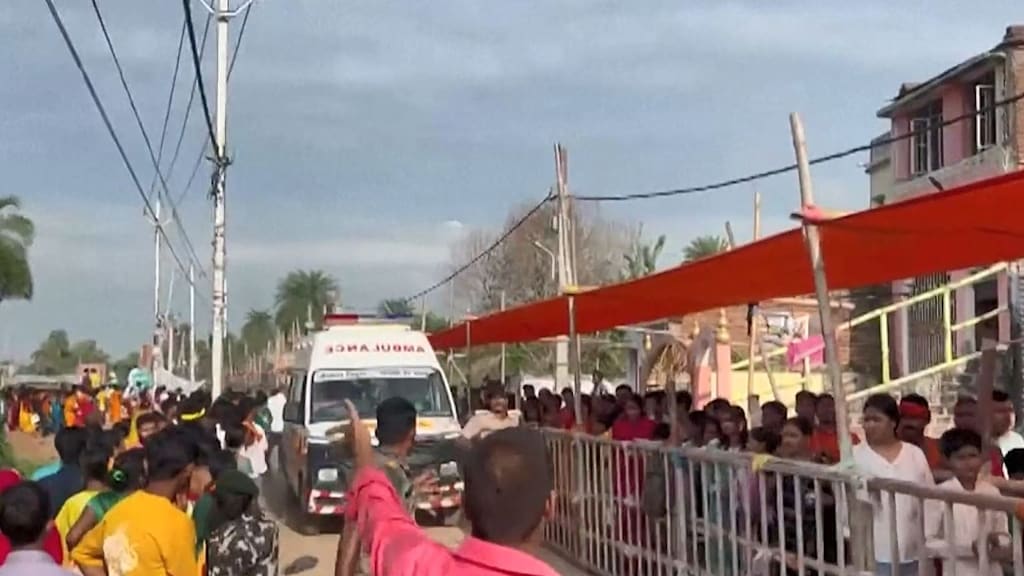
At least seven people have died and more than a dozen others have been injured after a deadly crowd crush at the Ashok Dham Temple in Bihar's Lakhisarai district in eastern India on Monday, August 17, 2026.
The incident occurred as thousands of devotees gathered at the temple during the holy month of Shravan, a major period of worship dedicated to Lord Shiva. Early reports indicate that panic spread after an electrical wire or pole-related incident, sending worshippers rushing through an already crowded area. Authorities are investigating the precise sequence of events.
The tragedy has once again drawn attention to the dangers associated with managing extremely large religious gatherings, particularly when crowds are concentrated around narrow entrances, barricades and transport routes.
What Happened at Ashok Dham Temple?
The incident took place early Monday morning near Ashok Dham Temple in Lakhisarai, Bihar.
Thousands of devotees had gathered to offer prayers on the third Monday of Shravan, one of the busiest periods of the Hindu religious calendar. The large gathering created intense pressure around the temple complex.
According to preliminary reports, an electrical wire reportedly snapped outside the temple, triggering fears of electrocution among people in the crowd. As worshippers attempted to move away from what they believed was an immediate danger, the crowd became compressed.
A section of barricading reportedly collapsed under the pressure of the moving crowd, causing people to fall and others to stumble over them.
Officials have stressed that the investigation is continuing and that the exact cause must be established before definitive conclusions are made.
Seven People Have Died
Authorities confirmed that at least seven people were killed in the incident.
Several others were injured and taken to hospitals for treatment. Some reports put the number of injured at more than a dozen, while other local reports have given higher figures as emergency teams continued assessing victims.
The deaths have caused grief among families and communities in the region.
The incident is particularly painful because many devotees had travelled to the temple for a religious observance and expected to return home after completing their prayers.
Why the Crowd Became Dangerous
Crowd crushes can occur extremely quickly when a large number of people are forced into a limited space.
Unlike the word “stampede,” which can suggest that people are simply running uncontrollably, experts often describe these incidents as crowd crushes. When people are packed tightly together, even a small movement can create enormous pressure.
If someone falls, others behind them may have little ability to stop or move around them.
This can create a chain reaction in which people fall on top of one another.
At Ashok Dham, the reported electrical scare appears to have contributed to sudden movement, while the size of the gathering and the failure of a barricade may have worsened the situation.
The Religious Significance of Shravan
The tragedy occurred during Shravan, one of the most important periods in the Hindu religious calendar.
Devotees traditionally observe fasting, prayers and pilgrimages during this period, with Mondays holding particular significance for worshippers of Lord Shiva.
Religious sites can therefore experience exceptionally large crowds during important days.
The combination of a major religious occasion, early-morning worship and thousands of visitors created a challenging environment for crowd-management teams at Ashok Dham.
Emergency Teams Respond
Police, local officials and emergency workers moved quickly after reports of the crowd crush.
Injured devotees were transported to government medical facilities for treatment, while authorities worked to restore order around the temple.
Officials were also required to manage the movement of people away from the affected area while allowing emergency vehicles and medical teams to reach those who needed assistance.
In disasters involving large crowds, emergency access can itself become a challenge because thousands of people may be attempting to leave the same location simultaneously.
Investigation Into the Incident
Authorities have launched an investigation to determine exactly what caused the tragedy.
One of the key questions is how an electrical incident may have contributed to the crowd movement and whether the safety arrangements were sufficient for the number of devotees present.
Reports have also raised questions about the condition and placement of barricades and the management of people approaching the temple.
Investigators will likely examine eyewitness accounts, security arrangements, electrical infrastructure and the movement of the crowd in the moments before the deaths occurred.
It is important to distinguish confirmed information from early reports because the circumstances of crowd disasters can change as investigators gather evidence.
India Has Faced Similar Crowd Tragedies
India has experienced a number of deadly crowd incidents during religious festivals and public gatherings.
The country's enormous religious events can attract hundreds of thousands or even millions of visitors. When infrastructure and crowd-management systems cannot cope with such numbers, the consequences can be devastating.
The Ashok Dham tragedy therefore raises wider questions about how religious sites prepare for peak attendance.
Authorities may need to consider controlled entry systems, wider pedestrian routes, stronger barricades, emergency exits, real-time crowd monitoring and clear communication systems.
Technology Could Improve Crowd Safety
Modern technology could help prevent similar disasters.
Large religious gatherings can potentially use CCTV networks, drones, digital counting systems and real-time crowd-density monitoring.
If authorities can identify an area becoming dangerously crowded, they may be able to temporarily stop people from entering and redirect visitors toward alternative routes.
Public-address systems can also provide immediate instructions when an emergency develops.
However, technology is only effective when it is supported by trained personnel and clear emergency procedures.
The Importance of Emergency Planning
Religious sites that regularly attract large crowds need detailed emergency plans.
These plans should identify evacuation routes, medical stations, emergency vehicle access points and safe assembly areas.
Electrical infrastructure should also be inspected before major events, particularly when large temporary installations are being used.
Crowd-control barriers need to be strong enough to withstand pressure, while entrances and exits should be designed to prevent dangerous bottlenecks.
Training is equally important. Staff and volunteers should know how to respond if panic begins spreading.
A Warning for Future Religious Gatherings
The Ashok Dham tragedy is a reminder that crowd safety must be treated as seriously as the religious event itself.
Devotees should be able to gather for worship without being exposed to preventable risks.
Authorities, temple management and emergency services all have important roles in making that possible.
The tragedy also shows why emergency information must be communicated quickly. Confusion or rumours can cause people to move suddenly, potentially turning a manageable situation into a life-threatening one.
Conclusion
The deaths at Ashok Dham Temple in Bihar have left families mourning and raised serious questions about crowd safety during major religious gatherings.
At least seven people died and more than a dozen were injured after panic reportedly spread among thousands of worshippers. Preliminary reports point to an electrical incident and a resulting surge in the crowd, while authorities continue investigating the exact circumstances.
The tragedy demonstrates how quickly a crowded religious gathering can become dangerous.
As India prepares for future festivals and major pilgrimages, stronger crowd-management systems, reliable infrastructure, emergency planning and rapid communication will be essential.
For the families who lost loved ones, however, no safety reform can undo the tragedy. The most meaningful response is to ensure that lessons from Ashok Dham are taken seriously and that future worshippers can gather in safety.
About the Creator
Enjoyed the story? Support the Creator.
Subscribe for free to receive all their stories in your feed.
Comments
There are no comments for this story
Be the first to respond and start the conversation.