
America is not a real country
A nation of strangers

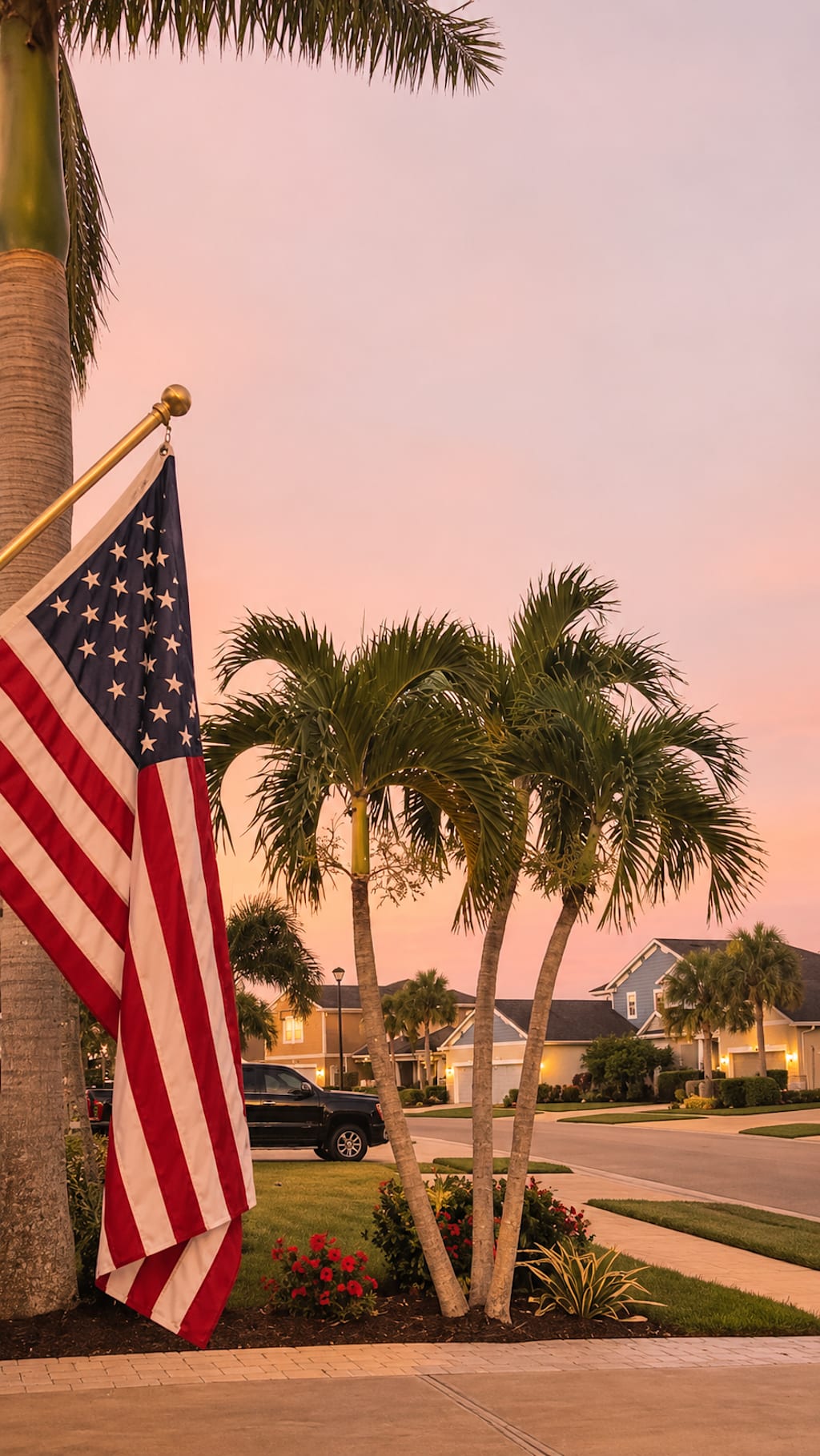
America isn’t a country the way Greece, Serbia, Italy, or even Poland are. It’s a business with a flag on it. An idea at best. America isn’t one big happy family bound by a shared past or a shared table. We’re bound by a legal document and a long weekend in July.
A country should be more than a collection of people occupying the same piece of land. It’s supposed to mean a shared identity, a sense of belonging, and some basic obligation to the people who live within its borders.
I was raised in Greece, where people care who lives next door. They check in on you. They don’t let their own go hungry. They don’t watch families struggle while someone else profits off it. Someone’s cousin always knows someone, and the neighbor is already at your door with food before you’ve asked. There’s an unspoken understanding that the people around you are, in some meaningful way, your people. Their happiness and their suffering matters because you see something of yourself in it.
I’m not saying Europeans are inherently kinder or more generous. Yes, they have their own problems with selfishness, corruption, and indifference. But there’s a familiarity to everyday life that’s hard to describe to Americans who haven’t lived it.
It’s an instinct, and it only exists when people see each other as theirs.
The playground test
You can see it at the playground. In Serbia, the parents at the park watch everyone’s kids. A toddler heads for the top of the slide and an adult who isn’t his parent is already standing underneath. My son was playing with another little boy, and his mom offered my son an apple for them to snack together.
You’ll rarely see that in America. Offering food to someone else’s child is practically a social negotiation. Allergies, gluten-free diets, sugar intake, parental boundaries. You don’t just hand a stranger’s kid an apple. You have to ask permission, but most of the time, it’s easier not to offer at all.
At American playgrounds, I’ve noticed two kinds of parents. Some hover over their own kids like a security detail. Others camp on the sidelines with their phones, polite and in their own world.
On a playground in New York, or even Florida, your kid might share a sandbox with five kids who speak five different languages, and the kids don’t notice, because they’re playing. But for the adults, it’s a different story. We don’t interact. Sometimes it’s the language barrier. Sometimes it’s the discomfort of approaching someone whose customs you don’t understand. Sometimes we just mind our business.
Whatever the reason, there’s a strange loneliness in watching parents sit ten feet apart without exchanging a word while their kids play together.
No one is being cruel or distant on purpose, and that’s something that bothers me, because cruelty would at least suggest having some type of relationship to begin with.
New York shows the other half of the story.
The city is a patchwork of culture: Chinese in Chinatown, Colombians in College Point, Blacks in Harlem, Puerto Ricans in the Bronx, Italians in Whitestone, Irish in Bayside, Indians in Richmond Hill, Albanians in Westchester, Greeks in Astoria, each with its own streets, its own bakery, its own church or mosque or social club.
Birds of a feather flock together for a reason. If you grew up on a block like that, you know the corner store owner who knows your order, or your mother. You belong there without having to earn it.
There’s comfort in being around people who understand the things you don’t have to explain. The holidays you celebrate. The food you grew up eating. The way your family behaves. The way you say hello. The dialect your grandmother speaks when she’s annoyed.
That’s the instinct I’m describing working exactly as designed. Each neighborhood is a small country. But when you zoom out of the map, what’s missing is still the bigger country. America as a whole isn’t united by a common religion, a common politics, or a common set of values. The city is a hundred small circles of ‘ours’ sharing a subway.
But I wonder how much of that closeness still exists, even within those neighborhoods.
There was a time when the people on your block could knock on your door on a Thursday night and your mom would invite them in for some Entenmann’s cake and coffee, your grandparents lived a couple houses down, and the homes in-between probably knew more about your business than you wanted them to. The older generations grew up with neighbors who sat outside smoking cigarettes together, boys who played up and down the street, and a daughter that couldn’t leave the vicinity of her lawn. People had block-parties, and you had your local dry cleaners who watched entire families go through high school. You didn’t have to arrange a playdate three weeks in advance. You just went outside.
I’m not trying to make those blocks sound like Pleasantville because I can’t put every person in the same episode. But something definitely changed in how we’re living today. We have more ways to communicate than any generation before us, yet most of us couldn’t tell you the name of the person living three houses down.
I don’t think we can blame all of that on diversity. Technology, individualism, the way we work, and the way we spend our free time have changed how we relate to people physically around us.
The bigger problem is that even our smaller circles of belonging are starting to tear at the seams.
Europe is now living through its own version of this.
The continent is more diverse than it was a generation ago, and the question of how to stay united is harder to ignore.
Pew Research Center asked Europeans what they think makes someone truly part of their country. The answers were pretty straightforward. Speaking the language and respecting the laws were at the top of the list. Across the countries surveyed, a median of 86% also said sharing national customs and traditions was important.
But for most Western Europeans, belonging isn't only about the roots of your ancestors. They want people to participate and adapt to the culture of the place you now call home.
What does it mean to become French, Greek, Italian, or Serbian? Is it enough to live somewhere, pay taxes, and obey the law? Or does belonging require something more? A common language, shared customs, some sense of loyalty to people who aren't related to you?
There’s a reason people cross the ocean for a bombolone with an affogato from an Italian bakery or fresh feta cheese from a little old lady’s table in Greece. We go to places that feel like somewhere. And they feel like somewhere because they’re places with character that generations of people have deliberately passed down.
The healthiest version of this doesn’t ask newcomers to erase where they came from. It asks them to make an effort to become part of where they’ve arrived. To join a common table while bringing something of their own to it. Not to enter a country and erase everything that country stands for to make it feel more like back home.
Sociologist Robert Putnam made a related argument in his research on diversity and social capital. His work suggested that diversity can initially complicate social trust, but that societies can develop broader shared identities over time.
The important part is that shared identity doesn’t pop up on its own. People have to create it. But America seems to have gone about the conversation from the opposite direction.
A 2026 Pew Research Center report found that 75% of Americans believe racial and ethnic diversity is good for the country. Yet only 62% believe it has a positive effect on American culture.
Those aren't necessarily contradictory opinions. We can appreciate having different cultures around us without knowing what kind of common culture we're supposed to be building.
We debate who should be allowed into the country, how many people should come, and whether our differences make us stronger. We spend considerably less time asking what happens after everyone gets here.
America seems far more comfortable celebrating the number of cultures living within its borders than asking: What are we supposed to share? What do we owe the person living next door? What makes someone else's suffering our responsibility?
That's where I think we've confused two very different things. Living alongside one another is not the same as belonging to one another.
We can fill a country with people from every corner of the world. We can celebrate their food, their holidays, their clothes, their languages, and their traditions. But none of that automatically creates the instinct to look after the stranger next door.
A shared neighborhood doesn't guarantee a shared sense of responsibility. Neither does a passport, a national anthem, or a Fourth of July barbecue.
Proximity isn’t unity.
People are perfectly capable of helping strangers. Researchers who analyzed CCTV footage of real public conflicts found that in most incidents, at least one bystander intervened, and often several others did. For all our suspicion of strangers, people often do help one another when something goes wrong. Which makes me wonder whether part of America’s problem isn’t that we’ve completely lost the ability to care. Maybe we’ve lost the expectation that other people will care about us. And expectation is a big part of belonging.
We celebrate diversity as though mixing cultures, values, and histories automatically builds a stronger society. But proximity isn’t the same thing as unity. Living in the same country doesn’t mean people feel they belong to the same community. And when people stop seeing their neighbors as their own, the social obligation to care is the first thing to go.
We step over each other. We scam each other. We shrug at a stranger’s bad luck, because the stranger isn’t our problem. And we’ve become so used to that kind of attitude, we rarely stop to question it. Think about how easily some of us can justify taking advantage of someone they don’t know. Overcharging a tourist. Underpaying an employee. Selling someone something they don’t need. Watching a family struggle and deciding their problems have nothing to do with you.
It’s easier to exploit someone when you feel no connection to them. You can catch it on the Greek islands. Tourists get the English menu with the higher prices. If you’re Greek, you get the family treatment. Same thing in New York. Tourists get ripped off every day.
It’s a tiny example, but it says a lot. The person receiving the better treatment hasn’t technically done anything to deserve it. They’re just recognized as belonging. And the outsider, who may be just as decent or deserving, doesn’t get the same consideration.
That sense of belonging I’ve been praising throughout this article—the neighbor who brings food, the stranger who watches your kid at the park, the deli owner who treats you like family—there’s another side to it all. The same instinct that makes people generous toward their own can make them closed off toward everyone else.
Psychologists call this in-group favoritism. We naturally trust, favor, and feel more connected to people we recognize as members of our own group. Sometimes that group is our family. Sometimes it’s our neighborhood, our religion, our race, or people who speak our language. We don’t even notice ourselves migrating to it.
A Greek shop owner might really believe he’s a good and generous man because he takes care of the locals. And maybe he is. But if he’s comfortable overcharging a tourist because they aren’t Greek, his generosity has limits. His sense of fairness changes depending on who’s standing in front of him.
That’s the logic that makes this conversation tricky. We look at compassion like it’s a personality trait. You’re either a caring person or you’re not. But how we treat people can depend heavily on whether we see them as belonging to our group. The boundary between us and them walks a thin line.
A language. An accent. A neighborhood. A last name.
Now suddenly, the person in front of you is either someone you feel responsible for or someone whose problems aren’t yours to worry about.
Which brings me back to America.
I’ve spent much of this article talking about what I admire about the closeness of European communities. But the answer can’t be to divide America into smaller circles of people who look, speak, and behave like us. We already have a bunch of those.
We need to find a way to take our instincts to protect our own and extend it to people who don’t immediately feel like our own. Because if compassion only reaches as far as the people we recognize, what happens to everyone else?
When you grow up believing the people around you will step in when you need them, you move through the world differently. You feel less alone in it. You might also feel a greater responsibility to do the same for someone else.
But when everyone is treated as an independent unit, responsible only for themselves and their immediate family, that obligation becomes much easier to dismiss.
We’ve built a society that rewards individual success and then expects collective responsibility to appear out of left field. Everyone is hyped up to get ahead. Make more money. Protect your interests. Look after your family. And if reaching the top comes at someone else’s expense, well, that’s business. Then we wonder why people seem blind to the suffering around them.
Of course, people exploit members of their own communities. And people from entirely different backgrounds can show real loyalty and generosity toward one another.
Diversity doesn’t kill compassion altogether. But diversity without a shared civic identity raises a question America seems reluctant to confront: what actually binds us together?
Is it citizenship? Our place on a map? Nationality? A passport? Or because we happen to live within the same borders?
Maybe America’s problem isn’t that it’s one giant melting pot. Maybe it’s that we never agreed on what we owe one another once we get here. A country can’t survive on diversity alone, and it can’t run on a flag and a barbecue party either.
Otherwise, we’re not really a nation in the social sense. We’re millions of strangers competing for the same resources, calling the arrangement a country. Diversity tells us who lives here. It doesn't tell us what we owe each other. And until we’re willing to answer that second question, I’m not sure we can keep calling the first one our greatest strength.
About the Creator
tatiana vitas
observational, a little sarcastic, mostly interested in why people lie to themselves.
tatianavitas.com
[email protected]
Enjoyed the story? Support the Creator.
Subscribe for free to receive all their stories in your feed. You could also become a paid subscriber, letting them know you appreciate their work.
Comments
There are no comments for this story
Be the first to respond and start the conversation.