
Africa Air Conditioner Market Heats Up as Rising Temperatures and Urbanization Drive Demand
Climate change, rapid construction activity, and expanding middle-class populations are pushing Africa’s air conditioner market toward US$ 13 billion by 2034.

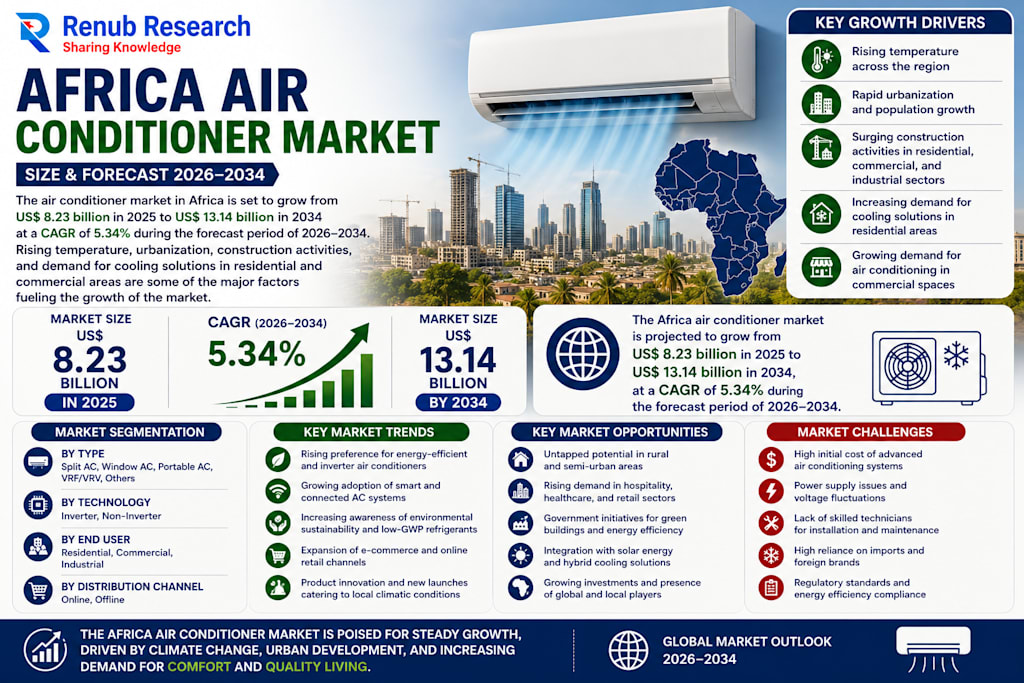
Africa’s Air Conditioner Market Enters a Strong Growth Phase
The African air conditioner market is witnessing significant expansion as rising temperatures, urbanization, and infrastructure development increase demand for cooling solutions across the continent. What was once considered a luxury product in many African countries is now becoming an essential appliance for homes, offices, hospitals, shopping malls, hotels, and industrial facilities.
According to Renub Research, the Africa air conditioner market is projected to grow from US$ 8.23 billion in 2025 to US$ 13.14 billion by 2034, expanding at a compound annual growth rate (CAGR) of 5.34% from 2026 to 2034. Rising climate temperatures, expanding middle-class populations, growing construction activities, and increasing awareness about indoor comfort are among the key factors driving market growth.
Air conditioners are electronic cooling systems designed to regulate temperature, humidity, and air quality in enclosed spaces. They are widely used in residential, commercial, and industrial environments, especially in regions with extreme heat and humidity. Popular air conditioner categories include split systems, window units, portable air conditioners, multi-split systems, and variable refrigerant flow (VRF) systems.
As African economies continue modernizing and urban populations expand rapidly, cooling technologies are becoming increasingly important for health, productivity, and quality of life.
Rising Temperatures and Climate Change Are Fueling Demand
One of the biggest growth drivers for Africa’s air conditioner market is the increasing impact of climate change and rising temperatures across the continent. Africa has been experiencing more frequent heat waves, prolonged hot seasons, and extreme weather conditions, significantly increasing the need for cooling systems.
The report highlights that Africa’s average annual temperature increased by approximately 0.86°C between 1991 and 2020, while North Africa experienced an even higher rise of 1.28°C during the same period. Climate events such as the 2023–2024 El Niño phenomenon further intensified heat conditions and extreme weather effects across multiple regions.
As temperatures continue rising, air conditioning is increasingly viewed as a necessity rather than a luxury. Homes, schools, offices, hospitals, and industrial facilities are investing more heavily in cooling technologies to maintain comfort, productivity, and operational efficiency.
The long-term effects of global warming are expected to keep demand for air conditioning systems strong throughout the forecast period.
Rapid Urbanization Is Accelerating Market Growth
Africa’s rapid urbanization is another major force driving the air conditioner market. The continent’s urban population is expected to grow dramatically over the coming decades, fueling construction of residential complexes, office buildings, hotels, shopping centers, hospitals, and commercial infrastructure.
The report notes that Africa’s urban population is projected to increase from approximately 700 million to 1.4 billion by 2050, making it the second-largest urban population globally after Asia. This extraordinary urban expansion is creating strong long-term demand for modern infrastructure and cooling solutions.
Air conditioning has become a standard feature in many newly developed residential and commercial projects, especially among middle- and upper-income consumers. Growth in hospitality, retail, healthcare, and corporate sectors is further increasing installation demand across major cities.
As urban lifestyles continue evolving, awareness regarding modern appliances and indoor comfort is also increasing among African consumers.
Rising Middle-Class Incomes Are Improving Accessibility
Improving living standards and middle-class growth are also helping expand Africa’s air conditioner industry. As household incomes rise and financing options become more accessible, more consumers can now afford appliances that were previously considered unaffordable.
The report highlights that Africa is expected to achieve real GDP growth of 3.9% in 2025, higher than Latin America and the Caribbean. Investments in infrastructure, transportation, and economic integration are expected to further improve regional economic development and job creation.
Greater exposure to international lifestyles through media, tourism, and digital connectivity is also changing consumer expectations. Air conditioners are increasingly viewed as symbols of modern living, comfort, and improved quality of life.
Affordable financing plans, installment-based purchases, and wider product availability are helping manufacturers expand market penetration among budget-conscious consumers.
Commercial Infrastructure Is Expanding Cooling Demand
The commercial sector continues to play a major role in Africa’s air conditioner market growth. Hotels, shopping malls, hospitals, office buildings, restaurants, educational institutions, and corporate facilities require effective cooling systems to maintain customer comfort and employee productivity.
Rapid development of tourism infrastructure and business districts across Africa is particularly supporting commercial air conditioner demand. Developers increasingly favor advanced cooling technologies such as VRF systems because they offer energy efficiency, zoning flexibility, and long-term operational savings.
As more multinational companies invest in Africa and commercial real estate development accelerates, demand for large-scale HVAC systems is expected to remain strong.
Electricity Limitations Remain a Major Challenge
Despite strong growth potential, the African air conditioner market still faces several structural challenges. One of the most significant obstacles is limited access to reliable electricity in many parts of the continent.
Frequent power outages, underdeveloped electrical infrastructure, and unstable power supply continue limiting air conditioner adoption in several African countries. Since air conditioners require continuous electricity to operate effectively, unreliable power availability creates operational concerns for both residential and commercial users.
Electricity costs are also relatively high in some regions, making consumers cautious about long-term operating expenses associated with cooling systems.
High Costs and Energy Efficiency Concerns Affect Adoption
The relatively high upfront cost of air conditioners remains another challenge, especially among low- and middle-income households. Advanced energy-efficient air conditioning systems are available in the market, but they often carry premium pricing that may limit accessibility.
Consumers are increasingly concerned about electricity consumption and long-term utility bills. As a result, energy efficiency is becoming one of the most important purchasing factors across the market. Manufacturers are therefore investing heavily in inverter technologies, smart cooling systems, and environmentally friendly refrigerants to improve operational efficiency.
Balancing affordability with energy efficiency will remain a major priority for manufacturers operating within the African market.
Multi-Split Air Conditioners Gain Popularity
The multi-split air conditioner segment is growing steadily across Africa because it offers an efficient cooling solution for apartments, villas, hotels, and small office spaces. Multi-split systems allow multiple indoor units to connect to a single outdoor unit, helping save space and improve installation flexibility.
As urban residential development continues increasing, multi-split systems are becoming increasingly attractive for densely populated cities where efficient use of outdoor space is important.
VRF Systems Expand in Commercial Projects
Variable Refrigerant Flow (VRF) systems are becoming more popular in Africa’s commercial and premium residential sectors because of their superior energy efficiency and zoning capabilities. These systems are particularly suitable for hotels, shopping malls, hospitals, and office buildings requiring flexible temperature control across multiple zones.
Although VRF systems involve higher upfront costs, developers increasingly recognize their long-term operational benefits and energy savings. Growing awareness about energy-efficient solutions is expected to support continued VRF market expansion.
Residential Segment Drives Strong Consumer Demand
The residential air conditioner market remains one of the largest contributors to overall industry growth due to rising temperatures and improving living standards. Consumers increasingly prefer split and window air conditioners for homes because they offer convenience, comfort, and health benefits during hot seasons.
Urban middle-class households are especially driving residential demand as financing options and affordable product ranges become more widely available. Energy-efficient systems are also gaining popularity as consumers seek to manage electricity expenses more effectively.
South Africa Leads the Regional Market
South Africa remains one of the most technologically advanced air conditioner markets in Africa due to its relatively strong infrastructure, high urbanization rates, and diversified economy. Residential, commercial, and industrial sectors all contribute significantly to demand across the country.
Consumers increasingly favor split air conditioners because of their energy efficiency and effectiveness in handling rising temperatures. The report also highlights Mitsubishi Electric’s acquisition of a stake in Intramech Pty Ltd., strengthening its HVAC and IT cooling presence in South Africa.
Despite infrastructure challenges and electricity concerns, continued urbanization and commercial development are expected to support long-term market growth.
Egypt, Nigeria, and Morocco Show Strong Potential
Egypt’s air conditioner market is growing rapidly due to extremely hot weather conditions and expanding infrastructure projects. Urbanization and rising middle-class populations are driving strong demand for residential and commercial cooling systems.
Nigeria’s market is also expanding because of rising urbanization, increasing temperatures, and growing awareness regarding indoor comfort. Commercial sectors such as shopping malls, offices, and hotels are particularly important demand drivers.
Morocco’s market benefits from urban development and tourism sector expansion. Demand for energy-efficient products is increasing steadily as consumers become more environmentally conscious. The report highlights Daikin’s partnership with Morocco’s OFPPT vocational training organization to develop HVAC-R workforce skills.
Competitive Landscape
The African air conditioner market includes major global and regional companies such as LG Electronics, Samsung Electronics, Daikin, Fujitsu General, Bosch, Carrier, Hisense, Midea, and Atlas Air Conditioning.
Competition is increasingly focused on energy efficiency, affordability, smart technologies, after-sales service, and localized distribution strategies. Companies that successfully adapt to Africa’s infrastructure realities and consumer affordability needs are expected to gain long-term market advantages.
Final Thoughts
The African air conditioner market is entering a period of strong and sustained growth as rising temperatures, urbanization, and economic development increase demand for modern cooling solutions. What was once viewed primarily as a luxury appliance is steadily becoming a necessity across homes, businesses, hospitals, and commercial infrastructure.
With the market projected to grow from US$ 8.23 billion in 2025 to US$ 13.14 billion by 2034, the future of Africa’s air conditioner industry looks increasingly promising. Companies that successfully balance affordability, energy efficiency, and technological innovation will likely shape the next phase of HVAC growth across the continent.
About the Creator
Enjoyed the story? Support the Creator.
Subscribe for free to receive all their stories in your feed.
Comments
There are no comments for this story
Be the first to respond and start the conversation.