
About 60,000 Migrants Arrive in Ceuta in 24 Hours, Spanish Territory's Leader Says
Spanish enclave struggles to cope as authorities launch emergency response to unprecedented migration surge. Thousands seek entry into Europe as humanitarian agencies and security forces mobilize in Ceuta. Local officials call for national and European support amid growing border crisis. Emergency shelters fill as record number of migrants reach Spanish territory in a single day.
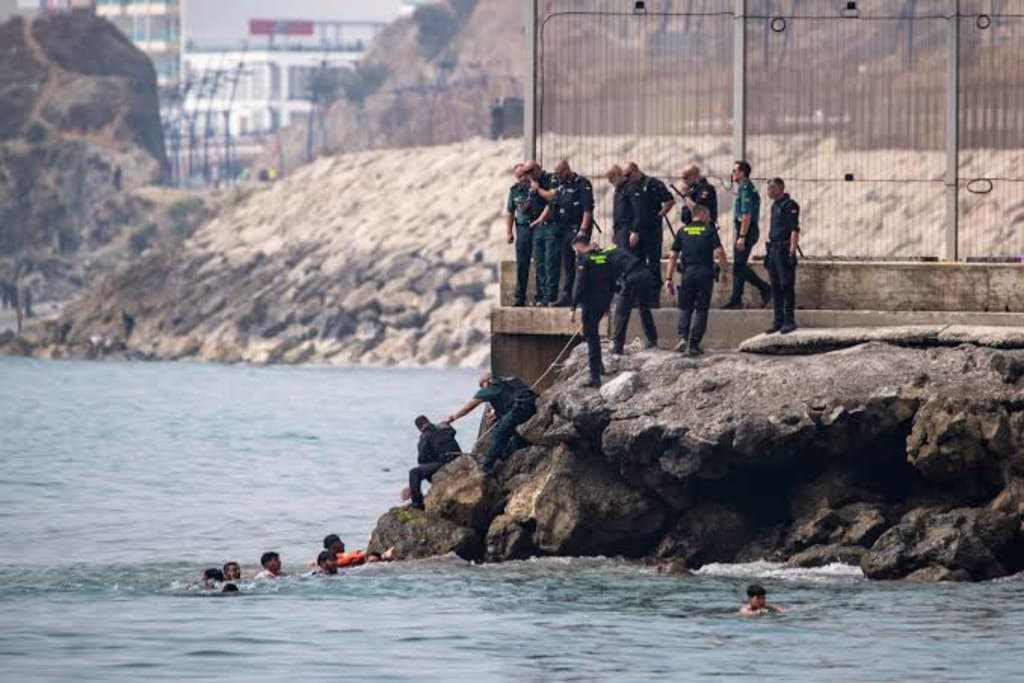
Ceuta, Spain — The Spanish enclave of Ceuta on North Africa’s Mediterranean coast is facing an unprecedented migration emergency after approximately 60,000 migrants arrived within a 24-hour period, according to local authorities. The sudden influx has placed enormous pressure on public services, border security, and humanitarian organizations operating in the territory.
The president of Ceuta described the situation as one of the most challenging moments in the territory’s recent history. Officials reported that migrants began arriving in large numbers throughout the day and night, crossing into the Spanish territory by land and sea. Many traveled in difficult conditions, while others arrived exhausted after long journeys through North Africa.
Emergency response teams were quickly mobilized as authorities sought to provide immediate assistance to those arriving. Temporary shelters, sports facilities, and public buildings were opened to accommodate migrants in need of food, water, medical attention, and temporary housing. Humanitarian organizations joined local agencies in responding to the rapidly developing situation.
Ceuta, a small autonomous Spanish city bordering Morocco, has long served as a focal point for migration into Europe. Because it is part of Spain and therefore the European Union, the territory is often viewed by migrants as a gateway to the continent. However, the scale of the latest arrivals has surpassed previous migration surges recorded in the region.
Local authorities warned that existing infrastructure was not designed to handle such a large number of arrivals within such a short period. Hospitals, social services, and emergency responders have been working around the clock to manage the crisis. Officials expressed concern about overcrowding, sanitation challenges, and the well-being of vulnerable individuals, including children and families.
Spanish government representatives in Madrid said they were closely monitoring developments and coordinating with local authorities. Additional security personnel and emergency resources were reportedly being deployed to Ceuta to help stabilize the situation. National officials emphasized the importance of maintaining public order while ensuring that migrants receive humane treatment in accordance with Spanish and international law.
The arrival of tens of thousands of migrants has also renewed discussions about European migration policy. Several political leaders called for greater cooperation among European Union member states to address migration pressures at the bloc’s external borders. Some officials argued that frontline territories such as Ceuta require additional financial and logistical support when faced with sudden migration surges.
Human rights organizations urged authorities to prioritize the safety and dignity of migrants during the response. Representatives from several aid groups noted that many individuals undertaking such journeys are fleeing conflict, political instability, economic hardship, or environmental challenges in their countries of origin. They called for thorough assessments of protection needs and access to asylum procedures where appropriate.
Residents of Ceuta have reacted with a mixture of concern, sympathy, and uncertainty. While many local volunteers participated in relief efforts by donating food, clothing, and other supplies, others expressed worries about the territory’s capacity to absorb such a large number of newcomers. Business owners and community leaders urged national authorities to provide additional support to prevent disruptions to daily life.
Security analysts noted that large-scale migration events can arise from a combination of factors, including regional instability, economic conditions, changing migration routes, and diplomatic developments. Experts cautioned against drawing immediate conclusions about the causes of the latest surge until a more complete picture emerges.
Meanwhile, Spanish and Moroccan authorities were expected to hold discussions regarding border management and regional cooperation. Both countries have historically worked together on migration-related issues, although challenges occasionally arise due to the complexity of managing one of Europe’s most sensitive external borders.
The European Commission stated that it was following the situation closely and remained in contact with Spanish authorities. European officials reiterated their commitment to supporting member states facing significant migration pressures while emphasizing the need for coordinated solutions that balance border security, humanitarian obligations, and long-term migration management.
As emergency operations continue, authorities are focused on addressing immediate humanitarian needs while assessing longer-term options. Registration processes, medical screenings, and security evaluations are underway as officials seek to determine the status of those who arrived during the 24-hour period.
For many migrants, the journey to Ceuta represents the culmination of months or even years of travel marked by uncertainty and hardship. For local authorities, however, the challenge lies in responding effectively to a rapidly evolving situation that has few historical precedents in the territory.
The coming days are expected to be critical as Spain, local officials, humanitarian organizations, and European institutions work together to manage the aftermath of one of the largest migration influxes ever reported in Ceuta. Whether the arrivals represent a temporary surge or the beginning of a broader trend remains unclear, but the event has already sparked renewed debate about migration, border management, and humanitarian responsibility across Europe.
Note: This article is a news-style draft based on the headline provided. It should not be presented as a verified factual report unless the figures and details are confirmed by reliable sources.
About the Creator
Enjoyed the story? Support the Creator.
Subscribe for free to receive all their stories in your feed.
Comments
There are no comments for this story
Be the first to respond and start the conversation.