
A Restaurant Named “Xi Jinping” Was Attacked in South Korea. Then the Name Became the Story.
For eight years, the name was a business choice. After months of pressure, four Chinese suspects allegedly broke into the restaurant, sprayed paint and fled to China. The motive is still under investigation.
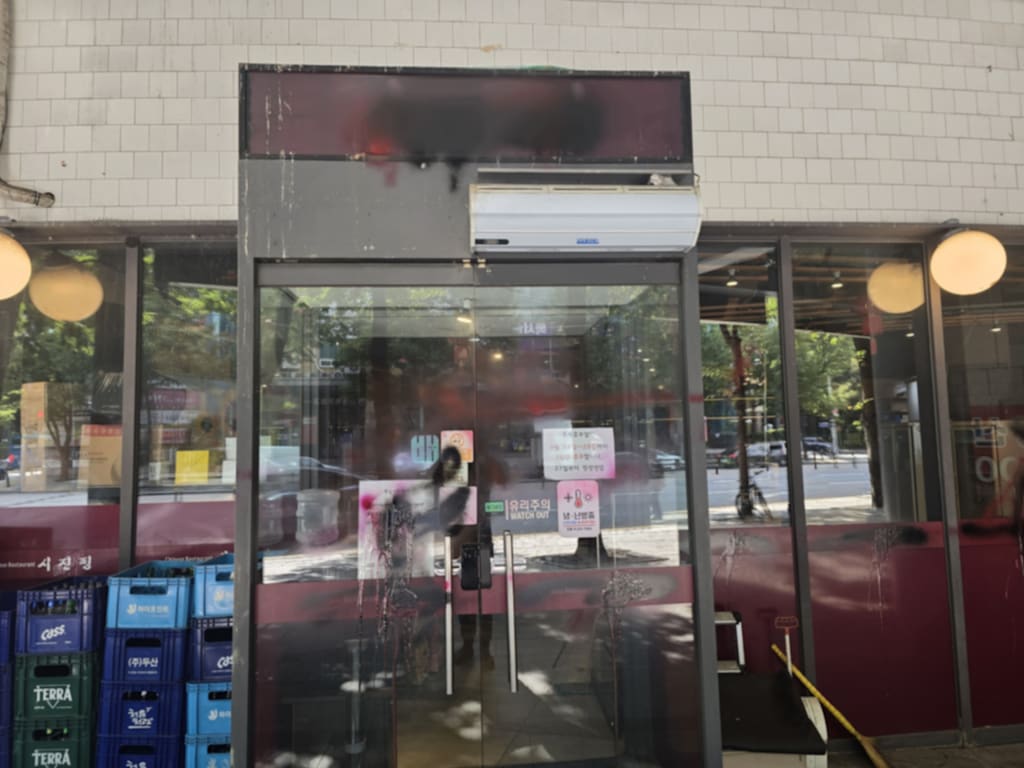
At about 2:40 a.m. on September 24, four masked men entered a Chinese restaurant in Seongnam, just south of Seoul.
Surveillance footage shows them moving through the premises, spraying lacquer and paint and damaging equipment. Investigators also found a substance believed to be pesticide on food ingredients.
By the time police identified the four suspects, they were already gone. All four were Chinese men in their 20s to 40s, according to South Korean police. They had left the country through Incheon Airport on the day of the incident, with police tracing their departures to China, including Shanghai and Yantai.
The restaurant had a name that made the incident unusually difficult to describe without describing the name itself.
It was called Xi Jinping.
The owner had been using the name for eight years. He told local media that he chose it because he wanted the restaurant to be “the best Chinese restaurant in South Korea” and said there was no political intention behind it.
Then the phone calls started.
A business name becomes a political object
The owner says demands to change the name increased during the past year.
In August 2025, after reports that Chinese President Xi Jinping would attend the APEC summit in South Korea, he said he received dozens of calls asking him to remove the name. Some people claiming to run businesses in China allegedly offered substantial sums of money if he changed it.
He refused.
The pressure did not disappear.
In April 2026, someone also complained to South Korea's intellectual-property authorities about a dish on the menu called “Xi Jinping Special Rice.” The case was eventually closed without action.
Then someone attacked the restaurant.
That sequence is documented.
The connection between the name and the September attack is not.
Police have identified the four suspects, but their motive remains under investigation. Korean media have reported that investigators are examining whether the restaurant's use of Xi's name was related to the attack. That is a line of inquiry, not an established fact.
That distinction matters.
A politically charged symbol was involved.
A political motive has not been proven.
The CCTV footage changed the story
Before September 24, the restaurant's name was mostly a curiosity.
After September 24, it became evidence in a criminal investigation.
The surveillance footage shows masked men entering the premises and damaging property. Police later identified four Chinese nationals and said they had already returned to China. On October 1, South Korean authorities said arrest warrants had been issued for all four men, clearing the way for international cooperation and possible Interpol Red Notices.
An Interpol Red Notice is not an international arrest warrant. It is a request to law-enforcement authorities in member countries to locate and provisionally detain a wanted person pending extradition or related legal proceedings.
For the restaurant owner, however, the legal process came after a much more immediate problem.
The building had been damaged.
The food stock had been affected.
The restaurant closed.
And a name that had once been chosen for commercial reasons was now attracting national attention.
The owner estimated the property damage at roughly 15 million won, about $11,000. The restaurant closed for five days and reopened on September 29. The owner has said the staff are considering changing its name.
The name mattered before the attack
That is perhaps the most important part of the story.
The attack did not create the controversy around the name.
It exposed how much controversy was already there.
The owner says people had been asking him to change the sign for months. Some allegedly offered money. A menu item using Xi's name had already attracted a formal complaint.
The restaurant existed in an uncomfortable space where commercial branding and political symbolism overlapped.
The owner could see a familiar business calculation: a Chinese restaurant needs a memorable Chinese name.
Other people apparently saw something very different: the name of China's political leader displayed above a private business in South Korea.
Both readings can exist at the same time.
The owner says the choice was commercial.
The people demanding a change treated it as political.
The law did not find a problem with the restaurant's “Xi Jinping Special Rice.”
Then four men allegedly entered the restaurant in the middle of the night.
That is where the story changes category.
A local dispute crossed a border
The suspects' departure made the case larger than a dispute over a restaurant sign.
South Korean investigators now have a cross-border case involving suspects who are believed to have returned to China before they could be arrested. Police have said they will use international cooperation channels and seek Interpol assistance.
The legal problem is straightforward.
The alleged crime happened in South Korea.
The suspects are believed to be in China.
The restaurant owner is in South Korea.
The political figure whose name appears on the sign is the Chinese president.
None of those facts, by themselves, establish a political conspiracy.
They do explain why a small restaurant in Seongnam has become the subject of a much larger discussion.
What remains unknown
The temptation in a story like this is to fill the missing piece.
Why did they do it?
Was the attack ordered?
Were the men acting on their own?
Was the restaurant's name the reason?
Was the attack connected to the people who had previously demanded a name change?
The available evidence does not answer those questions yet.
Police have identified the suspects and established their movements. They have also found evidence of planning serious enough to prompt international cooperation. But motive remains an investigative question.
That uncertainty should stay in the story.
It is more useful than pretending the missing information is already known.
The sign outside the restaurant may disappear
The restaurant reopened on September 29.
The sign may not survive.
The owner is considering a new name after eight years of operating under the old one.
That would be the quietest ending to the story.
No declaration.
No diplomatic statement.
Just a new sign replacing an old one.
But the old name has already acquired a meaning its owner says he never intended.
For years, “Xi Jinping” was a restaurant name.
Then it became a source of complaints.
Then an object of vandalism.
Now it is part of a police investigation that has crossed the boundary between South Korea and China.
The name did not change.
The context around it did.
And that is what makes the incident worth watching.
Not because it proves a larger theory about Chinese nationals, South Korean politics or relations between the two countries. The evidence is not strong enough for that.
It is interesting for a smaller reason.
A business owner chose a political leader's name for a restaurant and said he meant nothing political by it.
The public did not necessarily accept that distinction.
Four men allegedly turned that disagreement into a criminal act.
Now the courts and police have to work out what happened, while the owner has to decide whether the name is still worth keeping.
Sometimes a sign is just a sign.
Sometimes the people looking at it decide otherwise.
About the Creator
Jin
Writer of reamstories
https://reamstories.com/jin
Enjoyed the story? Support the Creator.
Subscribe for free to receive all their stories in your feed. You could also become a paid subscriber, letting them know you appreciate their work.
Comments
There are no comments for this story
Be the first to respond and start the conversation.