
450 Drones Over Moscow: The Night the War Came Home
Ukraine’s largest drone attack yet hit a refinery, a residential block, and Russia’s sense of safety, all on the final day of voting.
The night the refinery burned
Moscow woke to smoke. At dawn on Sept. 20, 2026, residents in the south of the capital filmed a column of black smoke rising from the Moscow refinery. The fire had burned for hours. Air-defense missiles lit the sky overnight. Mayor Sergei Sobyanin said more than 1,600 drones had been shot down since the previous day. Of those, 450 were approaching Moscow. He called it the largest attack of its kind.
The refinery sits about 16 miles from the Kremlin. It processes roughly 245,000 barrels of crude a day, about 12 million tons a year. It supplies more than a third of the fuel used in the Moscow region. It also produces gasoline, diesel, and aviation fuel for the Russian military. Ukrainian military officials said three key production units were damaged. Video showed flames inside the plant. The BBC said it could not independently verify the footage.
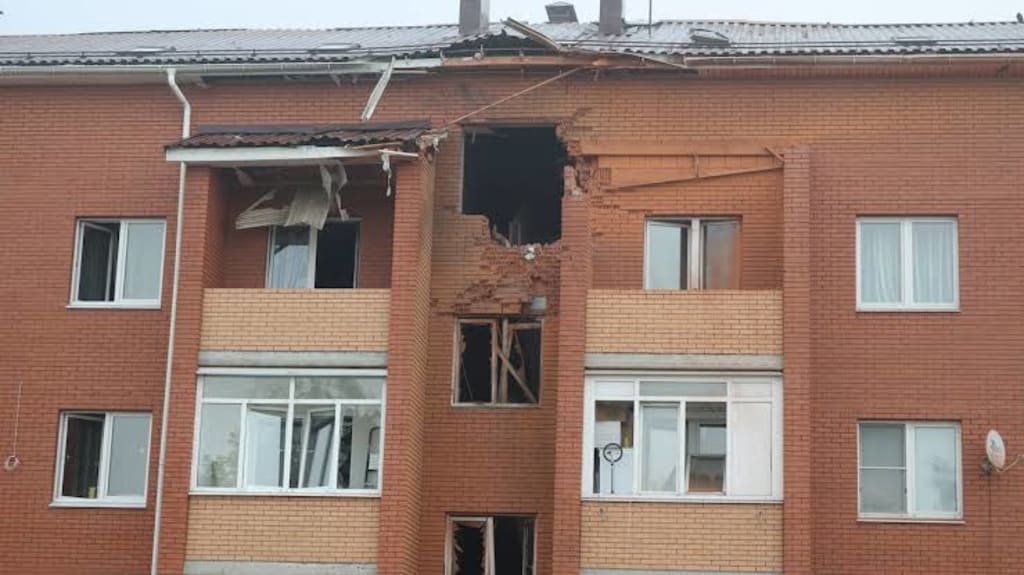
In Sofyino, a three-story residential building was hit. A 44-year-old woman was killed. Five people were injured, including two children. In Orekhovo-Zuyevo, a private house was struck. An elderly man died. By Sunday evening, officials said at least three people had died and about 20 were injured. In Ramenskoye, a 21-story building caught fire on its roof. About 400 residents were evacuated. A resident described glass flying, people screaming, and the entrance door blown off.
Airports, elections, and silence
Sheremetyevo, Vnukovo, Domodedovo, and Zhukovsky imposed temporary restrictions. Nearly 450 flights were delayed or canceled. By Sunday morning, restrictions were lifted, but delays continued.
The attack came on the third and final day of voting for the State Duma. Sobyanin said it was intended to disrupt the election. The Kremlin controlled the vote. It was neither free nor fair. In the Russian-controlled Kherson region, a bus was hit by a drone. Two people died, one an election worker, according to Russia’s election commission chief.
Ukraine has repeatedly struck energy infrastructure. Moscow did not sound air-raid sirens during the attack, according to the Institute for the Study of War. The governor’s Telegram channel turned off comments after residents complained.
Zelensky confirms the strike
President Volodymyr Zelensky confirmed the strike. He said Ukraine used drones and missiles to hit a key Russian oil facility and a logistics base. He said the targets were “billion-dollar assets that keep the war machine running.”
Ukraine’s defense ministry said the refinery supplies more than a third of the Moscow region’s fuel and some gasoline, diesel, and aviation fuel to the Russian military. The defense minister said such strikes “directly weaken the enemy’s ability to continue the war of aggression and supply its military formations.”
The operation used domestically produced long-range weapons, including the Flamingo cruise missile, MICH-2000, FP-1, RZ-100, and Pelican. The Flamingo has a range of up to 3,000 km and a 1,000 kg warhead. It costs hundreds of thousands of dollars and can be produced at more than 200 a month, Ukrainian officials said. Ukrainian officials did not name the Pelican’s manufacturer. The FP-7 is a ballistic missile based on S-300 technology, with a range of 200 to 350 km and a 150 kg warhead. Ukraine’s Unmanned Systems Forces said successful deep strikes have increased 1,150% since early 2026. In July 2026, Zelensky created a Long-Range Strike Command.
Russia’s own weekend of attacks
On the same weekend, Russia launched 138 drones at Ukraine. They hit industrial and railway facilities in Kyiv, Vinnytsia, and Odesa regions. In Fastiv, a mother and her two young children were killed. A child injured in Vyshhorod died in hospital. In Sumy, a Russian drone hit a car, killing four. Zelensky said a Russian drone hit a monastery in Kherson, killing a cleric and injuring four.
Both sides have escalated attacks on energy and logistics. On Friday, President Trump signed a sanctions bill authorizing tariffs of up to 100% on major buyers of Russian oil and gas, including China and India. The bill would hit Russia’s economy. Trump had said both sides agreed not to strike energy infrastructure. The strikes continued.
The global diesel shock
The Moscow refinery attack came as global diesel supplies were already tight. Diesel futures and refining margins hit record highs. The U.S. heating oil crack spread rose to $117 a barrel, the highest since Bloomberg began recording in 2009. U.S. diesel retail prices topped $6 a gallon and climbed to $6.45. Brazil, Libya, and parts of Africa saw fuel shortages. Russia considered extending its diesel export ban.
The global refining system is under strain. Over the past decade, the Middle East and Russia expanded refining capacity. Middle East diesel exports doubled between 2017 and 2025, overtaking North America. Now two wars, Russia-Ukraine and Middle East instability, are limiting exports from key regions. According to Cambridge Energy Research Associates, Russia’s idle refining capacity has exceeded 4 million barrels a day. Russia’s total refining capacity is about 6.9 million barrels a day. After this round of attacks, nearly 60% of Russian refineries were offline. Almost every federal subject reported gasoline or diesel shortages. Retail gasoline prices rose more than 10% from the start of the year to late June.
Cutting the fuel lines
Ukraine’s campaign targets fuel and logistics. The goal is to raise the cost of war for Moscow and force it to negotiate. Zelensky said energy and food security proposals are on the table. “The only thing missing is Russia’s political will.” But Russia is responding with larger air attacks. The war has expanded from front-line battles to deep strikes on economic arteries.
The night 450 drones flew toward Moscow, the fire at the refinery was visible from the city. The next morning, at a gas station on the outskirts, cars waited in line. A station attendant said they had no diesel. The sign was handwritten. It said: “No fuel until further notice.”
About the Creator
Jin
Writer of reamstories
https://reamstories.com/jin
Enjoyed the story? Support the Creator.
Subscribe for free to receive all their stories in your feed. You could also become a paid subscriber, letting them know you appreciate their work.
Comments
There are no comments for this story
Be the first to respond and start the conversation.