
The Art of Holding: Why Some Bitcoin Investors Never Sell
Bitcoin Investors

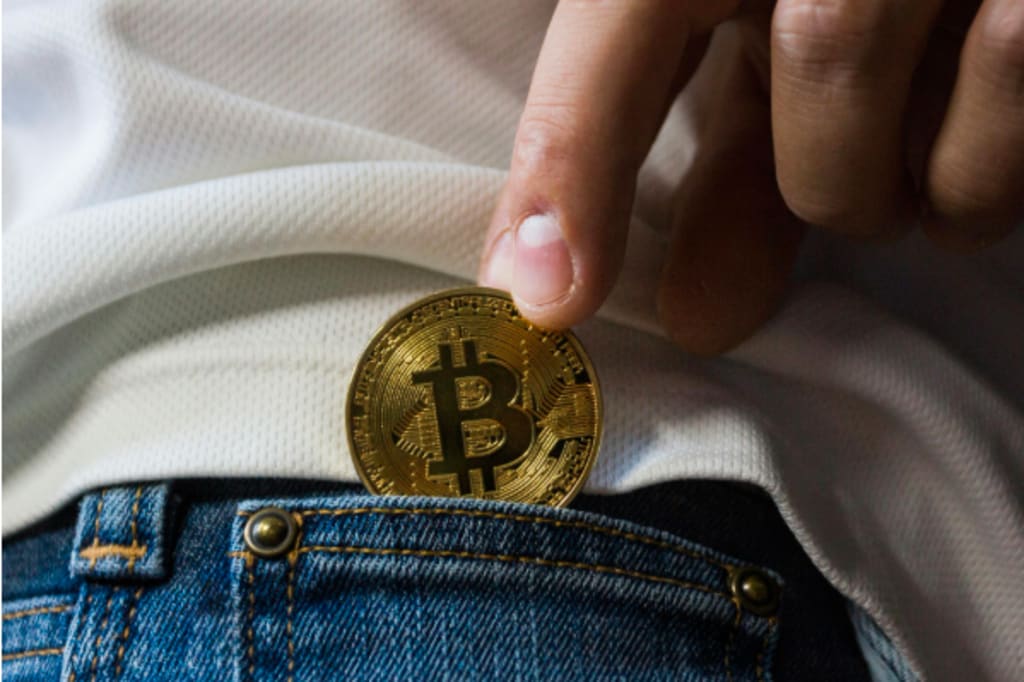
It is a curious phenomenon, the way that individuals discourse about Bitcoin. To some, it is a craze, a monetary manifestation of one decidedly annoying one-hitter. To others, it is the absolute future of finance, a cypher fortress against governments' and central banks' reaching hands. And then, of course, there are those who have simply bought in—sometimes literally—and grudgingly taken the decision to hang on for dear life.
You probably know them, these so-called "HODLers." The term itself, a misspelt relic of a drunk Bitcoin forum posting years ago, has since come to be a sort of battle cry. To "HODL" isn't just to hold Bitcoin, but to do so with stubborn, almost obstinate disregard for market volatility. While others come and go, speculating on momentum and panicking on volatility, the HODLer stays still, believing that calmness will eventually be vindicated. It's a strategy that, when initially considered, appears to go against general investment dogma. And yet, the longer one considers it, the more one finds oneself questioning whether they might be right.
The Long Game
Old-fashioned investors have always been conditioned to think in terms of timing. Buy low, sell high, watch the markets, predict the trends. The problem is, markets have a maddening habit of being unpredictable. Bitcoin, with its record of sudden spikes and equally sudden crashes, is often accused of being particularly volatile. But in this lies the secret to the HODL strategy: rather than attempting to navigate volatility, the idea is to just ride through it. And it is precisely this determination that leads investors to fixate on analysis of Bitcoin price, poring over charts and timelines and hoping to catch a glimpse of the underlying structure. Not that it always changes their actions—if anything, the true HODLer finds these charts little more than a long-term abstract work of art, an interesting but ultimately futile record of what they already knew: that markets rise and fall, and those that weather the storms are often the people left standing when the dust has settled.
This is reinforced by the very nature of Bitcoin itself. Unlike other currencies, which can be printed at will, Bitcoin is capped—there will only be 21 million coins. The shortage, combined with increasing institutional investment, has caused many to think that in the long run its price will inexorably rise. Of course, one can't possibly know how or when, and thus so many investors spend their days scanning Bitcoin price analysis, poring over charts and graphs as if searching for some kind of divine revelation hidden in the numbers. But to the most devoted HODLers, the day-to-day fluctuations are merely background noise. The vision is broader: Bitcoin, to them, is an investment to be retained not in weeks or months, but in decades.
The Psychology of Holding
It takes a certain mindset to resist cashing out when prices soar—or resisting panic when they plummet. The human brain, it seems, is not particularly well-equipped with patience. Behavioural economics has found that losses are more painful than equal-sized gains feel enjoyable, and that's what lies behind so common a phenomenon among so many investors as the tendency to buy high on euphoria and sell low on despondency. HODLing, in contrast, is really an exercise in detachment. It requires a species of emotional restraint that verges on monasticism.
And for some, there is even an ideology. Bitcoin, being a currency without a centre, is a challenge to the traditional system of finance. Owning it is to believe, in a way, in that threat—to believe that the future of finance is not in boardrooms and central banks, but in an open, borderless network no one owns. It is for this reason that some of the longest-standing and most ardent Bitcoin advocates speak about it less as an investment prospect and more as a cause. Selling in these circumstances can come to feel like betrayal.
When HODLing Pays Off
The grandeur of long-term strategies is that they are only vindicated once they're over. There have been a number of times in the history of Bitcoin when its value has crashed, only to recover in spectacular fashion again. In 2011, it fell from $30 to a low of $2. In 2017, it rocketed past $19,000 before crashing to $3,000. And yet, every time, it has recovered. Those who hung in through the rough times have often reaped handsome rewards years later.
Of course, previous performance is no guarantee of future success—a truism repeated so many times in financial markets that it's become a sort of mantra. It is certainly possible that Bitcoin someday will encounter a problem too great to surmount, that regulatory forces or technological developments might cause its price to collapse irretrievably. And yet, to those who adhere to the HODL school, such worries are not really pertinent. They are playing a different game altogether, one where the finish line is not next quarter or next year, but somewhere down the line, at a time when the world itself will be quite different.
The Fine Line Between Faith and Stubbornness
There is a difference, naturally, between blind faith and patience. The greatest long-term investors are not always those who will never sell but who understand why they are holding in the first place. Bitcoin, as promising as it is, is not riskless. The key is in understanding the difference between conviction and mere desire.
This is why others of HODLers, even those of us with staunch faith in the long-term of Bitcoin, are also strong supporters of careful moderation. Diversification is always a wise tactic—after all, even the best technologies have failed previously. But fundamentally, the doctrine of HODLing isn't about ignoring risk. It's about acknowledging that real value, in markets as in life, is not ever typically found overnight.
The Quiet Power of Doing Nothing
In a day and time of speed, action, and constant demands for what comes next, there is something almost revolutionary in the idea of merely hanging on. To HODL is, in so many senses, to reject the very notion of haste—to embrace the idea that sometimes the greatest thing to do is nothing at all.
For those who have spent years following Bitcoin's rollercoaster ride, this sort of thinking is second nature. They've seen the highs and the lows, the bubbles and the bursts. And yet, they remain there, quietly holding on, convinced that time will be on their side. Whether they will be proved right or not remains to be seen. But in a money world too frequently characterised by whim, there is a reassuringly attractive idea that maybe patience is actually a virtue every now and then.
About the Creator
Gulshan
SEO Services, Guest Post & Content Writter.
Enjoyed the story? Support the Creator.
Subscribe for free to receive all their stories in your feed.
Comments
There are no comments for this story
Be the first to respond and start the conversation.