blockchain
First came Bitcoin, then came the blockchain; all about the myriad applications of blockchain technology and how decentralization is changing the world.
Triumph Over Deception: How a Seattle Professor Recovered $1 Million Lost in a Crypto Scam
The allure of quick riches has always been a powerful draw, and in the modern age, cryptocurrency has become a prime avenue for those seeking rapid financial gains. However, this burgeoning market also presents fertile ground for sophisticated scams that can ruin unsuspecting investors. While the narrative often ends in despair, the story of a Seattle professor demonstrates that the recovery of lost or stolen crypto assets is indeed achievable, even in the face of a seemingly insurmountable loss. After falling victim to a well-orchestrated crypto investment scam, she turned to Tawny Swift Ltd., a leading crypto recovery firm, who successfully recovered over $1 million in lost assets.
By MUHAMMAD SHAFIEabout a year ago in The Chain
Bitcoin’s Weakest Halving Rally Ever: What Investors Need to Know
The Bitcoin halving event has historically been a trigger for massive price rallies, igniting investor excitement and ushering in bullish markets. However, the 2024 halving has defied expectations. Despite Bitcoin reaching new all-time highs, its post-halving price performance is officially the worst on record. This unusual market behavior has left many investors scratching their heads: what exactly is happening, and what could it mean for Bitcoin’s future? Understanding Bitcoin’s Halving Events First, it's important to understand what a Bitcoin halving is. Roughly every four years, the reward for mining Bitcoin transactions is cut in half. This mechanism is programmed into Bitcoin’s code to control inflation by gradually reducing the number of new Bitcoins entering circulation. In the past, halvings have had explosive effects on Bitcoin’s price. After the 2012 halving, Bitcoin's price soared over 8,000%. The 2016 halving sparked a rally of nearly 3,000% in the following months. Even the 2020 halving led to a robust surge of around 650%. Naturally, many anticipated the 2024 halving to fuel another monumental rally. Instead, the post-halving price performance has been unexpectedly muted. A Modest Gain Compared to History Since the April 2024 halving, Bitcoin has only climbed about 49%—a fraction compared to previous cycles. This percentage growth marks the smallest post-halving rally in Bitcoin’s history. Even though Bitcoin set new all-time highs in March, the growth rate following the halving itself has disappointed those hoping for another meteoric rise. This underperformance raises serious questions: Why is Bitcoin lagging behind previous cycles, even in an environment of supposed "crypto maturity" and institutional adoption? Macro Challenges Looming Over the Market One major factor weighing on Bitcoin is the broader macroeconomic environment. High interest rates, persistent inflation fears, and growing economic uncertainties ave created a less favorable backdrop for speculative assets like Bitcoin. In the United States, the return of Donald Trump’s administration has added further unpredictability to financial markets. Policy uncertainty can discourage risk-taking, which historically benefits safe-haven assets like gold — not volatile assets like cryptocurrencies. Additionally, central banks around the world have not eased monetary policy as aggressively as many investors had hoped. With borrowing costs high, less money is flowing into riskier investments, including crypto. Miners Are Feeling the Pressure Another critical — and often overlooked — factor is the current state of Bitcoin miners. After a halving, mining becomes half as profitable overnight. Although this is expected, the impact on miners in 2024 has been more brutal than in previous years. Competition among miners has intensified, energy costs have risen, and profitability margins have thinned significantly. As a result, many mining companies have been forced to sell more Bitcoin just to stay afloat. This selling pressure has added downward momentum to Bitcoin’s price, making it harder for the asset to maintain a strong post-halving rally. Moreover, some public mining companies, which investors once viewed as proxies for Bitcoin exposure, have been offloading more of their Bitcoin holdings to stabilize their balance sheets. Was the 2024 Halving Rally Overhyped? In many ways, analysts suggest that expectations around the 2024 halving were simply too high. Bitcoin's market dynamics have changed. Institutional investors now play a much larger role, and the market is far more efficient. These factors reduce the likelihood of explosive price movements seen in earlier, less mature markets. Additionally, Bitcoin had already rallied significantly before the halving event in anticipation of reduced supply. This "buy the rumor, sell the news" phenomenon may have played a role in the more muted reaction after the fact. In short, much of the halving’s positive impact may have been priced in well ahead of time. What’s Next for Bitcoin? Despite the sluggish start, not all hope is lost for Bitcoin bulls. Historically, Bitcoin rallies have taken months — not days — to materialize after a halving. Past halvings have shown that while immediate post-halving performance might be underwhelming, the long-term trajectory often remains very bullish. If history is any guide, Bitcoin could still see substantial gains over the next 12 to 18 months. However, investors must now navigate a more complex environment. Macroeconomic factors, regulatory uncertainty, and mining economics will all play a bigger role than in previous cycles. Long-term Bitcoin holders, or "HODLers," may need to exercise more patience and manage expectations for slower, steadier growth rather than rapid parabolic spikes.
By Tech Horizonsabout a year ago in The Chain
How to Create a Token Account on Solana – A Beginner-Friendly Guide
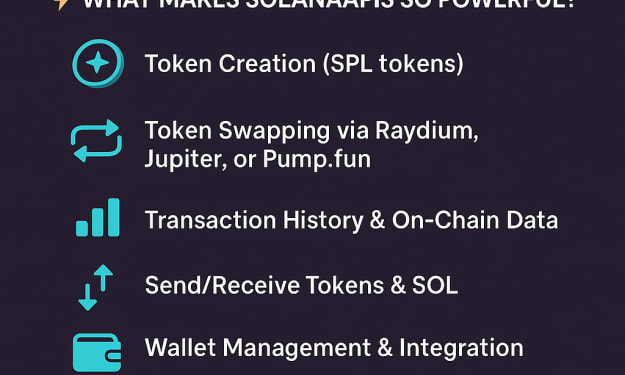
What is a Token Account, Anyway? In Solana, when you create a token (like an SPL token), that token needs a specific account to live in — called a token account. It’s kind of like a locker inside your wallet, and each type of token has its own locker.
By Solana Portalabout a year ago in The Chain
What Is ICO Development? A Beginner's Guide for Startups
In today’s fast-moving digital economy, Initial Coin Offerings (ICOs) have become a powerful tool for startups looking to raise capital, build communities, and launch blockchain-powered projects. If you're new to the world of crypto and wondering how to fund your dream project, ICO development could be your gateway to success.
By juliee princeabout a year ago in The Chain
Token Development on Ethereum vs. Binance Smart Chain: Which is Better?
The world of blockchain is booming, and token development is at the heart of it. Whether you're launching a new cryptocurrency, an NFT collection, or a DeFi project, choosing the right blockchain is crucial.
By Technoloaderabout a year ago in The Chain