bitcoin
Behold the Bitcoin, the original cryptocurrency; whether you're a skeptic or a bitcoin believer, get the lowdown on this controversial coin.
Consumer Price Index (CPI): What Is It and Why Is It Important?
CPI stands for Consumer Price Index, which is a common indicator for measuring the change in prices paid by the consumers within a country. CPI is usually released regularly by the government or band it calculates the percentage change in the cost of purchasing representative goods and services by surveying the prices of a certain quantity of these goods and services.
By Bitcoin Realm3 years ago in The Chain
Why White-label NFT Marketplace Is The New Way To Launch Digital Platforms?
A white-label NFT marketplace is a platform that enables users to buy, sell, and trade non-fungible tokens (NFTs) under their brand name without having to build a platform from scratch. White-label NFT marketplaces allow businesses to enter the NFT market quickly and with minimal upfront costs, as they do not need to invest in the development and maintenance of a custom platform.
By Angelika Candie3 years ago in The Chain
NFT Marketplace Development - An Ultimate Guide To Lead The Crypto Market
NFTs (Non-Fungible Tokens) have become a hot topic in the world of cryptocurrency and blockchain technology. NFTs are unique digital assets that are stored on a blockchain and can represent a wide range of things such as digital art, music, videos, games, collectibles, and more.
By Angelika Candie3 years ago in The Chain
THE MARKET OF BULLS
THE EXPLANATION OF CRYPTO: Cryptocurrency, often referred to as crypto, is a type of digital or virtual currency that relies on cryptographic techniques to secure transactions, control the creation of new units, and verify the transfer of assets. It is decentralized and operates on a technology called blockchain, which is a distributed ledger maintained by a network of computers (nodes) across the globe.
By Arsh Kochalia3 years ago in The Chain
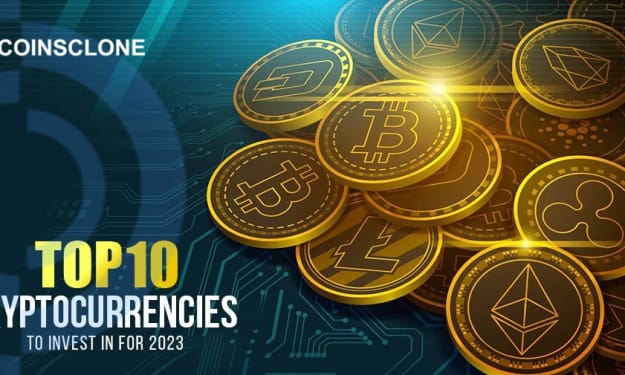
Top Cryptocurrency to Invest in 2023: A Comprehensive Guide for Startups
If you're a startup or entrepreneur looking to invest in cryptocurrency, you may be wondering what the best option is for 2023. With so many different cryptocurrencies available, it can be difficult to know which one to choose. In this guide, we'll take a closer look at the top cryptocurrency to invest in for 2023, as well as the benefits and features of crypto exchanges. While exchanging cryptos, crypto exchanges act as a middleman between buyers and sellers. The majority of revenue is generated by users. Bitcoin exchanges are making billions of dollars in profit owing to these users.
By AdeleneJennifer3 years ago in The Chain
Keevo Hardware Wallet Review: Is it the Best Way to Secure Your Crypto Assets?
In recent years, cryptocurrencies have become increasingly popular, with people investing in digital assets more than ever before. However, with the rise in popularity comes a rise in security risks. Crypto hacks and thefts have been on the rise, leading to a need for secure storage options. This is where hardware wallets like Keevo come into play. In this Keevo hardware wallet review, we'll examine the features and security measures of this popular cryptocurrency wallet. Find out if Keevo is the right choice for safeguarding your digital assets.
By TeckyBlock3 years ago in The Chain
The Future of Money: Why Cryptocurrencies Are Here to Stay
Cryptocurrencies have taken the world by storm in recent years, and their popularity continues to grow. From Bitcoin to Ethereum, these digital currencies have disrupted traditional financial systems and opened up new opportunities for investors and businesses alike. But what is the future of money, and why are cryptocurrencies here to stay? In this article, we will explore the benefits of cryptocurrencies and why they are becoming an essential part of the modern financial landscape.
By Caffeinated Perspectives3 years ago in The Chain
THE ROLE OF BLOCKCHAIN TECHNOLOGY IN SUPPLY CHAIN MANAGEMENT
From the clothes we wear to the food we eat, every product we consume has a journey that begins from raw materials and ends at our doorstep. In today's interconnected world, supply chains have become incredibly complex, involving multiple parties and spanning across continents. Ensuring the authenticity, safety, and quality of products is paramount, but with so many players involved, it can be challenging to maintain visibility and trust across the entire supply chain. That's where blockchain technology comes in, offering a promising solution to address these challenges by providing an immutable, decentralized, and transparent ledger for tracking and verifying transactions. In this article, we'll explore how blockchain technology is revolutionizing supply chain management, bringing greater traceability, transparency, and efficiency to global trade.Supply chain management is the process of overseeing and coordinating the flow of goods and services from the manufacturer to the end consumer. upply chains are complex and involve multiple stakeholders, including suppliers, manufacturers, distributors, and retailers, who must work together to ensure that goods and services are delivered to the end customer in a timely and cost-effective manner. Traditionally, supply chains have been managed using a centralized, top-down approach, with little transparency or accountability. This has resulted in a number of challenges, including inefficiencies, lack of visibility, and increased costs. However, blockchain technology has the potential to completely transform the way that supply chains are managed, by providing a more transparent, secure, and efficient system for managing the flow of goods and services. One of the key advantages of blockchain technology in supply chain management is that it provides a decentralized, transparent, and secure ledger of all transactions and interactions within the supply chain. This means that all stakeholders can access real-time information about the flow of goods and services, and can easily track the progress of each shipment from the manufacturer to the end customer. Additionally, all transactions are recorded on a public ledger, which means that there is a permanent and unalterable record of all interactions within the supply chain. Another advantage of blockchain technology in supply chain management is that it provides a secure and tamper-proof record of all transactions, which can help to prevent fraud and counterfeiting. For example, using blockchain technology, it is possible to track the origin of each item in the supply chain, from the raw materials to the end product. This means that it is possible to verify the authenticity of each item, and to ensure that it has been produced ethically and sustainably. Additionally, blockchain technology has the potential to streamline and automate many of the processes within the supply chain, which can result in significant cost savings and increased efficiency. For example, using smart contracts, it is possible to automate the process of payment and settlement, which can eliminate the need for intermediaries and reduce the risk of fraud and errors. Despite the many advantages of blockchain technology in supply chain management, there are also some challenges that need to be addressed. One of the biggest challenges is the lack of standardization in the industry, which makes it difficult for different stakeholders to communicate and interact with each other effectively. Additionally, the technical complexity of blockchain technology means that it can be difficult for some organizations to implement, especially if they have limited technical expertise. Another challenge is the need for a high level of collaboration and trust between all stakeholders in the supply chain, in order to ensure that the technology is adopted and used effectively. This requires significant investment in education and training, as well as the development of new processes and procedures to support the adoption of blockchain technology. In conclusion, blockchain technology has the potential to completely transform the way that supply chains are managed, by providing a more transparent, secure, and efficient system for managing the flow of goods and services. However, there are also significant challenges that need to be addressed, including the need for standardization, technical complexity, and a high level of collaboration and trust between all stakeholders. Nevertheless, the potential benefits of blockchain technology in supply chain management are too significant to ignore, and it is likely that we will see significant growth and adoption in this space over the next few years.
By Jemimah Essien4 years ago in The Chain
Unlocking the Potential of Cryptocurrency: An In-Depth Analysis.
Cryptocurrency is a digital or virtual currency that uses cryptography technology for secure transactions and to control its creation. Cryptocurrencies are decentralized and operate independently of a central bank, making them a popular alternative to traditional currencies.
By Gopinath.R4 years ago in The Chain
Simplify Your Crypto Taxes with the Best Crypto Tax Software in 2023
I. Introduction Cryptocurrency is a digital or virtual currency that uses cryptography for security. It operates independently of a central bank and is decentralized, making it popular among users. However, as with any financial asset, cryptocurrency is subject to taxes, which can be complicated to calculate. The purpose of this article is to help readers find the best crypto tax software for 2023 to simplify their cryptocurrency tax reporting.
By TeckyBlock4 years ago in The Chain