
Real Estate Tokenization: Unlocking Scalable Investment in Global Property Markets
Tokenizing Property Assets to Enable Fractional Ownership, Liquidity, and Borderless Real Estate Investment at Scale
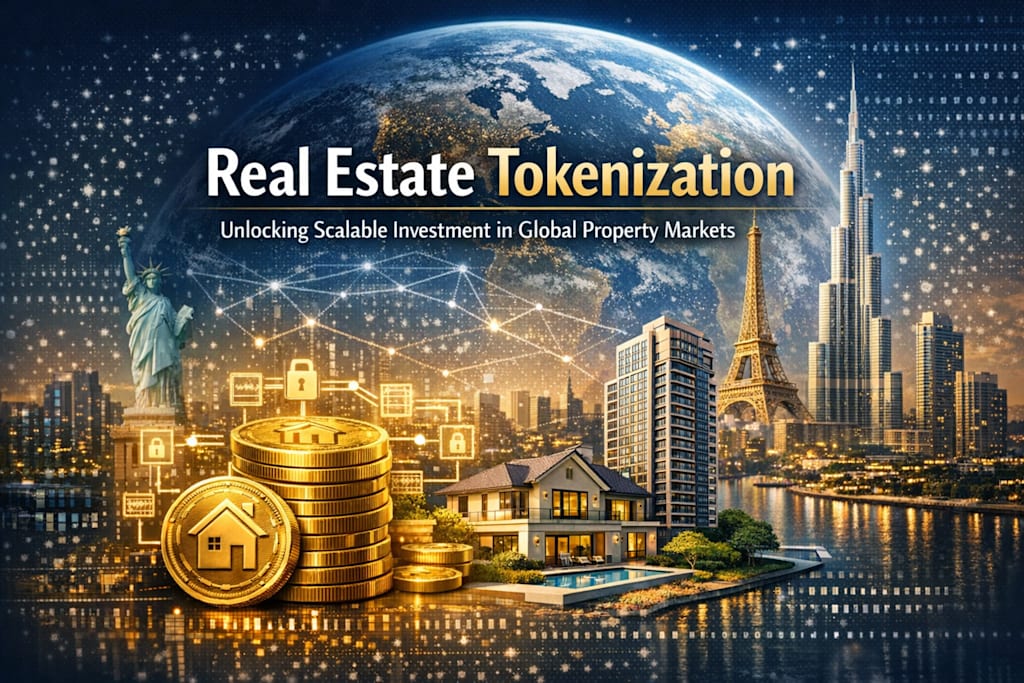
Real estate tokenization is emerging as a structural shift in how property assets are financed, owned, and traded across global markets. By converting illiquid real estate assets into blockchain-based digital tokens, the model introduces fractional ownership, enhanced liquidity mechanisms, and programmable compliance layers. This transformation is not merely technological—it represents a reconfiguration of traditional capital formation and asset distribution frameworks within the real estate sector.
At its core, tokenization leverages distributed ledger technology (DLT) to represent ownership rights as cryptographic tokens. These tokens can correspond to equity, debt, or hybrid instruments tied to real estate assets. Unlike conventional property investments, which require substantial capital commitments and long holding periods, tokenized real estate enables granular participation across diverse investor segments.
Structural Foundations of Real Estate Tokenization
The architecture of tokenized real estate ecosystems is built on smart contracts, regulatory compliance protocols, and asset digitization pipelines. The tokenization process typically involves asset identification, legal structuring through special purpose vehicles (SPVs), and issuance of security tokens aligned with jurisdictional regulations.
From a financial engineering perspective, tokenization introduces modularity into asset ownership. Each token encapsulates a proportional claim on rental income, capital appreciation, or governance rights, depending on the token design. This modularity allows for portfolio diversification at a micro-allocation level, reducing concentration risk and enhancing capital efficiency.
Additionally, blockchain-based registries ensure immutability and transparency in ownership records. This reduces reliance on intermediaries such as custodians and registrars, thereby lowering transaction costs and operational inefficiencies. The integration of oracles further enables real-time data synchronization, supporting dynamic valuation models and automated income distribution.
Key Advantages Driving Market Adoption
The growing interest in tokenized real estate can be attributed to several systemic advantages that address longstanding inefficiencies in traditional property markets:
Fractional Ownership Enablement
Tokenization lowers the entry barrier for investors by allowing fractional participation in high-value assets. This democratization of access expands the investor base beyond institutional players to include retail and cross-border participants.
Enhanced Liquidity Mechanisms
Traditional real estate assets are inherently illiquid due to lengthy transaction cycles. Tokenized assets, however, can be traded on secondary marketplaces, enabling near real-time liquidity and price discovery.
Programmable Compliance and Governance
Smart contracts embed regulatory requirements directly into token logic. This includes KYC/AML enforcement, investor accreditation checks, and transfer restrictions, ensuring compliance without manual intervention.
Global Capital Accessibility
Tokenization facilitates cross-border investment flows by eliminating geographical constraints. Investors can access international property markets without the complexities of foreign ownership regulations and currency conversions.
Operational Efficiency and Cost Reduction
By automating administrative processes such as dividend distribution, reporting, and record-keeping, tokenization significantly reduces overhead costs and enhances operational scalability.
These advantages collectively position tokenization as a transformative mechanism for unlocking dormant capital and improving market efficiency.
Technical and Regulatory Considerations
Despite its potential, real estate tokenization operates within a complex intersection of technology, law, and finance. The regulatory landscape remains fragmented, with varying definitions of digital securities across jurisdictions. Compliance with securities laws, taxation frameworks, and property ownership regulations is critical for sustainable implementation.
Jurisdictional Variability
Different countries impose distinct legal requirements for token issuance and trading. Navigating these frameworks requires robust legal structuring and ongoing regulatory monitoring.
Smart Contract Auditing
The integrity of tokenized assets depends on the reliability of smart contracts. Comprehensive auditing and formal verification are essential to mitigate vulnerabilities and ensure operational security.
Custody and Asset Backing
Ensuring that tokens are fully backed by underlying real estate assets is crucial for investor confidence. This involves transparent asset valuation, legal ownership documentation, and secure custody arrangements.
Interoperability Challenges
The coexistence of multiple blockchain protocols can create fragmentation. Interoperability solutions are necessary to enable seamless asset transfers and integration across platforms.
Market Infrastructure Development
The maturation of tokenized real estate markets depends on the development of secondary trading platforms, liquidity pools, and institutional-grade infrastructure.
Addressing these challenges requires coordinated efforts between technology providers, regulators, and financial institutions. The role of a specialized Real Estate Tokenization Company becomes critical in bridging these domains, ensuring that both technical implementation and regulatory compliance are aligned.
Economic Implications and Market Evolution
The tokenization of real estate assets has far-reaching implications for global capital markets. By enabling fractional ownership and secondary trading, tokenization increases asset velocity and capital turnover. This, in turn, enhances market depth and reduces the cost of capital for property developers.
From an institutional perspective, tokenization introduces new asset classes that can be integrated into diversified portfolios. Pension funds, hedge funds, and sovereign wealth funds can leverage tokenized assets for improved liquidity management and risk diversification.
Moreover, the integration of decentralized finance (DeFi) protocols with tokenized real estate opens new avenues for collateralization and lending. Token holders can use their assets as collateral in decentralized lending platforms, unlocking additional liquidity without liquidating their holdings.
Future Outlook and Strategic Trajectory
The evolution of real estate tokenization is closely tied to advancements in blockchain scalability, regulatory harmonization, and market adoption. As infrastructure matures, tokenized assets are likely to become a standard component of global investment portfolios.
Emerging trends such as tokenized real estate investment trusts (REITs), hybrid asset models, and AI-driven valuation mechanisms are expected to further enhance the ecosystem. Additionally, the convergence of tokenization with emerging technologies like digital identity and zero-knowledge proofs will strengthen compliance and privacy frameworks.
In the long term, real estate tokenization has the potential to redefine property ownership paradigms, shifting from static, illiquid assets to dynamic, tradable financial instruments. This transformation not only enhances accessibility but also aligns real estate markets with the broader digitization of global financial systems.
About the Creator
Enjoyed the story? Support the Creator.
Subscribe for free to receive all their stories in your feed.
Comments
There are no comments for this story
Be the first to respond and start the conversation.