
Real Estate Tokenization: How Digital Property Shares Are Attracting Global Investors
Digital Property Shares Attract Global Investors

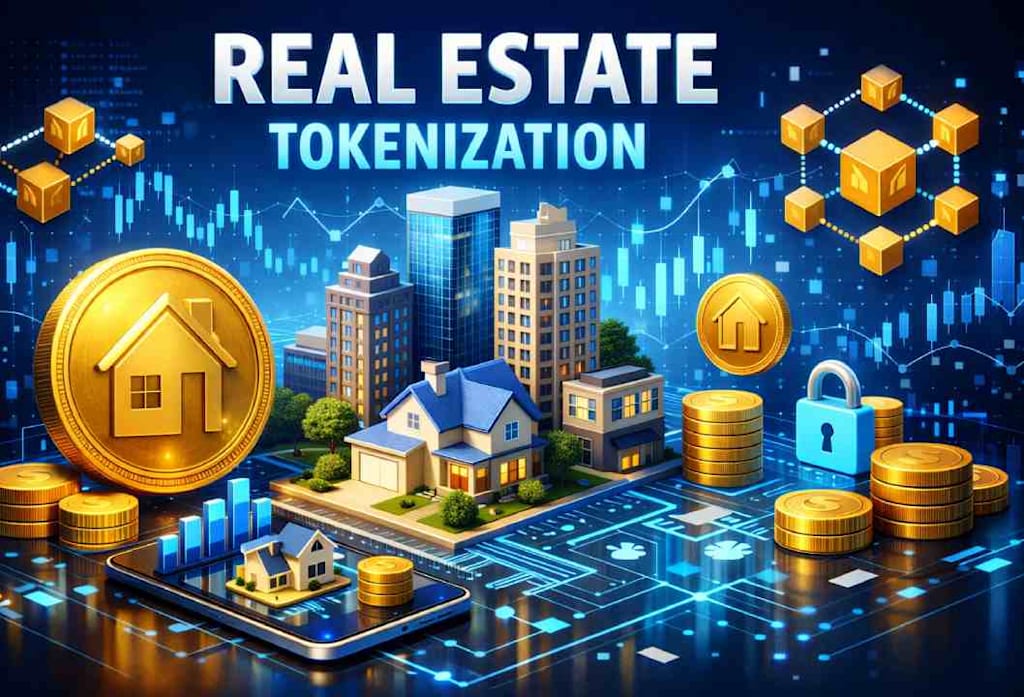
The real estate industry, traditionally dominated by high capital requirements, limited access, and illiquid markets, is undergoing a significant transformation. At the forefront of this evolution is real estate tokenization, a process that converts physical properties into digital tokens representing ownership or revenue rights. By offering fractional ownership, tokenization enables investors worldwide to access markets that were previously exclusive to wealthy individuals or institutional players.
As blockchain technology matures, digital property shares are becoming a viable and attractive investment vehicle. They combine the stability and long-term returns of real estate with the liquidity, transparency, and accessibility of digital assets. This innovative approach is reshaping how capital flows into real estate tokenization and expanding opportunities for global investors.
Understanding Real Estate Tokenization
Real estate tokenization involves creating digital representations of ownership rights on a blockchain. Each token represents a fraction of a property, a portfolio of assets, or the rights to revenue generated from real estate. Tokens can be traded, bought, or sold on secondary markets, providing liquidity and flexibility that traditional real estate investments cannot offer.
Key features include:
- Fractional Ownership: High-value assets are divided into smaller units, enabling smaller investors to participate.
- Global Access: Investors anywhere can buy property tokens using digital wallets, bypassing geographical and legal barriers.
- Transparency: Blockchain ensures immutable records of ownership, transaction history, and revenue distribution.
- Liquidity: Tokenized properties can be traded on digital marketplaces, allowing investors to exit positions quickly.
- Automated Compliance: Smart contracts enforce legal and financial agreements automatically, reducing administrative friction.
For example, a $50 million commercial property can be tokenized into 50 million digital tokens, each representing a $1 stake. Investors globally can buy these tokens, earn rental income proportional to their holdings, and trade them on digital platforms.
How Digital Property Shares Attract Global Investors
1. Lower Entry Barriers
Traditional real estate investment requires significant capital, often limiting participation to wealthy individuals or institutions. Tokenization breaks these barriers by allowing fractional ownership. Investors can start with small amounts, diversify across multiple properties, and gradually increase their holdings.
This democratization attracts a wider audience, including retail investors who previously had little or no access to commercial real estate markets. Platforms offering tokenized property shares often provide user-friendly interfaces, making it simple to invest, track performance, and manage portfolios globally.
2. Access to Global Markets
Tokenization removes geographical and regulatory barriers by enabling cross-border investments. Investors no longer need to navigate local legal frameworks, hire intermediaries, or manage properties directly. Instead, they can buy digital property shares online, participate in revenue streams, and trade tokens globally.
This opens high-value real estate markets to investors from emerging economies, increasing capital inflows and enhancing liquidity. Global accessibility makes tokenized real estate particularly attractive for investors seeking portfolio diversification across regions and asset types.
3. Enhanced Liquidity
Illiquidity has traditionally been a major challenge in real estate investment. Selling property can take months or years due to legal processes, buyer negotiations, and market conditions. Tokenization converts ownership into digital assets that can be traded instantly, providing flexibility and faster returns.
Secondary marketplaces for property tokens are emerging, enabling investors to sell or transfer shares without relying on traditional real estate brokers. Enhanced liquidity makes real estate more comparable to stocks or ETFs, appealing to investors seeking flexible investment vehicles.
4. Transparent and Secure Ownership
Blockchain technology ensures transparent and secure ownership records. Each transaction is recorded immutably, making it easy to verify who owns what share of a property. Smart contracts automate revenue distribution, enforce legal compliance, and reduce the risk of disputes or fraud.
Transparency and security are particularly appealing to global investors who may be hesitant to invest in foreign real estate markets. Blockchain creates trust by providing a verifiable digital ledger of ownership and revenue distribution.
Popular Business Models for Tokenized Real Estate
Several business models have emerged to structure tokenized property shares effectively, each with unique benefits for investors:
Equity-Based Tokenization
Tokens represent fractional ownership of a property, and holders are entitled to a share of rental income and capital appreciation. This model is attractive for long-term investors seeking both revenue and asset growth.
- Example: A luxury office building is tokenized, and investors earn rental income proportional to their holdings. As the property appreciates, token values increase, providing capital gains.
Revenue-Sharing Tokenization
Tokens do not confer ownership but entitle holders to a share of the revenue generated by the asset. This model is popular for hotels, retail spaces, and other income-generating properties.
- Example: A five-star hotel distributes a percentage of booking revenues to token holders monthly through smart contracts.
Property Fund Tokenization
A diversified portfolio of properties is tokenized, and investors buy shares representing proportional ownership in the fund. This model mitigates risk through diversification and professional management.
- Example: A fund holds residential, commercial, and industrial assets across multiple countries, giving investors broad exposure without owning individual properties.
Hybrid Models
Hybrid tokenization combines debt and equity, offering fixed income returns plus equity upside. This model attracts both conservative and growth-oriented investors.
- Example: Investors receive a 5% annual return (debt portion) and share in property appreciation (equity portion).
Use Cases Across Sectors
Commercial Real Estate
Commercial office buildings, shopping centers, and warehouses are increasingly tokenized, offering global investors exposure to high-value properties.
Benefit: Fractional ownership allows small investors to participate in multi-million-dollar projects, while developers access capital from a worldwide pool.
Residential Properties
Luxury apartments and residential complexes are tokenized to attract global investors seeking long-term rental income and capital appreciation.
Benefit: Rent-to-own tokenization models enable tenants to gradually acquire ownership through monthly payments converted into tokens.
Hospitality Sector
Hotels, resorts, and vacation properties use revenue-sharing tokens to distribute earnings from room bookings and services to a global investor base.
Benefit: Investors gain passive income without managing property operations, while developers secure funding efficiently.
Industrial and Logistics Assets
Warehouses, manufacturing facilities, and infrastructure projects are tokenized to attract international capital.
Benefit: Fractional ownership reduces investment barriers for small investors and enhances liquidity for otherwise illiquid assets.
Regulatory and Legal Considerations
Tokenized real estate intersects multiple regulatory frameworks, including securities laws, property rights, taxation, and cross-border investment rules. Platforms issuing property tokens must comply with local and international regulations to ensure legal enforceability.
Key considerations include:
- Securities Classification: Tokens representing fractional ownership may be considered securities in some jurisdictions.
- Investor Protection: Platforms should provide transparent information, governance rights, and legal clarity.
- Cross-Border Compliance: Global investors must comply with both home-country and target-country regulations.
- Property Valuation and Reporting: Accurate and consistent valuation practices maintain investor confidence.
As regulatory clarity improves, tokenized real estate is expected to become a mainstream investment option, attracting institutional players and enhancing market credibility.
Future Trends
The growth of tokenized real estate is expected to accelerate due to:
- Integration with DeFi: Decentralized finance platforms may offer lending, staking, or derivative products backed by property tokens.
- Institutional Adoption: Banks, REITs, and investment funds may use tokenization to raise capital and manage assets globally.
- Increased Liquidity: Secondary marketplaces will mature, enabling real-time trading of property shares.
- Enhanced Transparency: Smart contracts and blockchain analytics will improve reporting, compliance, and investor trust.
These trends will make digital property shares a critical component of diversified investment portfolios, bridging traditional real estate with modern digital finance.
Conclusion
Real estate tokenization is transforming how properties are bought, sold, and invested in globally. By offering fractional ownership, liquidity, transparency, and accessibility, digital property shares are attracting investors worldwide. Equity, revenue-sharing, hybrid, and fund-based models provide flexible investment options suited to various risk profiles and financial goals.
As blockchain technology and regulatory frameworks evolve, tokenized real estate will become an increasingly attractive alternative to traditional investment channels. Global investors will have unprecedented access to high-value assets, enabling diversification, passive income, and capital growth. Real estate tokenization is not just a technological innovation—it represents the future of property investment in a globally connected financial ecosystem.
About the Creator
Gabrielle
Blockchain enthusiast and NFT writer dedicated to merging technology with art on decentralized platforms, driving innovation for a creative future. Embracing the potential of digital expression.
Enjoyed the story? Support the Creator.
Subscribe for free to receive all their stories in your feed.
Comments
There are no comments for this story
Be the first to respond and start the conversation.