
How Real Estate Tokenization Will Transform Property Investment in 2030
Real Estate Tokenization Will Transform Property Investment

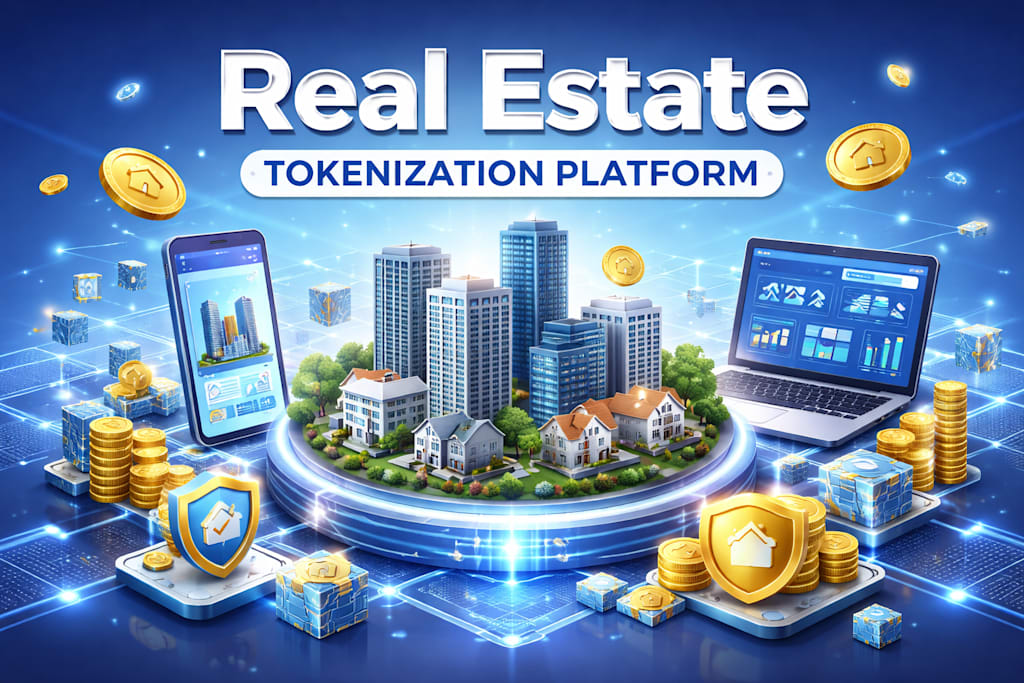
Real estate has traditionally been one of the most valuable yet least accessible asset classes in the global economy. High capital requirements, complex legal processes, and low liquidity have limited participation to institutional investors and high-net-worth individuals. By 2030, real estate tokenization is expected to significantly reshape this structure by introducing blockchain-based fractional ownership, global accessibility, and programmable investment systems.
Tokenization converts physical property into digital tokens on a blockchain, where each token represents a fraction of ownership or economic rights tied to the asset. This transformation is not just a technological upgrade it represents a fundamental shift in how property is bought, sold, financed, and managed.
Understanding Real Estate Tokenization
Real estate tokenization is the process of converting ownership rights in a physical property into digital tokens recorded on a blockchain. Each token represents a share of the underlying asset, allowing multiple investors to own fractions of a single property.
Instead of purchasing an entire building or unit, investors can buy small portions of high-value assets. This model is made possible through smart contracts, which automate ownership distribution, compliance, and transaction settlement.
By 2030, this structure is expected to become a standard investment model as financial markets integrate blockchain-based infrastructure more deeply.
Why Real Estate Needs Transformation
The traditional real estate investment system has several long-standing limitations:
- High entry barriers requiring large capital
- Slow and paperwork-heavy transactions
- Limited liquidity due to long holding periods
- Dependence on intermediaries such as brokers, banks, and legal agents
These inefficiencies make real estate difficult to trade compared to equities or digital assets. Real estate tokenization directly addresses these issues by digitizing ownership and enabling faster, more flexible transactions.
Key Ways Tokenization Will Transform Property Investment by 2030
1. Fractional Ownership Becomes the New Norm
By 2030, full property ownership will no longer be the only investment route. Tokenization enables fractional ownership, where a property is divided into thousands or even millions of digital shares.
This will allow:
- Small investors to access high-value properties
- Portfolio diversification across multiple regions
- Reduced financial risk per investment
Instead of investing in a single property, investors may hold shares across global residential, commercial, and industrial assets.
2. Liquidity in Real Estate Markets Will Increase Dramatically
One of the biggest limitations of real estate today is illiquidity. Selling a property can take weeks or months due to legal processes and buyer dependency. Tokenization introduces secondary markets where property tokens can be traded like stocks. This creates:
- Faster exit opportunities
- Continuous market pricing
- Lower friction in asset transfers
Research indicates that tokenization can significantly improve liquidity by enabling easier fractional trading of real estate assets. However, liquidity will depend heavily on market adoption and regulatory clarity.
3. Global Access to Real Estate Investment
By 2030, geographic restrictions in real estate investing will weaken significantly. Tokenized platforms will allow investors from anywhere in the world to participate in property markets across different countries.
This will result in:
- Cross-border investment opportunities
- Exposure to emerging real estate markets
- Increased capital flow into developing economies
Developers will also benefit, as they can raise funds from global investors rather than relying solely on local financing systems.
4. Faster and Automated Transactions Through Smart Contracts
Traditional property transactions involve banks, brokers, escrow agents, and legal documentation. Tokenization replaces many of these intermediaries with smart contracts.
These contracts can:
- Automate ownership transfers
- Enforce compliance rules
- Distribute rental income automatically
- Execute instant settlements
By 2030, property transactions that once took weeks may be completed in minutes, significantly reducing operational friction.
5. Real Estate Becomes a Programmable Financial Asset
Tokenization transforms real estate from a static asset into a programmable financial instrument. This means property ownership can be integrated into decentralized finance (DeFi) systems.
Potential applications include:
- Using tokenized property as collateral for loans
- Automated rental yield distribution
- Real-time asset valuation updates
- Fractional reinvestment mechanisms
This integration will blur the line between traditional real estate and digital financial markets.
6. Increased Transparency and Reduced Fraud
Blockchain technology introduces immutable records of ownership and transactions. This reduces risks associated with:
- Title fraud
- Ownership disputes
- Hidden transaction histories
Every transaction is recorded on a transparent ledger, making property ownership verification significantly easier.
7. Lower Entry Barriers for Retail Investors
Real estate has traditionally required large capital commitments. Tokenization significantly lowers entry barriers by allowing investments with smaller amounts.
By 2030, this will:
- Expand participation to retail investors
- Increase financial inclusion
- Encourage younger investors to enter real estate markets earlier
This democratization is expected to be one of the most impactful changes in property investment.
Market Growth and Institutional Adoption
The tokenized real estate market is projected to expand significantly over the next decade, with broader tokenized asset markets potentially reaching trillions of dollars by 2030.
Institutional investors are already exploring tokenization to improve:
- Portfolio diversification
- Operational efficiency
- Access to global capital markets
As regulatory frameworks mature, adoption is expected to accelerate further.
Real-World Use Cases Emerging Today
Even before 2030, tokenization is already being applied in several areas:
Residential Real Estate
- Fractional ownership of apartments and housing units
- Shared rental income distribution
Commercial Properties
- Office spaces and co-working hubs
- Retail and shopping complexes
Luxury Assets
- Hotels and resorts
- High-value investment properties
Developer Financing
- Token-based fundraising for new construction projects
- Early-stage capital formation through global investors
These early applications provide a foundation for large-scale adoption by 2030.
Challenges That Must Be Solved Before 2030
Despite its potential, real estate tokenization still faces several challenges:
1. Regulatory Uncertainty
Different countries classify tokenized assets differently, creating compliance complexity.
2. Market Liquidity Constraints
Tokenized assets require active secondary markets; otherwise, liquidity benefits remain theoretical.
3. Technology and Security Risks
Smart contract vulnerabilities and platform risks must be addressed to ensure investor trust.
4. Investor Awareness
Many traditional investors still lack understanding of blockchain-based property ownership models. These challenges must be resolved through global regulatory coordination and infrastructure development.
The Role of Institutional Finance in 2030
By 2030, institutional players are expected to play a central role in tokenized real estate markets. Large asset managers, banks, and investment firms will likely integrate tokenized assets into their portfolios.
This will bring:
- Greater market stability
- Improved liquidity depth
- Standardized compliance frameworks
Institutional involvement will also help bridge the gap between traditional finance and blockchain-based systems.
Long-Term Impact on Global Real Estate Markets
By 2030, real estate tokenization is expected to fundamentally reshape global property markets in several ways:
- Property ownership becomes more divisible and accessible
- Real estate behaves more like a liquid financial asset
- Cross-border investment becomes seamless
- Capital flows into real estate become more efficient
- New financial products emerge around tokenized property
Ultimately, real estate will transition from a rigid, location-bound asset class to a dynamic, globally traded digital investment ecosystem.
Conclusion
Real estate tokenization represents one of the most significant structural shifts in property investment since the modernization of financial markets. By 2030, it is expected to redefine how ownership is distributed, how assets are traded, and how investors interact with real estate.
While challenges such as regulation, liquidity, and adoption remain, the underlying trajectory points toward a more accessible, transparent, and efficient global property market. Tokenization will not eliminate traditional real estate, but it will reshape its accessibility and functionality in ways that fundamentally expand participation and liquidity. The transformation is already underway, and by 2030,
About the Creator
Gabrielle
Blockchain enthusiast and NFT writer dedicated to merging technology with art on decentralized platforms, driving innovation for a creative future. Embracing the potential of digital expression.
Enjoyed the story? Support the Creator.
Subscribe for free to receive all their stories in your feed.
Comments
There are no comments for this story
Be the first to respond and start the conversation.