
How Can White Label Tokenization Platforms Boost Digital Asset Growth?
White Label Tokenization Platforms Boost Digital Asset Growth

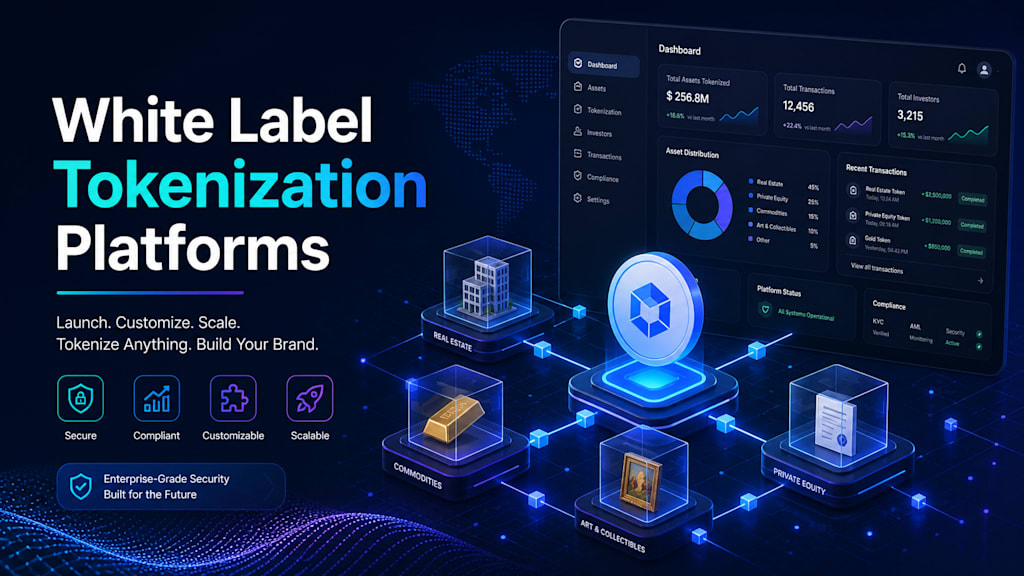
The rise of blockchain and digital asset ecosystems has created a growing demand for tokenization solutions that are flexible, scalable, and easy to deploy. White-label tokenization platforms have emerged as a critical driver in this landscape, providing organizations the ability to launch digital assets quickly without building the underlying infrastructure from scratch. By offering customizable, pre-built solutions, these platforms can accelerate the growth of digital assets across industries, including real estate, finance, supply chain, and entertainment.
Understanding White-Label Tokenization Platforms
A white-label tokenization platform is a ready-made solution that allows businesses to create, issue, and manage digital tokens under their own brand. These platforms include the technological infrastructure, security protocols, smart contract templates, compliance mechanisms, and often user interfaces that organizations can customize to fit their specific needs. Unlike building a tokenization system from scratch, white-label solutions drastically reduce development time, technical complexity, and operational costs.
White-label tokenization platforms support a wide range of digital assets, including security tokens, utility tokens, stablecoins, and tokenized real-world assets. By abstracting the technical and regulatory complexities, these platforms empower companies to focus on strategy, branding, and market adoption while ensuring compliance and security standards are met.
Key Ways White Label Platforms Drive Digital Asset Growth
1. Reduced Time to Market
One of the most significant advantages of white-label tokenization platforms is the reduction in development time. Launching a digital asset traditionally requires extensive blockchain development, smart contract auditing, and integration with regulatory frameworks. White-label solutions provide pre-built frameworks, enabling businesses to issue tokens in a fraction of the time. Faster deployment allows companies to capture market opportunities promptly, especially in fast-evolving sectors like decentralized finance (DeFi) and digital collectibles.
2. Lower Technical and Operational Barriers
Tokenization involves complex technologies such as smart contracts, decentralized ledgers, and secure wallet integration. For many companies, particularly startups and traditional businesses, building and maintaining such infrastructure can be prohibitively expensive and technically challenging. White-label platforms eliminate these barriers by providing turnkey solutions with integrated blockchain protocols, compliance tools, and transaction management systems. This accessibility encourages more businesses to enter the tokenization ecosystem, increasing overall digital asset issuance and adoption.
3. Customization and Brand Identity
White-label platforms allow businesses to fully customize the user interface, branding, and token economics while relying on a proven technological backbone. This flexibility enhances market credibility and fosters customer trust, which is essential for the adoption of digital assets. Businesses can differentiate their offerings with unique features, loyalty programs, or governance models while leveraging the reliability of established blockchain infrastructure.
4. Enhanced Compliance and Security
Regulatory compliance is a critical factor in the growth of digital assets. White-label tokenization platforms often include built-in compliance mechanisms, such as KYC (Know Your Customer) and AML (Anti-Money Laundering) verification, regional regulatory integration, and smart contract auditing. These features reduce the risk of legal complications and provide assurance to investors, encouraging broader adoption. Additionally, advanced security protocols protect against fraud, hacking, and token mismanagement, ensuring the integrity of the digital asset ecosystem.
5. Scalability and Interoperability
Digital asset markets are highly dynamic, requiring scalable platforms that can handle high transaction volumes, cross-chain interoperability, and integration with third-party applications. White-label solutions are typically designed to support rapid scaling and integration, enabling businesses to expand their offerings without reengineering the infrastructure. This scalability is essential for digital assets that target global markets or aim to facilitate real-time trading and liquidity across multiple platforms.
6. Enabling New Revenue Streams
By leveraging white-label tokenization, businesses can explore new revenue models such as fractional ownership, token-based access, loyalty rewards, and revenue-sharing structures. For instance, tokenizing real estate or digital content allows fractional investment or usage rights, creating liquidity and monetization opportunities that were previously unavailable. These innovative financial models attract new participants and stimulate market activity, contributing to the overall growth of digital assets.
7. Driving Market Adoption
Ease of use, trust, and regulatory compliance are key factors influencing the adoption of digital assets. White-label platforms simplify onboarding for both businesses and end-users, often providing intuitive dashboards, secure wallets, and transaction analytics. By lowering the friction for participation, these platforms expand the user base and accelerate the adoption of tokenized assets in mainstream markets.
The Future Impact of White Label Tokenization Platforms
As the digital asset market matures, white label tokenization platforms are expected to play an increasingly critical role in driving adoption and growth. Key trends include:
- Integration with Decentralized Finance (DeFi): Tokenized assets can be utilized in lending, staking, and liquidity provision, creating new revenue streams and financial opportunities.
- Cross-Asset Tokenization: Platforms will support diverse asset classes, from real estate and commodities to intellectual property and carbon credits, expanding the range of investable assets.
- Interoperability Across Blockchains: White label solutions will increasingly support multiple blockchain networks, allowing tokenized assets to move seamlessly between ecosystems.
- Institutional Adoption: Large financial institutions may leverage white label platforms to launch compliant digital asset offerings at scale, providing credibility and liquidity to the market.
Conclusion
White label tokenization platforms are fundamentally reshaping the digital asset landscape by lowering entry barriers, enhancing regulatory compliance, and enabling rapid deployment of secure and scalable tokenized solutions. By providing flexible, customizable, and cost-effective infrastructure, these platforms empower businesses to focus on strategy, investor engagement, and market expansion. As a result, white label tokenization is not just a technological tool it is a growth catalyst that accelerates adoption, liquidity, and global participation in the digital asset ecosystem.
By 2026, businesses leveraging white label tokenization solutions will be better positioned to capitalize on emerging trends, expand their reach, and drive the next wave of digital asset growth.
About the Creator
Gabrielle
Blockchain enthusiast and NFT writer dedicated to merging technology with art on decentralized platforms, driving innovation for a creative future. Embracing the potential of digital expression.
Enjoyed the story? Support the Creator.
Subscribe for free to receive all their stories in your feed.
Comments
There are no comments for this story
Be the first to respond and start the conversation.