
How Can White Label Real Estate Tokenization Simplify Multi-Asset Property Integration?
White Label Real Estate Tokenization Simplify Multi-Asset Property Integration

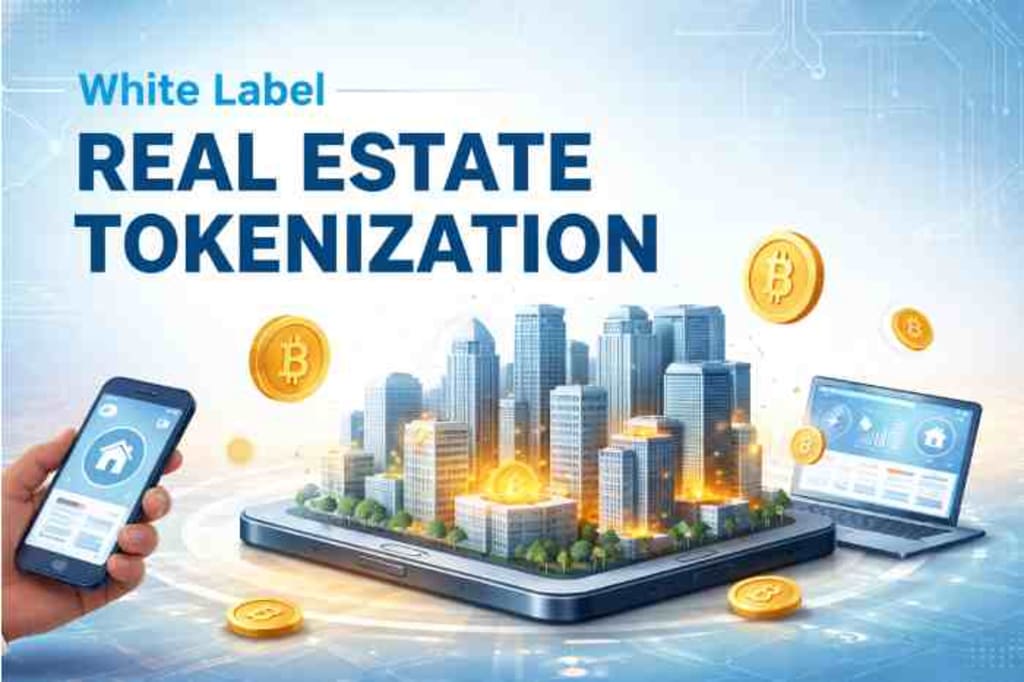
Managing multiple real estate assets across different locations, ownership structures, and financial systems has traditionally been a complex and resource-intensive process. Real estate portfolios often include residential units, commercial spaces, industrial facilities, and mixed-use developments, each governed by different legal frameworks, valuation methods, and operational workflows. Integrating these assets into a unified system for investment, management, and trading has long been a challenge.
White label real estate tokenization introduces a structured approach to solving this problem. By combining blockchain-based asset representation with pre-built, customizable platforms, white label solutions enable organizations to bring diverse property assets into a single digital ecosystem. These platforms abstract technical complexity while allowing asset owners to standardize, tokenize, and manage multiple properties efficiently.
Understanding Multi-Asset Property Integration
Multi-asset property integration refers to the process of consolidating different types of real estate assets into a unified system for ownership tracking, valuation, and transactional activity. This includes:
- Residential properties such as apartments and housing units
- Commercial assets including office spaces and retail centers
- Industrial facilities such as warehouses and logistics hubs
- Hospitality assets like hotels and resorts
Each asset type comes with distinct characteristics, rental yields, occupancy cycles, regulatory constraints, and market behavior. Traditionally, these assets are managed through separate systems, resulting in fragmented data, inconsistent reporting, and operational inefficiencies.
What Is White Label Real Estate Tokenization?
White label real estate tokenization refers to pre-built blockchain platforms that allow organizations to tokenize property assets under their own brand. These platforms provide the underlying infrastructure smart contracts, token standards, compliance modules, and user interfaces while enabling customization to meet specific business requirements.
Instead of building a tokenization system from scratch, organizations can deploy a ready-made solution and focus on integrating assets, onboarding investors, and managing operations. This significantly reduces development time and complexity.
White label platforms are particularly effective for multi-asset environments because they are designed with modular architectures that support different asset types within a single ecosystem.
How White Label Tokenization Simplifies Multi-Asset Integration
Standardized Digital Asset Framework
White label platforms convert diverse property assets into standardized digital tokens. Regardless of asset type, each property is represented as a token with defined attributes such as ownership rights, valuation metrics, and income distribution rules. This standardization enables different assets to coexist within a unified framework, simplifying integration and management.
Unified Asset Registry
White label real estate tokenization platforms maintain a single, blockchain-based registry of all assets. This registry acts as a centralized source of truth, recording ownership, transaction history, and asset metadata. For multi-asset portfolios, this eliminates the need for separate databases and ensures consistency across all properties.
Modular Smart Contract Architecture
White label solutions use modular smart contracts that can be customized for different asset types. For example:
- Residential properties may include rental income distribution logic
- Commercial assets may incorporate lease management features
- Industrial properties may require logistics-related parameters
This modularity allows diverse assets to be integrated without compromising their unique characteristics.
Automated Ownership and Fractionalization
Tokenization enables fractional ownership, allowing assets to be divided into smaller units. White label platforms automate this process, making it easier to integrate assets with different ownership structures. Investors can hold fractions of multiple properties within a single portfolio, enhancing diversification and simplifying asset management.
Cross-Asset Interoperability
White label platforms are designed to support interoperability between different asset types. This means that tokens representing various properties can interact within the same ecosystem. For example, investors can trade shares of residential and commercial properties on a unified marketplace, or use one asset as collateral for another financial activity.
Integrated Compliance Frameworks
Compliance is embedded into the platform through programmable rules. These include:
- Identity verification requirements
- Jurisdictional restrictions
- Investment limits
By standardizing compliance across assets, white label solutions simplify integration in multi-regulatory environments.
Unified Investor Interface
White label platforms provide a single interface where investors can view, manage, and trade multiple property assets. This enhances user experience and reduces the complexity associated with managing diverse investments. A unified dashboard allows for consolidated reporting, performance tracking, and portfolio management.
Real-Time Data Synchronization
Blockchain-based systems enable real-time updates to asset data. Changes in ownership, valuation, or income distribution are instantly reflected across the platform. This eliminates delays and ensures that all stakeholders have access to accurate, up-to-date information.
Benefits of Simplified Multi-Asset Integration
Portfolio Diversification
Investors can access multiple property types within a single platform, enabling diversified portfolios without the need for separate investment channels.
Improved Liquidity Across Assets
Tokenization introduces tradability to traditionally illiquid assets. By integrating multiple properties into a unified marketplace, liquidity is enhanced across the entire portfolio.
Operational Efficiency
Automation reduces the need for manual processes, lowering costs and improving scalability. Asset managers can oversee large portfolios with greater efficiency.
Enhanced Transparency
A unified ledger provides clear visibility into asset ownership and transactions, increasing trust among participants.
Scalability for Global Expansion
White label platforms support cross-border asset integration, enabling organizations to expand their portfolios globally without significant infrastructure changes.
Use Cases in Multi-Asset Tokenization
Real Estate Investment Platforms
Platforms can integrate residential, commercial, and industrial properties into a single investment ecosystem, offering diversified opportunities to investors.
Institutional Asset Management
Large institutions can manage multiple property portfolios through a unified system, improving reporting and operational efficiency.
Hospitality and Mixed-Use Developments
Hotels, resorts, and mixed-use properties can be tokenized alongside other assets, creating integrated investment opportunities.
Cross-Border Property Integration
Tokenization enables assets from different regions to be included in a single platform, simplifying international investment.
Challenges and Considerations
While white label tokenization simplifies integration, certain considerations remain:
Customization Limitations
Pre-built platforms may require adjustments to meet specific business needs.
Regulatory Alignment
Ensuring compliance across multiple jurisdictions remains a complex task.
Technology Integration
Existing systems must be aligned with the tokenization platform for seamless operation.
Market Adoption
The success of multi-asset integration depends on user adoption and market participation.
Future Outlook
White label real estate tokenization is expected to play a central role in the evolution of property investment infrastructure. As blockchain technology matures and regulatory frameworks become clearer, the integration of diverse real estate assets will become more streamlined.
Future developments may include:
- Greater standardization of token frameworks
- Enhanced cross-chain interoperability
- Integration with decentralized financial systems
- Advanced analytics for portfolio optimization
These advancements will further strengthen the ability of white label platforms to support complex, multi-asset environments.
Conclusion
White label real estate tokenization provides a practical and efficient solution to the challenges of multi-asset property integration. By offering standardized frameworks, modular architectures, and automated processes, these platforms enable diverse real estate assets to be unified within a single ecosystem.
This approach reduces fragmentation, enhances interoperability, and improves the overall efficiency of property investment systems. As the financial landscape continues to evolve, white label tokenization will serve as a key enabler of integrated, scalable, and globally accessible real estate markets.
About the Creator
Gabrielle
Blockchain enthusiast and NFT writer dedicated to merging technology with art on decentralized platforms, driving innovation for a creative future. Embracing the potential of digital expression.
Enjoyed the story? Support the Creator.
Subscribe for free to receive all their stories in your feed.
Comments
There are no comments for this story
Be the first to respond and start the conversation.