
How Are Startups and Enterprises Capitalizing on the Tokenization of Real-World Assets?
Startups and Enterprises Capitalizing on the Tokenization of Real-World Assets

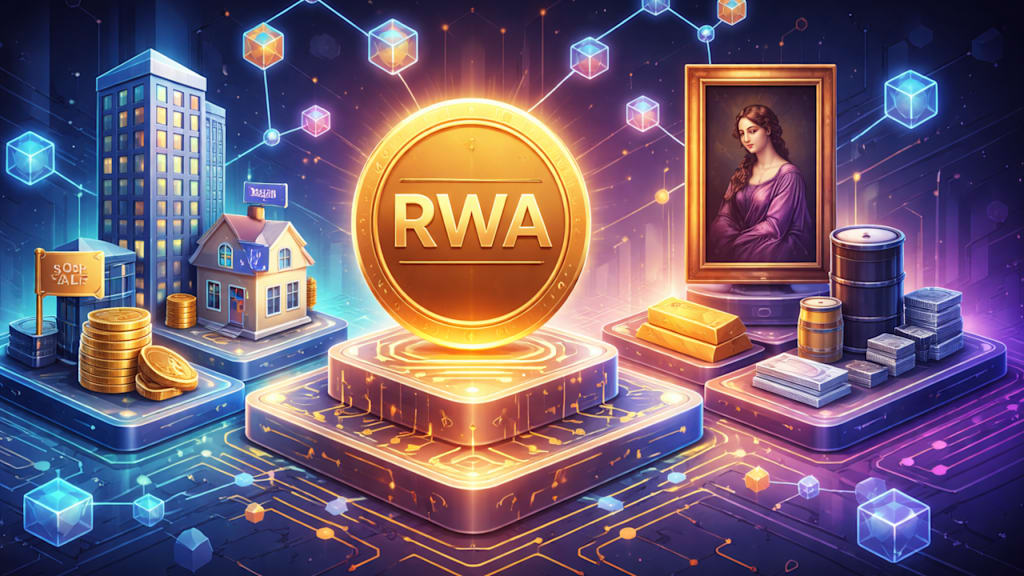
The financial and investment ecosystem is entering a new phase where physical and traditional financial assets are increasingly being represented as blockchain-based digital tokens. This transformation, widely known as Real-World Asset (RWA) tokenization, is reshaping how startups and enterprises raise capital, manage liquidity, distribute ownership, and access global investment markets. From commercial real estate and private equity to commodities, invoices, infrastructure assets, and treasury products, organizations across industries are leveraging tokenization to modernize asset management and unlock new economic opportunities.
The rise of blockchain infrastructure, evolving regulatory clarity, institutional participation, and decentralized finance integration has accelerated the adoption of RWA tokenization across global markets. Reports published in 2026 indicate that tokenized real-world assets have grown significantly, with institutional participation increasing rapidly across sectors including finance, real estate, and private credit.
Understanding Real-World Asset Tokenization
Real-world asset tokenization refers to the process of converting ownership rights of physical or financial assets into blockchain-based digital tokens. These tokens represent fractional or full ownership of assets such as:
Real estate properties
Government bonds
Commodities
Art and collectibles
Infrastructure projects
Each token is recorded on a blockchain ledger and can include programmable rules through smart contracts. This structure enables automated compliance, transparent ownership records, dividend distribution, and near-real-time settlement.
Unlike traditional ownership systems that rely heavily on intermediaries, tokenization creates a digital framework where assets can be traded, managed, and transferred more efficiently. Researchers have described RWA tokenization as a transition from static ownership systems toward programmable financial infrastructure capable of automated settlement and algorithmic collateralization.
Why Startups Are Rapidly Adopting Asset Tokenization
Startups often face major challenges in raising capital, accessing liquidity, and competing with larger financial institutions. Real-world asset tokenization provides a solution by lowering barriers to investment participation and creating globally accessible fundraising models.
Fractional Ownership Creates Broader Investment Access
One of the biggest advantages for startups is the ability to divide high-value assets into smaller digital shares. Instead of requiring large institutional investments, startups can attract retail investors through fractional ownership.
For example, a startup developing a commercial real estate project can tokenize the property into thousands of smaller units, enabling global investors to participate with relatively small amounts of capital. This approach dramatically expands the investor base while improving liquidity.
Industry discussions around RWA adoption repeatedly highlight fractional ownership as one of the primary drivers of startup participation in tokenized ecosystems.
Alternative Fundraising Models
Traditional fundraising processes can be expensive, slow, and geographically restricted. Venture capital funding often involves lengthy negotiations, equity dilution, and complex legal structures.
Tokenization allows startups to launch digital asset offerings that represent equity, revenue shares, or ownership rights tied to real-world assets. Smart contracts automate investment management and reduce administrative overhead.
This model enables startups to:
- Raise funds globally
- Reduce dependency on intermediaries
- Access liquidity earlier
- Improve transparency for investors
- Automate compliance procedures
As blockchain adoption grows, startups are increasingly using tokenization to create more flexible capital formation strategies.
Building New Revenue Streams
Many startups are building entire business models around RWA tokenization infrastructure. These companies provide:
- Asset tokenization platforms
- Compliance systems
- Smart contract frameworks
- Digital custody solutions
- Secondary trading marketplaces
- Token issuance infrastructure
This growing ecosystem has created a new generation of blockchain startups focused specifically on bridging traditional finance with decentralized technologies.
How Enterprises Are Leveraging RWA Tokenization
Large enterprises are adopting tokenization for different reasons than startups. While startups often focus on fundraising and accessibility, enterprises are prioritizing efficiency, settlement speed, liquidity optimization, and operational automation.
Improving Liquidity for Illiquid Assets
Many enterprise-held assets are difficult to trade efficiently. Commercial real estate, private debt, infrastructure investments, and private equity typically require lengthy settlement processes and large capital commitments.
Tokenization transforms these traditionally illiquid assets into divisible digital units that can be traded more efficiently across blockchain networks. Major institutions including banks, asset managers, and exchanges are increasingly exploring tokenized financial products to improve liquidity and operational performance.
Faster Settlement and Reduced Operational Costs
Traditional financial settlement systems can take several days to complete transactions because they involve multiple intermediaries, clearing systems, and manual verification processes.
Blockchain-based tokenized systems significantly reduce settlement times through smart contracts and distributed ledgers. According to community discussions surrounding institutional adoption, businesses are experiencing measurable improvements in settlement speed and operational cost reduction through tokenized asset systems.
Enterprises benefit from:
- Near real-time settlement
- Reduced paperwork
- Lower intermediary costs
- Improved auditability
- Enhanced transparency
- Automated reconciliation
These improvements help enterprises streamline financial operations while reducing infrastructure complexity.
Expanding Global Market Participation
Traditional investment systems are often geographically fragmented and heavily dependent on local financial infrastructure. Tokenization enables enterprises to reach a broader global investor base through blockchain-enabled accessibility.
This is especially valuable for:
- Real estate investment firms
- Infrastructure developers
- Commodity trading companies
- Alternative investment managers
- Private credit institutions
Global accessibility improves capital efficiency while expanding investment participation across international markets.
The Rise of Institutional Adoption
Institutional participation has become one of the strongest indicators that RWA tokenization is evolving into a mainstream financial framework. Major financial organizations are now exploring or deploying tokenized products involving treasury assets, bonds, money market funds, and securities. Reports suggest that tokenized treasury markets alone are expanding rapidly as institutions seek faster settlement and programmable financial infrastructure.
Financial institutions are particularly attracted to tokenization because it enables:
- Improved collateral management
- Programmable compliance
- Enhanced transparency
- Cross-border settlement efficiency
- Better liquidity management
The increasing participation of institutional investors also improves credibility and regulatory acceptance for the broader tokenization ecosystem.
Real Estate Tokenization as a Leading Use Case
Among all asset categories, real estate remains one of the most prominent applications of RWA tokenization.
Traditional real estate investment is typically associated with:
- High entry barriers
- Limited liquidity
- Complex ownership structures
- Slow transaction processing
Tokenization addresses these limitations by enabling fractional ownership and digital trading mechanisms.
Property developers, real estate startups, and investment firms are increasingly using tokenization to:
- Attract global investors
- Raise capital faster
- Simplify ownership transfers
- Improve secondary market activity
- Reduce transaction friction
Industry discussions consistently identify real estate as one of the fastest-growing sectors within the tokenized asset ecosystem.
Tokenized Treasury and Bond Markets
Government securities and treasury products are emerging as major institutional tokenization markets.
Tokenized treasury funds provide several advantages:
- Faster settlement
- Continuous market access
- Improved liquidity
- Enhanced collateral efficiency
- Programmable financial product
Large institutions including global banks and asset managers are actively experimenting with tokenized treasury infrastructure. The rapid growth of tokenized treasury products demonstrates how traditional financial markets are gradually integrating blockchain-based systems into mainstream operations.
Integration with Decentralized Finance (DeFi)
One of the most transformative developments in RWA tokenization is its integration with decentralized finance ecosystems.
Tokenized assets can now be used within DeFi protocols for:
- Lending
- Borrowing
- Yield generation
- Collateralization
- Automated trading
This integration creates new forms of capital efficiency by connecting traditional assets with blockchain-native financial systems. For startups, DeFi integration creates alternative liquidity opportunities. For enterprises, it expands the utility and accessibility of tokenized assets. As the market evolves, analysts expect increasing convergence between traditional finance and decentralized financial infrastructure.
Compliance and Regulatory Evolution
Regulatory clarity remains one of the most important factors influencing enterprise adoption. Historically, uncertainty around securities laws, investor protections, and digital asset classifications slowed institutional participation. However, evolving frameworks in multiple jurisdictions are helping enterprises adopt tokenization with greater confidence.
Reports indicate that regulatory progress in regions including Europe, Asia, and North America is accelerating institutional involvement in tokenized markets.
Compliance-focused tokenization systems now incorporate:
- Know Your Customer (KYC) verification
- Anti-Money Laundering (AML) procedures
- Transfer restrictions
- Jurisdiction-based access controls
- Automated reporting systems
This regulatory alignment is essential for scaling institutional-grade tokenization ecosystems.
Emerging Industries Exploring RWA Tokenization
Although finance and real estate dominate current adoption trends, many additional industries are beginning to explore tokenization opportunities.
Infrastructure and Energy
Infrastructure projects often require large amounts of capital and involve long investment cycles. Tokenization enables fractional participation and more flexible fundraising structures for infrastructure development. Energy-related assets such as renewable energy projects and carbon credits are also being tokenized to improve sustainability-focused investment participation.
Supply Chain and Trade Finance
Trade finance systems frequently suffer from inefficiencies, paperwork delays, and fragmented verification processes. Tokenization improves supply chain transparency while enabling programmable invoice financing and automated settlement systems.
Telecommunications and Network Infrastructure
Research is also exploring how network resources and communication infrastructure can be tokenized to improve liquidity and operational flexibility in next-generation digital ecosystems.
The Competitive Advantage for Early Adopters
Despite these challenges, startups and enterprises that adopt tokenization early may gain significant competitive advantages.
Benefits include:
- Faster capital access
- Improved operational efficiency
- Expanded investor participation
- Lower administrative costs
- Enhanced transparency
- Global market reach
- Better liquidity management
Organizations that successfully integrate tokenization infrastructure may also position themselves ahead of future digital financial transformation trends.
Future Outlook of Real-World Asset Tokenization
Industry analysts increasingly describe tokenization as one of the most important long-term developments in modern finance. Forecasts suggest the tokenized asset market could grow dramatically over the next decade as institutional adoption accelerates and blockchain infrastructure matures.
Several trends are expected to shape the future of RWA tokenization:
- Institutional-grade blockchain infrastructure
- Cross-chain interoperability
- AI-driven asset valuation systems
- Automated compliance frameworks
- Expansion of tokenized treasury markets
- Greater DeFi integration
- Growth of secondary trading platforms
As these systems mature, tokenization may fundamentally transform how ownership, investment, and capital formation operate across global markets.
Conclusion
Startups and enterprises are capitalizing on the tokenization of real-world assets by transforming how assets are funded, owned, traded, and managed. What began as a blockchain-driven innovation is now evolving into a broader financial infrastructure movement that connects traditional assets with programmable digital systems.
For startups, tokenization provides access to global capital, fractional ownership models, and alternative fundraising opportunities. For enterprises, it offers liquidity optimization, operational efficiency, and faster settlement infrastructure capable of modernizing traditional financial systems.
About the Creator
Gabrielle
Blockchain enthusiast and NFT writer dedicated to merging technology with art on decentralized platforms, driving innovation for a creative future. Embracing the potential of digital expression.
Enjoyed the story? Support the Creator.
Subscribe for free to receive all their stories in your feed.
Comments
There are no comments for this story
Be the first to respond and start the conversation.