
How Are Real-World Asset Tokenization Services Opening New Markets for Enterprises?
Real World Asset Tokenization Services Opening New Markets for Enterprises

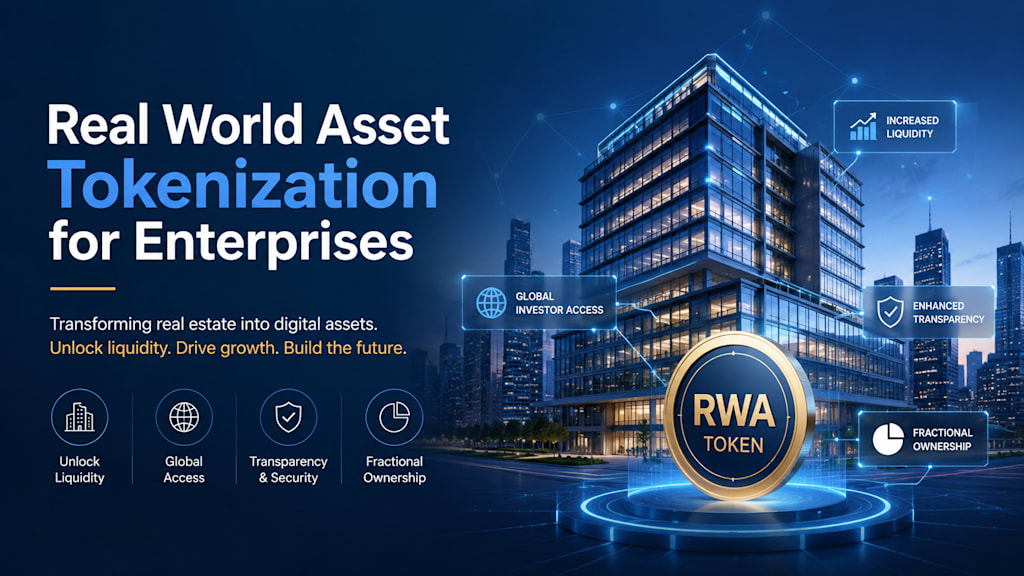
Businesses across industries are constantly seeking new ways to unlock value from their assets, attract investors, and expand into previously inaccessible markets. Traditional asset ownership models often limit liquidity, restrict investor participation, and create operational inefficiencies. These challenges are particularly evident in asset classes such as real estate, infrastructure, commodities, private equity, and intellectual property.
Real World Asset (RWA) tokenization is emerging as a transformative solution to these limitations. By converting physical and financial assets into blockchain-based digital tokens, enterprises can create more accessible, transparent, and liquid markets. As blockchain technology continues to mature, tokenization is becoming a strategic tool that enables businesses to reach global investors, optimize capital allocation, and develop innovative business models.
What is Real World Asset Tokenization?
Real World Asset tokenization refers to the process of representing ownership rights of tangible or intangible assets as digital tokens on a blockchain network. These tokens can represent full ownership, fractional ownership, revenue rights, or other economic interests associated with an asset. Blockchain technology provides a secure and transparent infrastructure for recording ownership, managing transactions, and automating contractual obligations through smart contracts. As a result, enterprises can digitize traditionally illiquid assets and make them easier to trade, transfer, and manage.
Assets commonly tokenized include:
- Real estate properties
- Infrastructure projects
- Precious metals and commodities
- Private equity investments
- Art and collectibles
- Intellectual property rights
- Revenue-generating business assets
Breaking Traditional Market Barriers
Expanding Access to Global Investors
One of the most significant advantages of RWA tokenization is its ability to remove geographical barriers that traditionally limit investment opportunities. In conventional markets, investors often face regulatory complexities, high transaction costs, and operational hurdles when investing across borders. Tokenized assets can be offered through blockchain-based platforms that provide standardized ownership structures and streamlined participation processes. This allows enterprises to access a much broader investor base, including international participants who may not have been able to invest through traditional channels.
Lowering Investment Thresholds Through Fractional Ownership
Many valuable assets require substantial capital commitments, limiting participation to institutional investors or high-net-worth individuals. Tokenization enables enterprises to divide assets into smaller digital units that can be purchased individually. This fractional ownership model lowers entry barriers and opens investment opportunities to a larger pool of participants. For enterprises, this means increased fundraising flexibility and access to new market segments that were previously excluded due to high investment requirements.
Creating Liquidity in Traditionally Illiquid Markets
Assets such as commercial real estate, infrastructure developments, and private equity investments are often difficult to buy or sell quickly. Real World Asset tokenization introduces liquidity by enabling assets to be traded as digital tokens. Investors can purchase and transfer ownership interests more efficiently than in traditional markets.
Greater liquidity benefits enterprises by:
- Accelerating capital formation
- Improving asset utilization
- Reducing holding periods
- Increasing investor confidence
As liquidity improves, enterprises can unlock value from assets that might otherwise remain dormant for extended periods.
Enabling New Financing Opportunities
Traditional financing models often rely on loans, venture capital, or institutional funding sources. These options can be costly, restrictive, or difficult to access. Tokenization provides alternative fundraising mechanisms by allowing enterprises to issue digital asset-backed tokens directly to investors.
This approach can support:
- Real estate development projects
- Infrastructure investments
- Renewable energy initiatives
- Industrial expansion programs
- Revenue-sharing business models
By diversifying funding sources, enterprises reduce dependence on traditional financing channels and gain greater flexibility in capital management.
Enhancing Transparency and Investor Confidence
Investor trust is critical for market growth. Traditional asset markets often suffer from information asymmetry, limited visibility, and fragmented ownership records. Blockchain technology addresses these challenges through transparent and immutable recordkeeping. Every transaction, ownership transfer, and asset-related activity can be recorded on a distributed ledger.
Benefits include:
- Improved asset traceability
- Reduced fraud risks
- Easier auditing and compliance
- Greater investor confidence
Transparent ecosystems are more attractive to both institutional and retail investors, helping enterprises expand their market reach.
Supporting Secondary Market Development
Traditional private investments often lack efficient secondary markets, making it difficult for investors to exit positions before maturity. Tokenized assets can be designed to support secondary trading environments where ownership interests are transferred more efficiently.
Secondary market access provides several advantages:
- Increased liquidity
- Enhanced price discovery
- Improved investor flexibility
- Greater market participation
For enterprises, active secondary markets can make tokenized offerings more attractive and encourage broader investor engagement.
Unlocking Value from Underutilized Assets
Many enterprises possess valuable assets that generate limited financial returns due to their illiquid nature.
Examples include:
- Land holdings
- Warehouses
- Industrial facilities
- Intellectual property portfolios
- Revenue-generating infrastructure
Tokenization allows businesses to monetize these assets without necessarily selling them outright. By offering fractional ownership or revenue participation models, enterprises can unlock capital while retaining operational control. This creates entirely new market opportunities around assets that may have previously been difficult to leverage effectively.
Facilitating Global Asset Distribution
Blockchain networks operate continuously and are accessible from virtually anywhere in the world. Tokenized assets can be distributed through digital platforms that connect enterprises with investors across multiple jurisdictions. This global reach increases visibility and creates opportunities to enter new markets without establishing extensive physical infrastructure. For enterprises seeking international growth, tokenization serves as a scalable mechanism for expanding investor participation and asset distribution.
Driving Innovation Across Industries
Real World Asset tokenization is not limited to real estate. Enterprises across various sectors are exploring new business models enabled by digital asset ownership.
Examples include:
Real Estate
Fractional ownership of residential, commercial, and industrial properties.
Infrastructure
Tokenized participation in transportation, utilities, and energy projects.
Agriculture
Investment opportunities linked to farmland and agricultural production.
Energy
Tokenized renewable energy projects and revenue-sharing structures.
Intellectual Property
Monetization of patents, copyrights, and licensing revenues.
These innovations create entirely new markets where previously illiquid assets become accessible investment opportunities.
Challenges Enterprises Must Address
While the benefits are substantial, enterprises should carefully evaluate several considerations before launching tokenization initiatives.
Regulatory Compliance
Tokenized assets must comply with securities laws, property regulations, and investor protection requirements.
Technology Infrastructure
Secure blockchain architecture and smart contract development are essential for platform reliability.
Asset Valuation
Accurate valuation methods are necessary to maintain investor trust and market integrity.
Market Education
Many investors and stakeholders are still learning about tokenized asset ecosystems, making education and transparency important components of adoption.
Addressing these challenges is critical for building sustainable tokenization strategies.
The Future of Enterprise Market Expansion Through Tokenization
As regulatory frameworks mature and blockchain adoption accelerates, Real World Asset tokenization is expected to play a growing role in global financial markets.
Future developments may include:
- Expanded institutional participation
- Enhanced interoperability across tokenization platforms
- Integration with decentralized finance ecosystems
- Automated compliance systems
- Broader adoption of digital asset marketplaces
These advancements will further strengthen the ability of enterprises to access capital, attract investors, and create new market opportunities.
Conclusion
Real World Asset tokenization services are opening new markets for enterprises by transforming traditionally illiquid assets into accessible, tradable, and transparent digital investments. Through fractional ownership, global investor access, improved liquidity, and innovative financing models, tokenization enables businesses to unlock value that was previously difficult to access.
As blockchain infrastructure continues to evolve, enterprises that embrace tokenization are likely to benefit from expanded market reach, diversified funding sources, and greater operational efficiency. In the coming years, Real World Asset tokenization is expected to become a fundamental component of modern enterprise growth strategies and digital financial ecosystems.
About the Creator
Gabrielle
Blockchain enthusiast and NFT writer dedicated to merging technology with art on decentralized platforms, driving innovation for a creative future. Embracing the potential of digital expression.
Enjoyed the story? Support the Creator.
Subscribe for free to receive all their stories in your feed.
Comments
There are no comments for this story
Be the first to respond and start the conversation.