
Vintage Pearl Necklace: Your Ultimate Guide to Timeless Elegance
Timeless Allure: Your Ultimate Vintage Pearl Guide

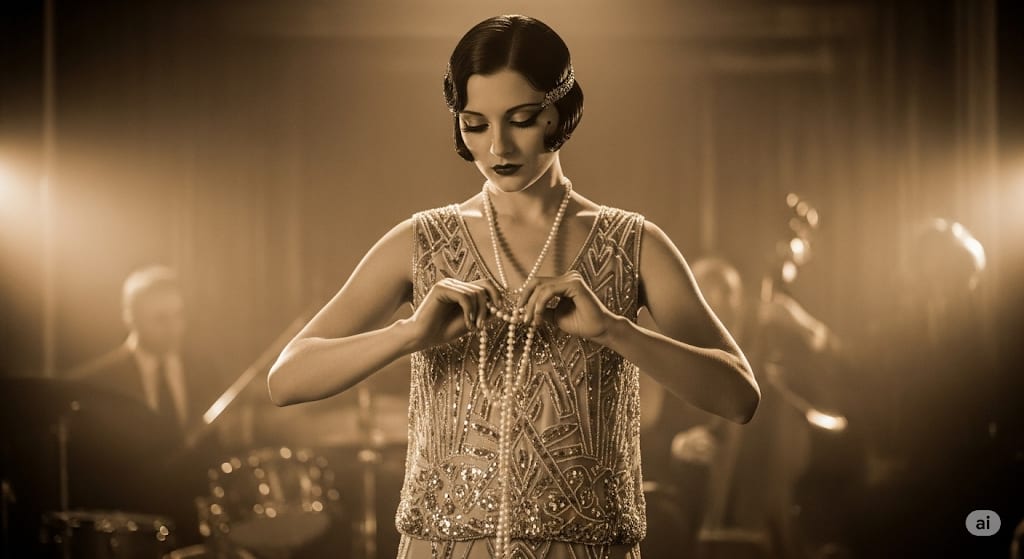
Pearls whisper tales of elegance from bygone eras.
A vintage pearl necklace is more than just jewelry; it's a wearable piece of history. Typically defined as being between 20 and 100 years old, these gems are coveted for their unique character, the superior craftsmanship of their time, and the rich stories they carry, setting them leagues apart from modern, mass-produced accessories.
The Soul of the Sea: What Exactly is a Vintage Pearl Necklace?
Diving into the world of vintage jewelry can feel like becoming a treasure hunter. The language, the history, the subtle cues—it's all part of the adventure. And when it comes to pearls, the terminology can be particularly nuanced. Understanding the difference between "vintage" and "antique," and appreciating the incredible journey of each pearl, is the first step to becoming a true connoisseur. It’s about recognizing that the strand you hold in your hands didn't just appear in a display case; it lived through decades, perhaps witnessing moments of great change and personal joy. This context is what transforms a simple accessory into a profound artifact. It's the difference between buying something beautiful and inheriting a legacy.
Defining "Vintage" vs. "Antique" in Jewelry
Vintage" and "antique" are often used interchangeably, but in the world of jewelry, they hold distinct meanings. Think of it as a timeline. Generally, an item is considered vintage if it's at least 20 to 50 years old, but less than 100. This places most vintage pieces firmly within the 20th century, covering iconic eras like the Art Deco period, the glamorous Mid-Century, and the bold styles of the 70s and 80s. A vintage pearl necklace, therefore, might have graced the neck of a flapper in the 1920s or been a cherished graduation gift in the 1960s. It has had a life and a past, but it's still relatively recent in the grand scheme of history.
On the other hand, antique is a title reserved for items that are 100 years old or more. An antique pearl necklace would hail from the Edwardian, Victorian, or even Georgian eras. These pieces are true historical artifacts, often showcasing craftsmanship and materials that are rare today. The distinction is crucial for both collectors and buyers. It affects value, rarity, and the type of care the piece requires. While a vintage piece speaks of a bygone generation, an antique piece whispers of a forgotten world. Knowing the difference helps you appreciate the specific story your pearls have to tell and ensures you're investing wisely in a piece of the past. It’s a simple rule of thumb: all antiques are vintage, but not all vintage items are antiques.
The Journey of a Pearl: From Ocean Floor to Heirloom
The life of a pearl is a story of beautiful accidents and patient cultivation. It begins with a tiny irritant—a grain of sand or a deliberately inserted bead—finding its way inside an oyster or mollusk. To protect itself, the mollusk secretes layers upon layers of a substance called nacre, the same iridescent material that lines its shell. Over years, these microscopic layers build up, forming the lustrous orb we know as a pearl. For natural pearls, this process is entirely a fluke of nature, making them incredibly rare and valuable. This is why, for centuries, pearls were reserved for royalty and the ultra-wealthy.
The game changed in the early 20th century with the advent of cultured pearls. This process, perfected in Japan, involves humans introducing the irritant to kickstart the nacre production. While guided by human hands, the creation of the pearl is still a natural process within the oyster. This innovation made pearls accessible to a much wider audience and is why most vintage necklaces from the 1920s onwards feature cultured pearls. This journey from a simple irritant to a gleaming gem is miraculous enough, but it doesn't end there. Once harvested and strung into a necklace, its second life begins. It becomes an heirloom, passed from mother to daughter, worn on wedding days, and treasured through generations. Each owner adds a new chapter to its story, infusing the strand with memories and sentiment, transforming it from a beautiful object into a priceless family legacy.
Echoes of Elegance: A Stroll Through Pearl History
Pearls aren't just timeless; they're trendsetters that have defined entire epochs of style. To wear a vintage strand is to connect with the fashionable women who came before you. Each era put its unique spin on this classic gem, from the lavish, long ropes of the Jazz Age to the prim and proper chokers of the 1950s. Understanding this sartorial history doesn't just make you a more informed buyer; it allows you to choose a piece that resonates with a specific aesthetic you love. Are you a free-spirited flapper at heart, or do you channel the polished poise of a Hitchcock heroine? The history of pearl necklaces is a lookbook of iconic styles, each reflecting the social and cultural shifts of its time.
The Roaring Twenties: Flappers and Art Deco Ropes
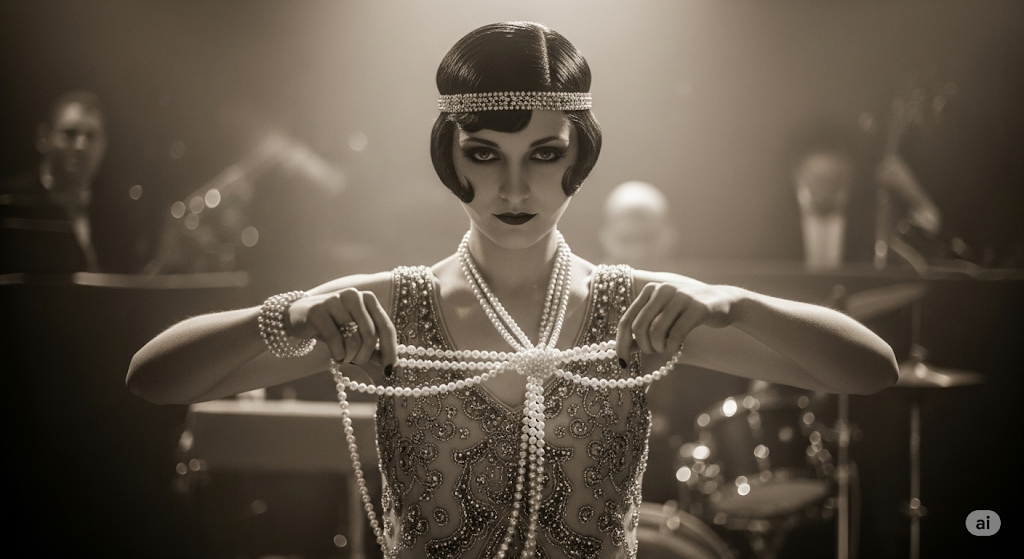
Oh, the Roaring Twenties! It was an era of unprecedented social change, jazz music, and unbridled exuberance. And the fashion? It was revolutionary. As hemlines shot up, so did the length of necklaces. The quintessential pearl look of the 1920s was the "sautoir" or "rope"—an incredibly long strand, often over 35 inches, that draped dramatically down the front of a flapper's dropped-waist dress. This wasn't just a style choice; it was a statement. The length and movement of the pearls accentuated the new, energetic dances like the Charleston. Women would loop them, knot them at the bottom, or even fling them over their shoulders with carefree abandon.
These long strands were a symbol of liberation and modernism. They perfectly complemented the Art Deco movement's emphasis on geometric lines and sleek silhouettes. Often, these ropes would terminate in an ornate tassel or a decorative pendant, adding another layer of visual interest. Coco Chanel famously championed the idea of wearing ropes of faux pearls, making the look accessible and chic for women of all classes. A vintage Art Deco pearl necklace is more than an accessory; it's a piece of the rebellion and glamour that defined the Jazz Age. It’s for the woman who isn't afraid to make a grand entrance and dance the night away.
Mid-Century Marvels: The Grace Kelly Effect
After the rebellious lengths of the 20s and the austerity of the war years, the 1950s ushered in a return to classic, polished femininity. This was the era of the "New Look," with cinched waists and full skirts, and the jewelry had to match this refined aesthetic. Enter the single-strand choker or princess-length pearl necklace. The ultimate icon of this style was, without a doubt, Grace Kelly. Whether in her films or as the Princess of Monaco, she was rarely seen without her signature single strand of pearls. It was the epitome of understated elegance and quiet luxury.
This look was all about perfection and poise. The pearls were typically uniform in size, perfectly round Akoyas, and they sat neatly at the base of the throat or just on the collarbone. They were the perfect accessory for a crisp shirt, a cashmere sweater set, or an elegant cocktail dress. The Mid-Century pearl necklace wasn't about drama; it was about flawless sophistication. It symbolized domestic bliss, aspirational class, and the polished image of the perfect housewife and hostess. Owning a vintage strand from the 50s or 60s is like owning a piece of that "Mad Men" era glamour. It’s a testament to the enduring power of classic, simple beauty that never, ever goes out of style.
Victorian Era Sentiments: Chokers and Symbolism
Venturing into antique territory, the Victorian era (1837-1901) had a fascinating and deeply symbolic relationship with pearls. Queen Victoria herself adored jewelry, and her tastes dictated the trends for decades. In the early part of her reign, pearls symbolized purity and innocence, making them a popular choice for brides. However, after the death of her beloved Prince Albert, the era plunged into a long period of mourning, and jewelry reflected this somber mood. Pearls, with their tear-like shape, became central to mourning jewelry. They were often set in dark materials like jet or black enamel.
The style of necklaces also varied. Multi-strand chokers, sometimes called "dog collars," were extremely fashionable, often featuring pearl strands spaced with decorative bars of gold or diamonds. These sat high on the neck, reflecting the era's high collars and formal attire. Lockets containing portraits or a lock of hair were also frequently suspended from pearl chains, emphasizing the sentimental nature of jewelry during this time. Seed pearls, tiny and delicate, were painstakingly sewn onto mother-of-pearl backings to create intricate floral and symbolic designs. An antique Victorian pearl piece is imbued with a deep sense of history and emotion. It’s not just an ornament; it’s a relic of an age that communicated love, loss, and status through a rich visual language.
The Authenticity Test: How to Spot a Genuine Vintage Pearl
So, you've found a strand that makes your heart skip a beat. It's nestled in a dusty box at an antique market, and it seems to glow with an inner light. But the big question looms: is it real? Distinguishing genuine vintage pearls from clever imitations is the most crucial skill for any aspiring collector. The market has been flooded with fakes for centuries, some of them surprisingly convincing. But don't worry, you don't need a gemologist's lab to perform a few key field tests. Learning to trust your senses—your touch, your sight, and yes, even your teeth—can help you separate the treasure from the trash. These simple, time-tested methods are your first line of defense in the thrilling hunt for authentic heirloom pearls.
The Tooth Test and Other At-Home Tricks
This is perhaps the most famous—and strangely effective—method for identifying real pearls. Gently rub the pearl against the front of your tooth (make sure your tooth is clean!). A real pearl, whether natural or cultured, is made of layers of nacre, which is crystalline in structure. This gives it a slightly gritty or sandy texture against your tooth. An imitation pearl, typically made of glass or plastic with a smooth coating, will feel perfectly smooth, almost slippery. Be gentle; you don't need to bite down on it! Just a light graze is enough to feel the texture.
Another simple trick is the temperature test. Real pearls are organic gems and feel cool to the touch when you first pick them up. They will gradually warm up against your skin. Most plastic fakes will feel room temperature right away, and glass imitations might feel cool initially but often don't have the same dense, substantive feel. You can also examine the weight. Real pearls have a certain heft to them that plastic imitations lack. A strand of genuine pearls will feel heavier than you might expect. While none of these tests are 100% foolproof on their own, when used together, they create a strong case for authenticity and can give you confidence in your assessment before you decide to buy.
Examining the Clasp: A Telltale Sign of Age
Often, the biggest clue to a necklace's age and quality isn't the pearls themselves, but the tiny piece of metal that holds it all together. The clasp is like a time capsule. Mass-produced modern jewelry often uses cheap, generic clasps made of base metals. A genuine vintage or antique piece, however, will almost always have a clasp made of precious metal. Look for tiny hallmarks indicating the metal content, such as "14k," "10k," "Sterling," or "925." Sometimes, you might find European marks like "750" for 18k gold. The absence of any mark can be a red flag.
The style of the clasp is also a dead giveaway. Intricate filigree "fish hook" clasps were very common in the early 20th century. Art Deco pieces might feature geometric box clasps, sometimes adorned with small diamonds or sapphires. Spring ring clasps and lobster claws are more modern inventions, so if you see a brand-new looking lobster claw on a supposedly "Victorian" necklace, it's likely either a reproduction or the original clasp has been replaced. Pay attention to the patina and wear on the clasp. It should look consistent with the age of the pearls. A heavily worn strand with a brand-new, shiny clasp is suspicious. The clasp tells a story of its own, so don't overlook it.
Luster, Nacre, and Shape: The Trinity of Pearl Quality
This is where you train your eye. The most important quality of a pearl is its luster. This refers to the way light reflects off its surface. High-quality pearls have a deep, inner glow that seems to emanate from within. Poor quality pearls or imitations look dull, chalky, or have a superficial, glassy shine. Hold the strand up to a light source and look at your reflection on the surface of the pearls. The sharper and more detailed your reflection, the better the luster.
Next, consider the nacre thickness. This is the layered substance that gives a pearl its beauty. On a vintage piece, check for wear around the drill holes. If you see the bead nucleus peeking through or if the coating looks like it's flaking or peeling, you're likely looking at a low-quality cultured pearl or an outright fake. A good quality pearl will have thick, even nacre. Finally, examine the shape and surface. While perfectly round pearls are often prized, it's actually a good sign if the pearls in a vintage strand have slight variations. No two real pearls are ever identical. Look for tiny imperfections, small bumps, or ridges. A strand where every single pearl is flawlessly, identically spherical is often a sign of a machine-made imitation. These subtle imperfections are part of a real pearl's organic charm and a key indicator of its authenticity.
A Spectrum of Beauty: Types of Vintage Pearls to Know
Just as there are many kinds of diamonds, the world of pearls is wonderfully diverse. Getting to know the different types is like learning the dialects of a beautiful language. Each variety has its own unique origin story, color palette, and character. From the classic white spheres of Japan to the exotic dark hues of the South Pacific, the type of pearl dramatically influences the look, feel, and value of a vintage necklace. Recognizing these differences will not only refine your taste but also empower you to identify rare and special pieces. It’s about appreciating the full spectrum of what the ocean—with a little help from humanity—can create.
The Luminescent Akoya: Classic Japanese Elegance
When you picture a classic pearl necklace—the kind Audrey Hepburn or Jackie Kennedy wore—you are almost certainly picturing Akoya pearls. These are the original Japanese cultured pearls, and they set the standard for quality and elegance throughout the 20th century. Akoya pearls are cultivated in the Pinctada fucata martensii oyster, which is relatively small, so the pearls themselves are typically in the 2mm to 10mm range. What they may lack in size, they more than make up for in quality.
Akoyas are renowned for their exceptionally high luster and their near-perfect round shape. Their shine is often described as "ball-bearing" luster because it's so sharp and reflective. While they are most famous for being white, they naturally occur in a range of colors, including cream, rosé, and silvery-blue overtones. A vintage strand of Akoya pearls from the 1950s or 60s is a true classic. Finding one with its original clasp, perhaps in a velvet-lined box from a heritage brand like Mikimoto, is a collector's dream. They represent a timeless, refined beauty that is always in style. When you're looking for that quintessential, "little black dress" pearl necklace, an Akoya strand is the undisputed champion.
The Rare and Regal: Natural vs. Cultured Pearls
This is one of the most fundamental distinctions in the pearl world. Natural pearls are formed without any human intervention. They are wild and exceptionally rare. Before the 1920s, every pearl was a natural pearl, which is why they were astronomically expensive and exclusive to the aristocracy. Finding a perfectly matched strand of natural pearls required sifting through thousands of oysters over many years. A certified antique necklace of natural pearls is a museum-quality piece and commands a very high price. They often have a softer, more subtle glow than their cultured cousins and are prized for their rarity above all else.
Cultured pearls, as we've discussed, are created when a human surgically implants a bead or piece of mantle tissue into an oyster to stimulate nacre production. This process, pioneered by Kokichi Mikimoto, revolutionized the industry and made pearls accessible. It's crucial to understand that cultured pearls are still real pearls, grown inside a real oyster. They are not fakes. The vast majority of vintage pearl necklaces you will encounter, especially those made after 1920, will be cultured. The value of a cultured pearl is determined by its luster, nacre thickness, shape, size, and surface quality. Don't let the term "cultured" deter you; the finest cultured pearls from the mid-20th century exhibit a quality of craftsmanship that is often superior to much of what is produced today.
Baroque and Beautiful: Embracing Imperfection
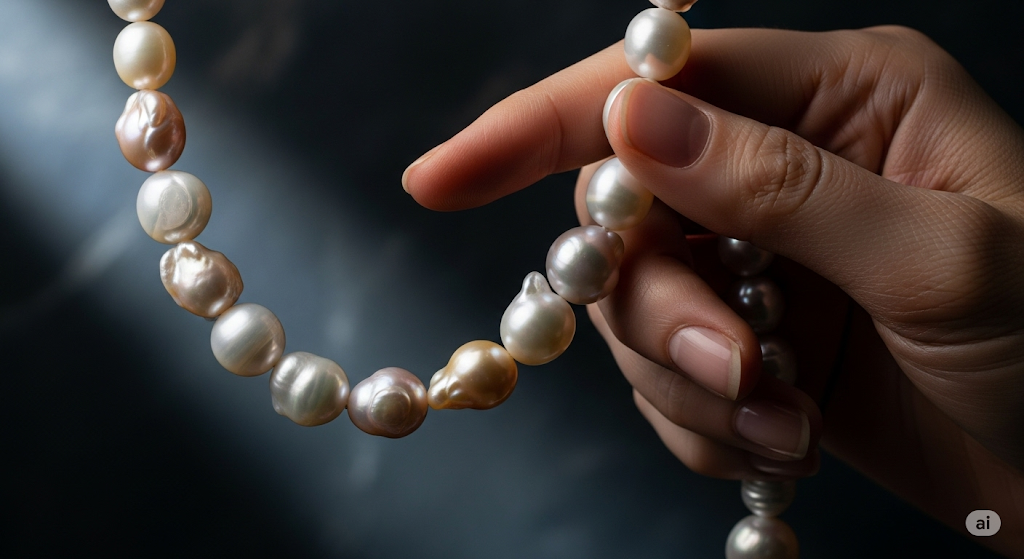
In a world that often prizes perfect symmetry, baroque pearls are a breath of fresh air. The term "baroque" simply refers to any pearl that is not perfectly round. They come in a wonderful array of asymmetrical, organic shapes—from teardrops (drop pearls) to ovals and wonderfully irregular, lumpy forms. For centuries, these irregular pearls were often overlooked in favor of their spherical counterparts. But today, their unique character is highly celebrated.
In vintage jewelry, baroque pearls were often used to create pieces with a lot of personality. Their irregular shapes can catch the light in interesting ways, showcasing incredible orient and iridescence. Because no two are alike, a baroque pearl necklace is guaranteed to be a one-of-a-kind piece. They challenge the traditional, sometimes stuffy, perception of pearls and feel more modern and artistic. Whether they are lustrous South Sea baroques or smaller freshwater varieties, these pearls prove that beauty doesn't have to be perfect. Choosing a vintage baroque strand is a way to express individuality and an appreciation for the quirky, untamed beauty of nature. It’s a sophisticated choice for those who walk their own path.
More Than an Accessory: The Benefits of Choosing Vintage
In a fast-fashion world obsessed with the new, there's a quiet revolution brewing—a return to things with soul, history, and a story to tell. Choosing a vintage pearl necklace is about so much more than just acquiring a beautiful object. It's a conscious decision that carries a multitude of benefits, from its positive environmental impact to its superior quality. It’s an investment not just in your personal style, but in a more sustainable and meaningful way of living. When you opt for vintage, you're not just buying a necklace; you're becoming the next guardian of a legacy, and that's a truly beautiful thing.
Sustainable Style: The Ultimate Eco-Friendly Choice
Let’s talk about sustainability. The fashion and jewelry industries are notorious for their environmental and ethical toll. Mining for new metals and gems requires immense resources, and the production process can be incredibly wasteful. When you choose a vintage piece, you are participating in the ultimate form of recycling. You are giving a new life to something that already exists, completely bypassing the environmental impact of new production. There's no new mining, no new manufacturing, and no new carbon footprint created.
It is, quite simply, the most eco-conscious way to adorn yourself. You are preserving a beautiful object and preventing it from being discarded or melted down. This choice extends the life of a piece of art and reduces consumer demand for newly manufactured goods. In an age where we are all trying to make more mindful choices, opting for a vintage pearl necklace is a powerful statement. It says that you value quality over quantity, longevity over fleeting trends, and that you care about the planet. It’s a chic and elegant way to wear your values, proving that sustainable style can also be incredibly glamorous.
Unmatched Character and Craftsmanship
There's a reason we say, "They don't make them like they used to." It's often true! Vintage and antique pearl necklaces were frequently made with a level of care and attention to detail that is hard to find in today's mass-market jewelry. Before the advent of modern mass production, jewelry was made by skilled artisans who took immense pride in their work. Clasps were often hand-engraved, pearls were meticulously matched for color and luster by a trained eye, and the stringing was done by hand with silk thread, often knotted between each pearl for security.
This human touch imbues vintage pieces with a unique character and soul that machine-made items lack. You can feel the history and the quality in your hands. The pearls themselves often have a superior quality of nacre, as older methods of cultivation sometimes allowed for longer growth periods. Furthermore, the slight patina on the metal clasp or the gentle softening of the pearl's luster over decades adds a layer of warmth and charm that cannot be replicated. When you buy vintage, you're not just buying a product; you're acquiring a piece of artisanal history, a testament to a time when things were made to last a lifetime and beyond.
An Investment That Tells a Story
A new necklace from a chain store starts depreciating the moment you walk out the door. A quality vintage pearl necklace, however, is an investment that can hold or even increase in value over time. Well-made pieces from desirable eras (like Art Deco or the Mid-Century) are finite resources. There will never be any more of them made. As they become rarer, their value to collectors and fashion lovers often grows. This makes them not just a beautiful addition to your wardrobe, but a tangible asset.
But the real investment goes beyond the financial. The true value of a vintage piece is in its story. Who wore this necklace before you? What celebrations did it witness? Where in the world has it traveled? While you may never know the exact answers, the mystery is part of the magic. You become the next chapter in its ongoing narrative. It's a conversation starter, a piece with a past, and a future that you get to help write. This intangible, romantic quality is something that no new piece of jewelry can ever offer. It’s an investment in beauty, history, and imagination all at once. For more on the history of pearls, this Wikipedia article provides a comprehensive overview.
The Thrill of the Hunt: Where to Find Your Perfect Strand
Finding the perfect vintage pearl necklace is an adventure. It’s a treasure hunt where the prize is a luminous piece of history that speaks directly to you. The search can take you from the dusty corners of a neighborhood antique shop to the vast, curated galleries of the internet. Knowing where to look and what to look for is key to a successful and enjoyable hunt. This isn't about instant gratification; it's about the joy of discovery and the satisfaction of finding "the one." Arm yourself with a little knowledge and a curious spirit, and the thrill of the chase will be almost as rewarding as the final discovery.
Navigating Estate Sales and Antique Shops
There's a certain romance to finding treasure in the wild. Estate sales, antique shops, and flea markets are fantastic places to hunt for vintage pearls. Here, you can physically handle the pieces, which is a huge advantage. You can perform the tooth test, feel the weight, examine the clasp up close, and see how the luster looks in natural light. Estate sales can be particularly fruitful, as you are often buying directly from a family's collection, and the pieces come with a known provenance (history of ownership).
When you're in a shop, don't be afraid to talk to the dealer. A reputable antique dealer is often a font of knowledge. Ask them what they know about the piece—its approximate age, its origin, the type of pearls. Their expertise can be invaluable. However, it's also important to trust your own judgment. Use the authentication tips you've learned to vet the pieces yourself. Look for shops that are well-established and have a good reputation. While you can certainly find hidden gems at a flea market, the risk of encountering fakes is also higher. The hands-on experience of in-person shopping is an education in itself and a truly delightful way to spend an afternoon.
The Digital Treasure Chest: Reputable Online Retailers
The internet has opened up a world of possibilities for vintage jewelry lovers. You can browse collections from dealers all over the globe from the comfort of your couch. Websites like Etsy, Ruby Lane, and 1stDibs have dedicated sections for vintage and antique jewelry, featuring items from thousands of vetted sellers. There are also many specialized online boutiques that focus exclusively on estate jewelry. This vast selection means you have a much better chance of finding a specific style or era you're looking for.
However, online shopping comes with its own set of challenges. You can't physically inspect the piece, so you are relying entirely on the seller's photos and description. This is why it is absolutely critical to buy from a reputable seller with a long history of positive reviews. Read the description carefully. Does it specify the type of pearl, the metal of the clasp, the length, and the condition? Look for high-resolution photos from multiple angles, including a close-up of the clasp and any imperfections. A trustworthy seller will be transparent about the piece's condition. And most importantly, check their return policy. You should always have the option to return the item if it's not as described, giving you a chance to have it inspected in person upon arrival.
What to Ask a Seller Before You Buy
Whether you're in a brick-and-mortar shop or clicking "add to cart," asking the right questions is your best tool. Being an informed buyer not only protects you but also shows the seller that you're serious and knowledgeable. Don't be shy—a good dealer will be happy to answer your questions.
Start with the basics: "Can you tell me the approximate age of this necklace?" Follow up with specifics about the materials: "Are these cultured or natural pearls? Do you know if they are Akoya, Freshwater, etc.?" and "What metal is the clasp made of, and are there any hallmarks?" Condition is key, so ask: "Has the necklace been restrung recently? Are there any notable flaws, chips, or damage to the pearls or the clasp?" And finally, inquire about their policies: "Do you have a return policy?" and "Can you provide any paperwork, such as a past appraisal, with the purchase?" A seller who is evasive or can't answer these fundamental questions might be a red flag. A confident, knowledgeable seller will welcome your curiosity and help you feel secure in your purchase.
From Dust to Dazzle: How to Care for Your Heirloom Pearls
Congratulations, you’ve found your perfect strand of vintage pearls! You are now the custodian of a delicate piece of history. Unlike diamonds or gold, pearls are organic gems, which means they are soft and porous, requiring special care to maintain their beauty. Proper care isn't difficult, but it is essential. Think of it as a pampering routine for your precious heirloom. By following a few simple rules, you can ensure that your pearls remain lustrous and gorgeous for generations to come, preserving their value and the memories they hold.
The Golden Rule: "Last On, First Off"
This is the single most important piece of advice for any pearl owner. Your pearls should be the very last thing you put on after getting ready and the very first thing you take off at the end of the day. Why? Because pearls are highly susceptible to damage from chemicals. Perfume, hairspray, makeup, and lotions all contain acids and alcohols that can eat away at the delicate nacre, causing the pearls to become dull, discolored, and lose their luster permanently.
Make it a habit. Finish your hair and makeup, spritz your perfume, and let it dry completely before you put on your necklace. At night, take your pearls off before you begin your skincare routine or undress. This simple practice creates a protective barrier between your pearls and the harmful chemicals in your everyday products. It’s a small ritual that pays huge dividends in the long-term health and beauty of your vintage strand. Think of it as giving your pearls a "safe zone" away from the chemical crossfire of your vanity table.
Cleaning and Storing Your Precious Pearls
After each wear, you should give your pearls a gentle wipe-down. Use a soft, lint-free cloth, like a microfiber jewelry cloth or even a clean glasses cloth, to remove any body oils or residue that may have accumulated. This prevents buildup that can dull the surface over time. For a more thorough cleaning, you can dampen the cloth with purified water, but never submerge your pearl necklace in water. Soaking can weaken the silk thread it's strung on, causing it to stretch or break. Absolutely never use ultrasonic cleaners, steamers, or harsh chemical jewelry cleaners, as these will destroy your pearls.
Storage is equally important. Pearls need to breathe, so don't store them in an airtight plastic bag. The best way to store them is in a soft pouch made of silk, velvet, or chamois. This protects them from being scratched by harder gemstones in your jewelry box. Always lay your necklace flat rather than hanging it. Hanging a pearl necklace for long periods can stretch the silk cord, creating unsightly gaps between the pearls and increasing the risk of breakage. Proper storage keeps your pearls safe, clean, and happy.
To Restring or Not to Restring? That is the Question.
The silk thread that holds your vintage pearls together is also organic and will degrade over time. It can stretch, weaken, and collect dirt. As a general rule, if you wear your pearls frequently, you should have them restrung every one to two years. If you only wear them on special occasions, you can go longer, perhaps every five years. But how do you know when it's time?
A key sign is the space between the pearls. If you can see excess movement or gaps between the knots, the thread has stretched, and it's time to visit a jeweler. Check the thread near the clasp, as this area often shows the most wear and discoloration. A professional restringing is a small investment that provides crucial insurance for your necklace. Always ask for the pearls to be knotted individually. This traditional technique serves two purposes: it prevents the pearls from rubbing against each other, and more importantly, if the strand ever breaks, you will only lose one pearl, not the entire necklace. This is non-negotiable for any quality pearl strand. To learn more about pearl quality factors, the Gemological Institute of America (GIA) is an excellent resource.
Styling Your Vintage Pearls for the Modern Age
Forget the image of pearls being reserved for your grandmother or stuffy formal events. A vintage pearl necklace is one of the most versatile pieces you can own, capable of adding a touch of instant chic to almost any outfit. The key to modern styling is all about contrast and confidence. It's about taking a classic piece and making it feel fresh, personal, and completely current. By playing with different looks and breaking a few old-school rules, you can unlock the full potential of your heirloom strand and make it a signature part of your contemporary wardrobe.
From Jeans and a Tee to a Little Black Dress
The true test of a versatile accessory is its ability to move seamlessly between casual and formal. This is where a vintage pearl necklace truly shines. For an effortlessly chic daytime look, drape a simple princess-length strand over a classic white t-shirt or a simple cashmere crewneck sweater and pair it with your favorite pair of jeans. The juxtaposition of the elegant pearls with the casual denim creates an interesting, high-low look that feels sophisticated and cool. It’s a page right out of the Parisian stylebook—understated, classic, and always put-together.
When evening comes, that same strand of pearls transforms. Paired with a little black dress, it becomes the epitome of timeless glamour, channeling everyone from Audrey Hepburn to Coco Chanel. But don't stop there. Let a longer opera-length strand add drama to a simple slip dress, or wear a bold multi-strand choker with a strapless gown for a major style statement. The secret is letting the pearls be the star. Whether you're dressing up or dressing down, they add a luminous glow and a touch of class that elevates the entire outfit without ever feeling overdone.
Layering Like a Pro: Mixing Old with New
One of the most modern ways to wear vintage pearls is by layering them. This is your chance to get creative and show off your personal style. Don't be afraid to mix your vintage strand with other necklaces from your collection. The key to successful layering is to play with different lengths, textures, and materials.
Try pairing your classic pearl strand with delicate gold or silver chains of varying lengths. This creates a beautiful, textured look that feels both classic and contemporary. For a bolder statement, mix your pearls with a chunkier chain necklace or even a pendant with a pop of color. You can also layer different lengths of pearl necklaces together—a choker with a matinee-length strand, for example—for a look of pure, decadent luxury. The "neck mess" trend is perfect for integrating your vintage piece into your daily rotation. By surrounding your pearls with more modern pieces, you frame them in a new context, highlighting their unique beauty while making them feel completely fresh and relevant.
FAQs (Frequently Asked Questions)
1. What makes a pearl necklace "vintage"?
A pearl necklace is generally considered vintage if it is between 20 and 100 years old. This places most vintage pieces within the 20th century, covering iconic style periods like Art Deco, Mid-Century Modern, and beyond. Pieces older than 100 years are typically classified as "antique."
2. Are vintage pearls a good investment?
Yes, high-quality vintage pearl necklaces can be an excellent investment. Unlike new, mass-produced jewelry that depreciates, well-preserved pieces from desirable eras often hold or even increase in value over time due to their rarity, superior craftsmanship, and historical significance.
3. How can I tell if vintage pearls are real at home?
The most common method is the "tooth test." Gently rub a pearl against your tooth; a real pearl will feel slightly gritty or sandy, while a fake will feel perfectly smooth. Real pearls also feel cool to the touch initially and have a noticeable weight compared to plastic imitations.
4. Is it safe to buy a vintage pearl necklace online?
It can be very safe, provided you buy from a reputable and trusted seller. Always check for a long history of positive reviews, read the item description carefully, examine high-resolution photos, and ensure the seller has a clear and fair return policy before you make a purchase.
5. How often should I get my vintage pearls restrung?
It is recommended to have your pearls restrung every one to five years, depending on how often you wear them. If you notice the silk cord is stretched, discolored, or there are gaps between the pearls, it's time to see a jeweler. Always request that they be individually knotted for security.
6. Can I wear my vintage pearls every day?
While you can certainly wear them often, pearls are soft, organic gems that require care. The "last on, first off" rule is essential to protect them from cosmetics and perfumes. If you wear them daily, be diligent about wiping them with a soft cloth after each use to preserve their luster.
Conclusion
A vintage pearl necklace is so much more than an accessory. It is a tangible link to the past, a symbol of enduring elegance, and a sustainable choice for the modern connoisseur. From the rebellious ropes of the Roaring Twenties to the polished chokers of the 1950s, each strand tells a unique story of its era and the women who wore it. By understanding how to identify authentic pieces, appreciate their history, and care for them properly, you are not just buying jewelry; you are becoming the next guardian of a precious heirloom. Whether dressed up or down, layered or worn alone, a strand of vintage pearls brings a touch of timeless grace and a whisper of history to every occasion, ensuring its magic will continue to glow for generations to come.
About the Creator
Emma Smith
A women self defense keychain is a discreet, practical tool for peace of mind. Featuring a personal alarm, kubotan, or pepper spray, it's designed to be easily accessible and simple to use in an emergency, offering security on the go.
Enjoyed the story? Support the Creator.
Subscribe for free to receive all their stories in your feed.
Comments
There are no comments for this story
Be the first to respond and start the conversation.