
Tape-in Hair Extensions vs. Hand-Tied Wefts: Which Method is Best for You?
Hand Tied Extensions vs Tape Ins: Which should I choose?

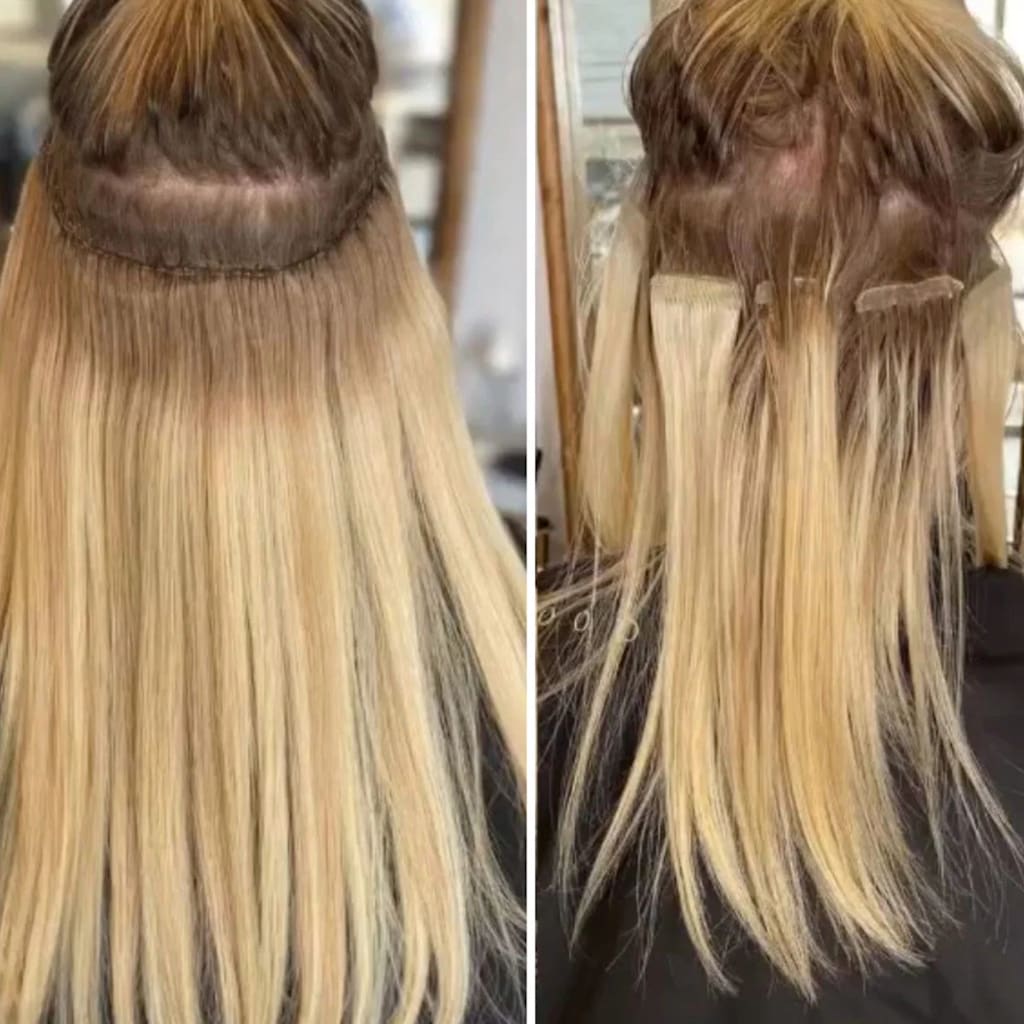
Tape-in Hair Extensions vs. Hand-Tied Wefts: Which Method is Best for You?
Tape-in extensions and hand-tied wefts mostly differ in how they're put in and how they rest on your scalp. Tape-ins depend on adhesive tabs to create a flat, quick bond. But hand-tied wefts are stitched right onto a beaded base, which gives you a lot more flexible movement. These basic physical differences completely change your comfort, daily upkeep, and how well the hair blends—and it all starts right at the installation process.
Key Takeaways
- Choose tape-ins for fine or thinning hair to distribute weight evenly; use hand-tied wefts for thicker hair needing volume.
- Opt for hand-tied wefts if you have an active lifestyle, as sweat and heat quickly weaken tape-in adhesives.
- Select tape-ins for high ponytails, as they lay flat against the scalp and remain completely hidden.
- Protect tape-in bonds by keeping oils away from the roots and thoroughly drying them after washing or sweating.
- Mix methods using a hybrid install—tape-ins at the crown and wefts in the back—for a seamless, comfortable blend.
Understanding the Mechanics: How Each Method Anchors to Natural Hair
The install method decides everything—how they blend, how they wear, and how you take care of them long-term. Tape-ins work by sandwiching your natural hair right between adhesive tabs. Hand-tied wefts, on the other hand, build up support using beaded rows and stitching. One gives you a fast, flat result. The other is much more structured and easy to adjust. These mechanics do more than just change how the extensions sit. They totally shape how clients actually feel them right from day one. Let's start by looking at tape-ins.
The Anatomy of Tape-Ins: Adhesive and Precision
Tape-ins rely on a basic sandwich setup. You put thin slices of natural hair right between two sticky tabs loaded with medical-grade glue. You have to keep the placement super clean and even. If you don't, the bond just weakens and starts shifting around.
That glue gives you a really flat finish, making it a breeze to blend into the client's own hair. But here's the catch. Leftover residue and bad removal techniques can mess with scalp health down the road. This whole sticky bond is a completely different ballgame from a purely mechanical setup.
The Hand-Tied Craft: Beads, Thread, and Tension
Hand-tied installs kick off with beaded rows lined up along the scalp to form a solid track. An extension specialist then locks the weft in place by literally sewing it right onto that base. No glue. Fully heat-free.
Getting the tension right is huge here. If it's too tight, it causes scalp stress. Too loose, and you lose your hold. Simple as that. This kind of structured base naturally moves a bit differently than flat adhesive tabs, and that directly changes how comfortable the client feels while wearing them.
The Lifestyle Compatibility Framework: Which One Fits Your Routine?
Lifestyle and comfort really just come down to how extensions act out in the wild, not just while sitting in the stylist's chair. The “Active Lifestyle Test” is pretty simple. Look at your client’s daily habits—stuff like gym frequency, their morning styling routine, or even how often they throw their hair into a high ponytail. Tape-ins usually win to get that seamless blend and lightweight feel. Hand-tied rows offer more structure but definitely feel a bit more present on the head. You'll spot the true match fast once they actually start wearing them, rather than just going off install day. Start by looking at how they move, then dig right into heat and sweat.
High-Intensity Workouts and the "Sauna Factor"
Heat and sweat attack the adhesive first. Tape-ins might start slipping when those heavy gym sessions stack up, especially if the client isn't drying their roots properly afterward. Moisture just sits right between the tabs. Over time, that completely weakens the bond.
Hand-tied rows handle sweat much better since there’s zero glue involved. But trapped moisture around the beads can still cause severe matting if clients get lazy with drying. So yeah, aftercare is extremely important here.
Basically, the real issue isn't just the hold. It's about how each method handles daily stress. Once you figure out the performance side of things, styling freedom becomes the next big question.
The Ponytail Test: Flexibility and Visibility Maps
Placement completely controls visibility. Tape-ins lay incredibly flat against the scalp. Because of that, they're way easier to hide in a high ponytail if you space them right. That’s exactly how you get a true seamless blend.
Hand-tied rows just aren't as forgiving when it comes to tight updos. The weft track might peek right through if the ponytail gets tied too high, even if the whole setup still feels totally lightweight and secure.
Stylists really need to map things out based on how clients actually wear their hair every day, not just how it looks straight down. Because once you nail the visibility, long-term hair health steps up as the final deciding factor.
Which Extension Method Causes the Least Amount of Tension and Breakage?
Getting low-damage results is all about even weight distribution and a gentle attachment. Tape-ins spread the weight across a wide panel, so they'll usually cause less point tension than bead-based rows. But they do rely on adhesive. That can definitely stress the hair if you take them out too often or use bad technique. Hand-tied rows completely skip the chemicals and use beads. The catch here is that each bead holds a tiny section, which puts more point pressure on thin hair. For overall hair health, lightweight tape-ins tend to cut down on breakage when your spacing and maintenance are spot on. It's really that simple. The true safety shift actually shows up when you factor in the specific hair type.
Fine Texture vs. Thinning Density: A Stylist’s Guide to Bono Hair
Fine hair basically means a small strand diameter. Thinning density means you clearly have fewer hairs per square inch. They need completely different game plans. Fine hair can handle tape-ins without a problem, as long as the panels stay narrow and the weight is kept pretty low to protect volume. Thinning density is a lot more fragile. Having fewer anchor points heavily drives up the breakage risk when you use beads.
Bono Hair systems made specifically for low-density clients use lighter wefts and softer bases, which really helps drop the tension. If you're dealing with fine hair but full density, Bono’s lightweight tape-ins naturally blend better and sit much flatter against the head.
Always pick the method based on strand count first, then look at the diameter. That single choice directly affects long-term upkeep, right along with how much time and money clients end up committing to.
The "Honest Math" Table: 12-Month Cost and Time Analysis
Year 1 costs boil down to two things: your first install and how often you get the hair moved up. Tape-ins usually need a bump up every 6 to 8 weeks, which means 6 to 8 salon trips over a full year. A long lifespan looks great on paper. But the actual price tag creeps up through all those repeat visits and hours in the chair. Skip a move-up, and you're asking for slippage and tangles—both of which easily kill that lifespan. The math is pretty straightforward: steady upkeep keeps your investment safe. And that routine starts at home every day.
Maintenance Mastery: The "Extension Mom" Routine
Daily care is what actually keeps them in. Grab a gentle brush—something like an Ibiza CX-8 does the trick—and always hold your roots while you brush out the middle and ends. This stops the pulling exactly where the tapes sit.
What you put on your hair is just as big of a deal. Stick to sulfate-free stuff, and make sure oils and conditioners never touch the root area. Even a tiny bit of leftover product will break those tabs down over time.
Nighttime habits aren't optional. Throw your hair in a loose braid or a low pony so it doesn't mat while you sleep. And every single wash needs to end with the tape spots totally clean and dry.
How you take them out is your last line of defense. It directly impacts how much of your real hair survives for the next round of extensions.
Professional Insights: Achieving a Seamless Blend with Bono Hair
Getting a seamless blend is really about smart pairing. Your Bono Hair wefts need to match both the density and the natural behavior of the client's hair. Go lighter at the nape (60–80g) and build up weight through the mid-zone (100–140g). Doing this prevents thick, bulky lines. Hybrid installs happen to work great here. You can mix tape-ins for a flat lay at the crown with hand-tied wefts to control fullness in the back. Keep the spacing snug but not packed—about 1 cm between rows keeps things moving naturally without leaving gaps. The main goal is even distribution, not max volume. That balance really shows up in how the hair feels every single day.
The Sensory Experience: What Do They Actually Feel Like?
Comfort is always the first thing clients notice. Tape-ins feel super light and sit tightly against the scalp. That keeps the "lumpiness" factor incredibly low, especially when they lay flat against the head's natural shape. They also flatten out easily under a pillow, so clients usually report way less pressure at night.
Wefts throw a bit more structure into the mix. A well-sewn row feels very secure. But too much weight or bad tension leaves annoying ridges when lying down. Just keep your rows thin and lined up to cut down on that extra bulk.
Hybrid installs fall somewhere in the middle. They spread the weight across different methods, so the scalp feels nice and balanced rather than heavy in random spots. That balance is usually what decides which specific method fits best into a client's normal routine.
Final Verdict: The "If X, Then Y" Decision Logic
Pick based on routine, not trends. If your client wants reusable hair with minimal daily styling, go with tape-ins. They lie flat and make for an easy move-up schedule every 6–8 weeks. If they need serious volume and longer wear between salon visits, wefts make a lot more sense. Just keep an eye on weight and tension. And if a natural finish with flexible styling is the main goal, human hair in a hybrid setup gives you total control over the overall blend and density.
Still running into edge cases? The FAQ breaks down specific scenarios and exactly how to fix them.
Frequently Asked Questions About Extension Methods
Are tape-in extensions damaging for thin or fragile hair?
No. They actually save thin hair. The adhesive tabs lay completely flat and distribute weight evenly across the strand. Just don't rip them out yourself. Use a proper solvent.
Do hand-tied extensions promote better natural hair growth than other types?
Not exactly. Extensions don't grow hair. Hand-tied wefts just reduce tension. They sit on a beaded foundation instead of glue. Less pulling means less breakage, letting your natural hair survive underneath.
Can I wash my hair normally with hand-tied rows?
Yes. But change your technique. Scrub gently between the rows, not directly over the beads. Rinse twice. Shampoo gets trapped in the stitching easily. Always blow dry the roots completely to prevent mildew.
How long do hand-tied extensions last compared to tape-ins?
Longer. Tape-ins need moving up every 6 to 8 weeks before the adhesive degrades. Hand-tied rows stretch to 8 to 12 weeks. The hair itself lasts up to a year for both if you buy quality.
About the Creator
Alex Morgan
Written by Bono Hair’s content team — experts in professional hair replacement solutions and advocates for confidence, authenticity, and self-expression through modern hair systems.
Enjoyed the story? Support the Creator.
Subscribe for free to receive all their stories in your feed.
Comments
There are no comments for this story
Be the first to respond and start the conversation.