
How to Inspect Stitching Quality Like a Leather Expert
Learn the Techniques Experts Use to Assess Leather Stitching

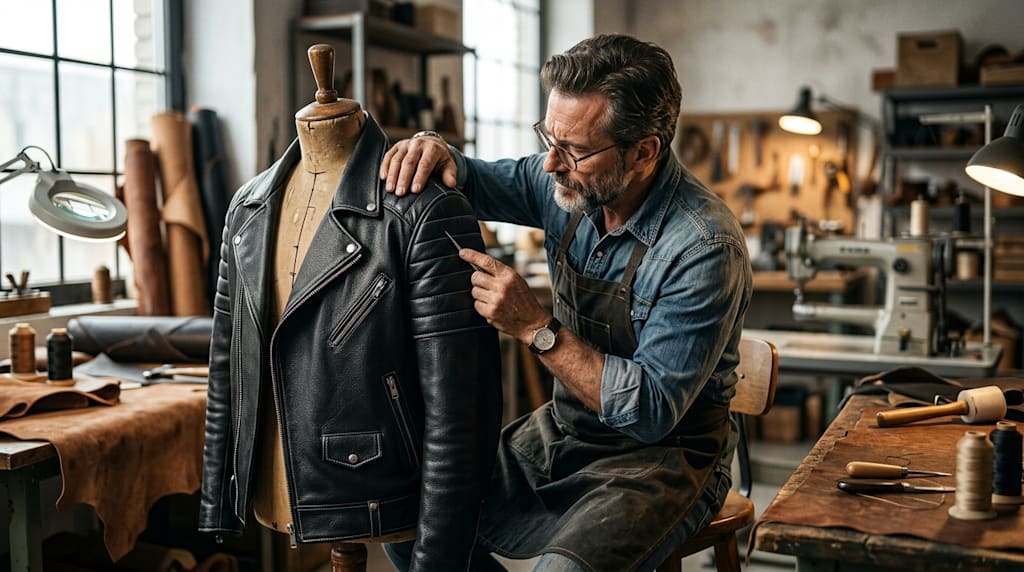
I bought my first leather jacket at 22. It looked perfect in the store. Six months later, the shoulder seam started splitting open. The stitching was terrible. I just did not know how to look for it.
That mistake taught me something most buyers figure out the hard way. The stitching tells you everything about how a jacket was actually built.
The leather can last decades. The stitching can fail in months if the brand cut corners. Here is how you inspect it properly before spending your money.
Why Stitching Is the Real Test of Quality
A lot of buyers focus on the leather type. That matters, sure. But seam construction is what keeps a jacket together during real wear.
Some numbers worth knowing before you buy:
- A poorly stitched jacket can start losing structural strength at seams within 6 to 12 months of daily wear
- Quality leather jackets use 7 to 9 stitches per inch as a minimum standard for seam integrity
- Double stitched seams hold up to 40% more tension than single stitch seams under regular stress
- Thread type accounts for roughly 60% of long term seam durability according to leather goods production research
- Mass produced jackets in the under $200 range frequently use polyester thread that degrades faster than the leather itself
These are not cosmetic issues. They decide whether your jacket survives two years or ten.
Five Things to Check Before You Buy
1. Count the Stitches Per Inch
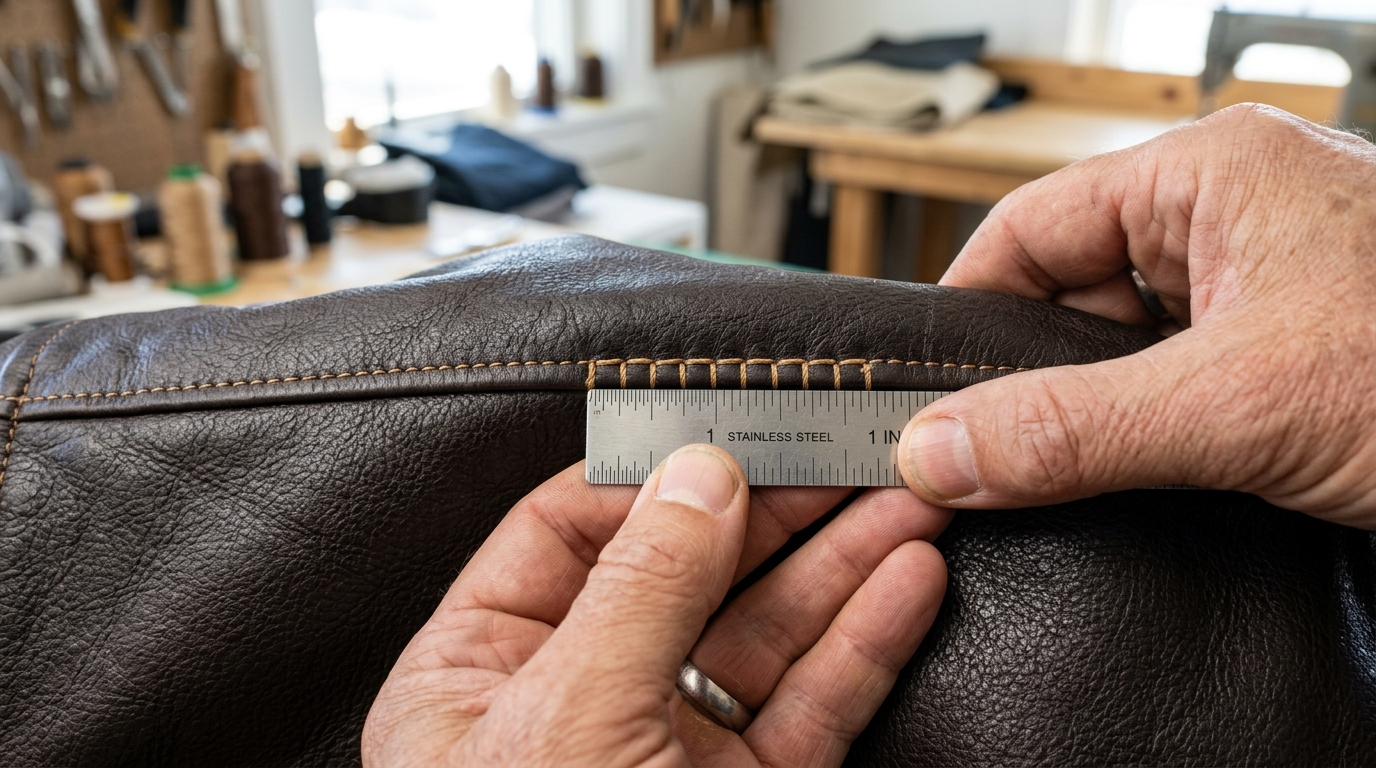
Run your finger along any main seam and look closely. Count how many individual stitches appear in one inch.
Fewer than 6 stitches per inch is a warning sign. The seam will pull apart under basic stress.
A solid jacket sits between 7 and 10 stitches per inch. Focus your check on the collar, sleeve cuffs, and the front zipper placket. These areas absorb the most daily strain.
2. Check What Thread Was Used
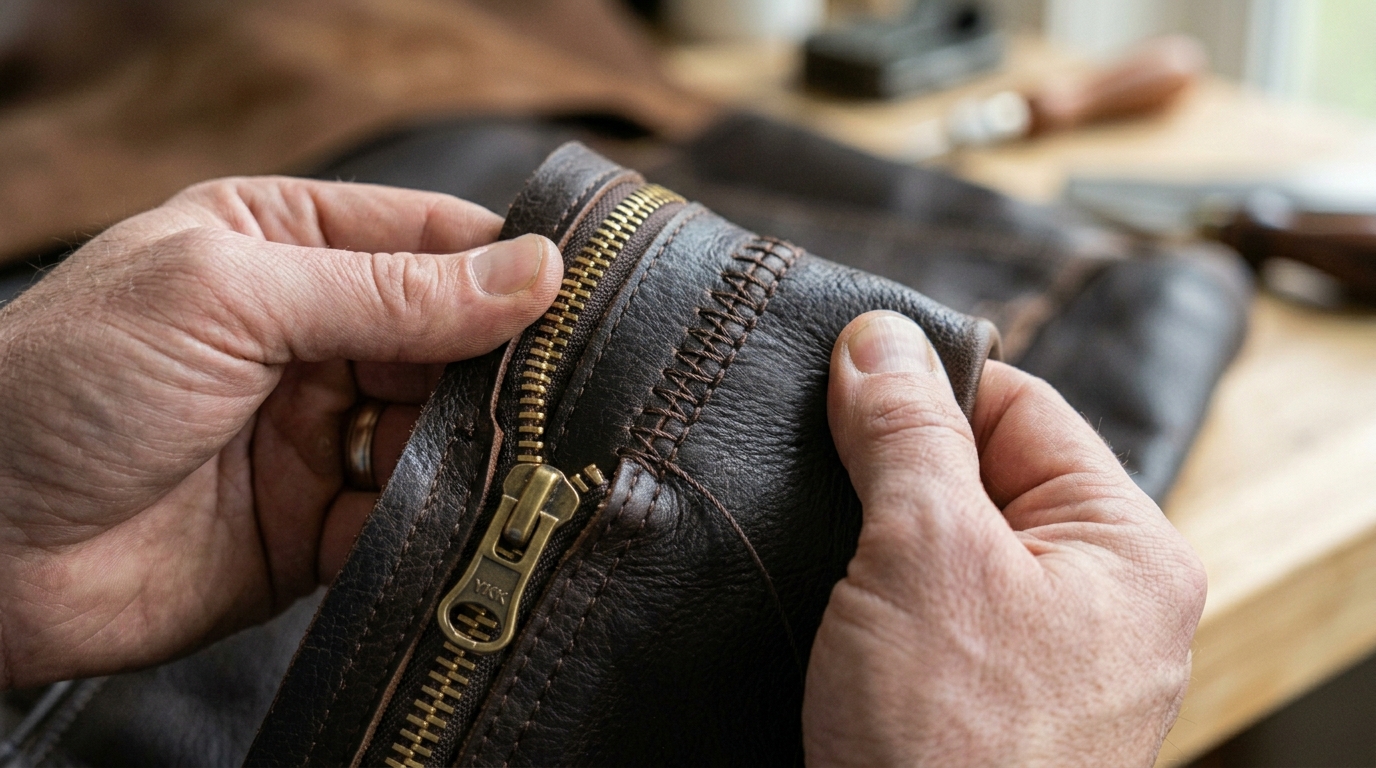
Cheap brands use thin polyester thread. It breaks before the leather does.
Good jackets use waxed nylon, bonded nylon, or bonded polyester thread. Some premium makers use linen thread on vegetable tanned leather for a more traditional build.
Here is how to spot weak thread at a glance:
- It looks noticeably thin compared to the thickness of the leather panels
- It appears shiny or synthetic under direct light
- You can see fray starting near button holes or zipper ends
- The color looks slightly off or inconsistent along the seam
Pull gently at a seam near a zipper or button. Nothing should stretch, shift, or pop. If it moves at all, the thread is too weak for long wear.
3. Look for Pattern Consistency
Crouch down and look at the stitching from a flat, side angle under a light source.
Every stitch should look identical. Same size. Same depth. Same spacing. No gaps or jumps between stitches.
Skipped stitches are a serious red flag. One skipped stitch can cause an entire seam to unravel under repeated stress. It means the machine was poorly calibrated or the worker rushed the job.
Uneven spacing tells you the jacket came off a production line with zero quality control on stitching.
4. Inspect the Stress Points
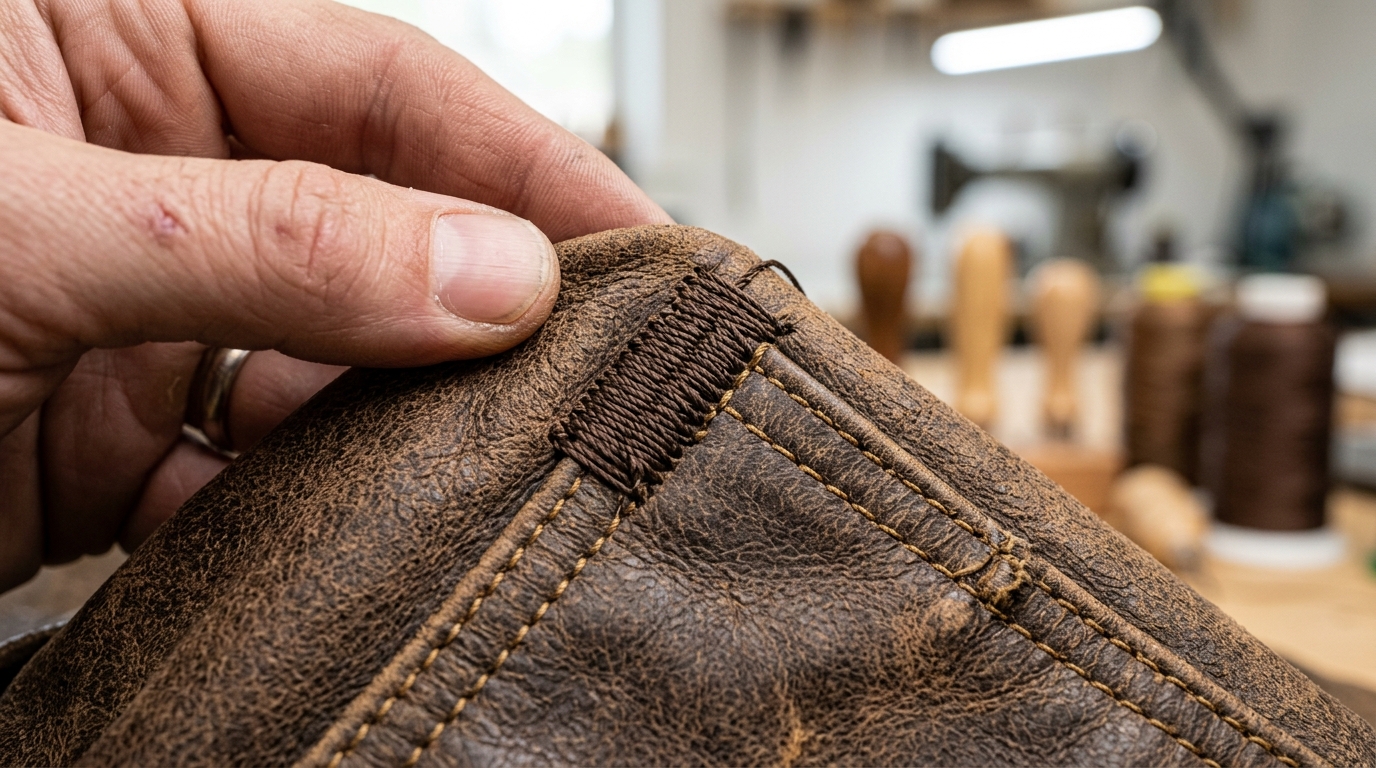
Stress points are where two or more leather panels meet under movement. Shoulder seams. Armhole seams. The base of the collar. The underarm area.
These spots need bar tacks. A bar tack is a tight cluster of reinforcement stitching at the start and end of a seam. It stops the seam from pulling free at its weakest spots.
No bar tacks means the jacket was not built for real use. It was built to look good on a rack.
On a Black Leather Jacket, pay extra attention to the front chest panels and both armhole seams. Motorcycle styles flex constantly. Weak stress point stitching fails fast on these cuts.
5. Check the Lining Seams
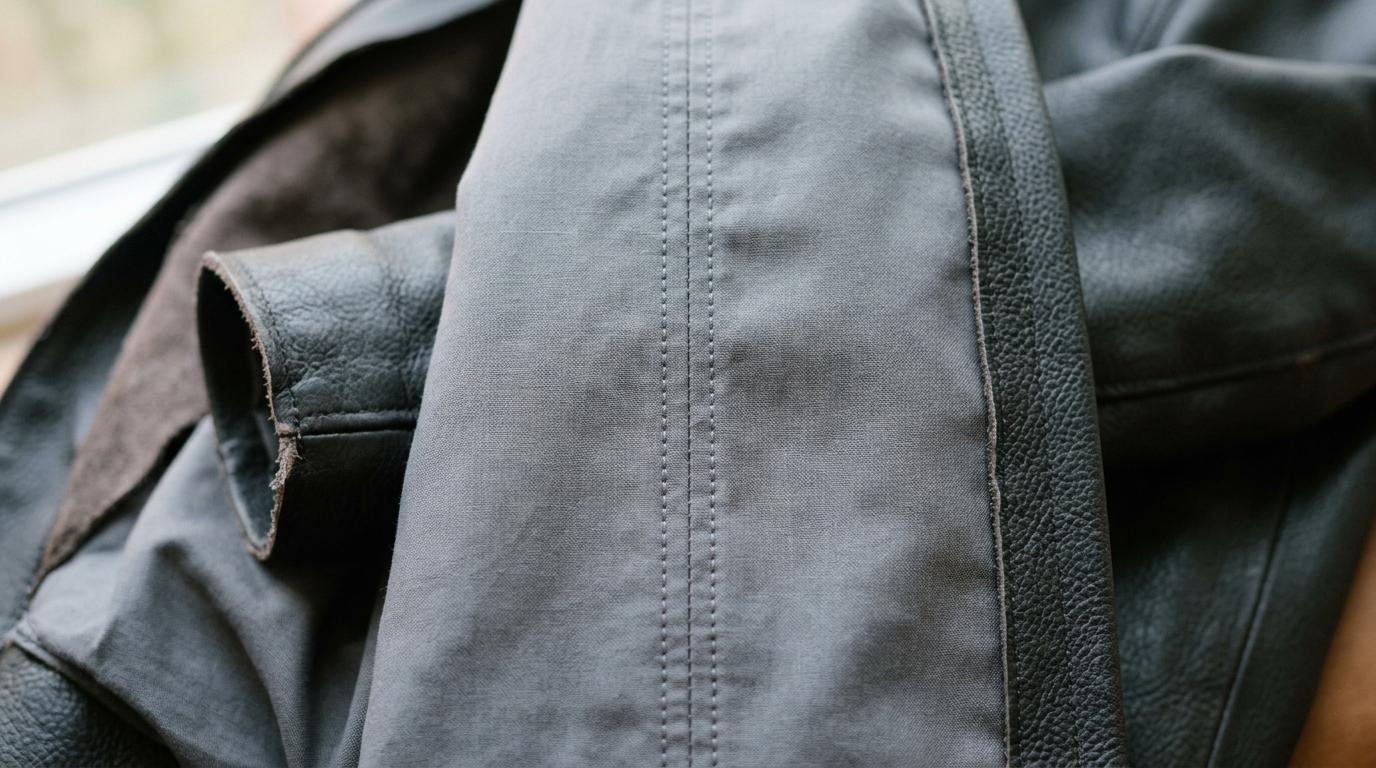
Turn the jacket inside out if you can. Cheap manufacturers hide bad stitching under the lining. The exterior looks clean but the inner construction is messy and loosely sewn.
Good jacket construction looks clean from both sides. Flat seams. No loose threads. No visible gaps in the inner stitching. If the lining hides everything, ask to inspect it before you commit.
Red Flags to Walk Away From
If you spot any two of these, leave the jacket on the rack:
- Loose threads hanging from any seam
- Thread color that does not match the leather evenly
- Seams that pucker or bunch along the edge
- Any seam that shifts when you apply gentle pull
- Visible gaps between stitch lines at stress points
- No visible bar tacks at the ends of major seams
Why Distressed Leather Makes Stitching Harder to Spot
Distressed leather is processed and treated to look naturally aged. That heavy texture and worn surface can easily hide poor stitching underneath.
When shopping for a black leather jacket with a distressed finish, always inspect the stitching near the front zipper placket and collar base under bright light. These are the two areas most often rushed during production.
Not every brand takes stitching seriously on distressed styles. Leather Jacket Black builds their brown distressed motorcycle jacket with reinforced double stitching on every major seam, bonded thread throughout, and hand finished bar tacks at all stress points. The construction holds up because the brand treats it as the foundation of the garment, not an afterthought.
FAQs
What stitch count should I look for in a leather jacket?
For everyday wear, 7 to 9 stitches per inch is the right range. Higher counts with quality bonded thread give you stronger seams and longer life.
How do I know if the thread will last?
Look for waxed nylon or bonded thread. Apply a gentle pull at any seam near a zipper or button. If nothing moves, stretches, or makes a sound, the thread is strong enough.
Does distressed leather hide bad stitching?
Yes it can. The worn texture draws the eye away from the seam line. Always check stitching under direct light and feel along the seam edge with your finger before buying.
Is double stitching actually worth it?
Yes. Double stitched seams handle significantly more stress and outlast single stitch seams, especially at the shoulder and armhole areas where jackets flex the most.
Can bad stitching be repaired after purchase?
A skilled leather tailor can restitch any seam. The cost is usually much lower than replacing the jacket and it can add several more years to its life.
About the Creator
Gwen Jorgensen
I’m Gwen Jorgensen, a fashion enthusiast and Marketing & PR Manager at Leather Jacket Black. I share insights on modern outerwear, style trends, and premium leather fashion, with a focus on what makes standout pieces truly timeless.
Enjoyed the story? Support the Creator.
Subscribe for free to receive all their stories in your feed.
Comments
There are no comments for this story
Be the first to respond and start the conversation.