
Flex NAA 2024 Booth Shows How Large Island Exhibits Are Becoming Branded Product Environments
A look at how Flex used a large island booth at NAA 2024 to combine brand visibility, product messaging, lounge-style engagement, and apartment software storytelling on the show floor.
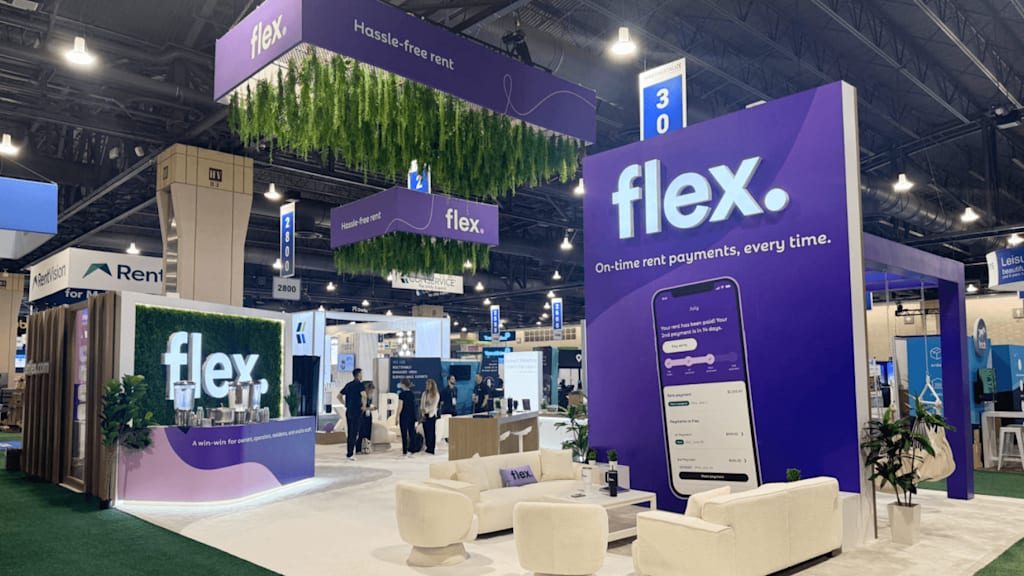
At NAA 2024, the Flex booth stood out by treating the exhibit as more than a product display. The space functioned as a branded environment: part software presentation, part meeting area, part hospitality space, and part visual landmark on a busy show floor.
For companies serving the apartment, property management, and rental technology market, this kind of booth direction makes sense. The product is not always something visitors can understand by looking at a physical object. A rent payment platform, resident experience tool, or property software solution needs context. It needs messaging, conversation space, and a booth layout that makes the product feel easy to approach.
Flex used a large island booth to do exactly that. Instead of relying only on screens or a standard backwall, the booth combined bold purple brand surfaces, suspended signage, greenery, lounge seating, app visuals, and open visitor paths to create a more complete product experience.
The Booth Works Like a Brand Landmark
The first thing visitors would notice is the scale of the Flex branding. The booth uses large purple structures, elevated signs, and a tall wall with the Flex logo and app message. This gives the exhibit visibility from several directions.
That matters in a large show environment. Visitors may not be actively looking for one specific company, but strong overhead and vertical branding can help a booth become easier to recognize while people move through the aisle.
The hanging elements also help define the space without closing it. The booth still feels open, but the suspended signage gives the area a clear identity from above. For a large island booth, that is an important balance: the booth needs to be visible at distance, but it also needs to remain accessible at floor level.
Product Messaging Is Simple and Direct
The main wall keeps the message clear: “On-time rent payments, every time.” That kind of direct product statement works well in a busy trade show setting.
For software exhibitors, the booth does not need to explain every feature immediately. It needs to help the right visitor understand the core value quickly. In this case, the message connects directly to a common property management issue: rent payment reliability.
The large app visual reinforces the message. Instead of using abstract technology graphics, the booth shows a recognizable mobile interface. That makes the product feel more concrete and easier to discuss.
This is especially useful for apartment technology exhibitors. When a product lives inside a platform or app, visualizing the interface can help visitors move from interest to conversation faster.
Lounge Space Changes the Tone of the Booth
One of the strongest parts of the Flex booth is the lounge area. The white sofas and chairs soften the booth and make the space feel more approachable.
This is not just a design choice. In property management and apartment industry events, many conversations are relationship-driven. Visitors may want to talk through workflows, resident experience, payment issues, owner concerns, or operational details. A lounge setting supports that kind of discussion better than a booth made only of counters and screens.
The seating also gives the booth a hospitality feel. It invites visitors to slow down without making the space feel closed or overly formal.
For exhibitors studying how larger booths can stay flexible without feeling temporary, modular exhibit systems offer a useful reference point. The Flex booth shows how modular structures, suspended branding, lounge areas, and open traffic flow can work together to create a branded environment that still feels organized on a busy show floor.
A larger booth should not only create more display space. It should create different interaction zones: quick stops, product conversations, seated meetings, and casual brand engagement.
Greenery Helps Break Up the Technology Feel
The hanging greenery and plant accents add warmth to the booth. That detail matters because software booths can easily feel cold if they rely only on screens, backlit walls, and large graphic panels.
Here, the greenery softens the purple brand environment and makes the lounge area feel more comfortable. It also helps separate the booth visually from neighboring exhibits.
This kind of material contrast is becoming more common in large island booths. Exhibitors want high-impact branding, but they also want visitors to feel comfortable staying in the space. Greenery, textured surfaces, and lounge furniture can make a booth feel less transactional and more conversational.
Open Flow Keeps the Island Booth Accessible
Although the booth has strong structures and multiple branded zones, the visitor flow remains open. People can enter from different sides, move toward the lounge area, stop at a counter, or look at the app display without being forced into one narrow path.
That is important for island booths. A large footprint can still feel crowded if the layout blocks movement. The Flex booth avoids that by using the main brand walls and hanging signs as visual anchors, while keeping the floor plan open enough for natural traffic.
This approach works well for high-traffic shows. Visitors can engage at different levels. Some may only notice the brand and continue walking. Others may stop at the app display. Qualified prospects may move into the lounge area for a deeper conversation.
The Booth Matches the Product Category
The booth design feels aligned with the product category. Flex is presenting a rent payment solution, so the booth does not need to look like a technical lab or hardware demo space. It needs to feel trustworthy, simple, and user-friendly.
The purple branding creates recognition. The app display explains the product. The lounge area supports conversation. The greenery and soft seating make the booth feel more human.
That combination is important for apartment software brands. Their buyers are not only evaluating features. They are also thinking about adoption, resident experience, workflow fit, and operational trust. A booth that feels approachable can help support those conversations.
What This Booth Says About NAA Exhibit Trends
The Flex booth reflects a larger direction at apartment and property management trade shows. Exhibitors are moving away from simple product counters and toward booth environments that feel more like branded meeting spaces.
For software and service companies, this makes sense. The booth has to explain value, create comfort, and make room for real conversations. A large island format gives exhibitors enough space to do that, but only if the layout is planned carefully.
The strongest booths are not always the ones with the most screens or the most walls. They are the ones where each area has a clear purpose.
Final Takeaway
Flex’s NAA 2024 large island booth shows how a software brand can use booth design to make an intangible product easier to understand.
The booth combines strong brand visibility, clear product messaging, a large app visual, open visitor flow, lounge seating, and warm environmental details. Together, those elements turn the booth into more than a display. They create a space where visitors can see the product, understand the message, and sit down for a real conversation.
For apartment technology exhibitors, that may be the most useful lesson. A booth does not need to overwhelm visitors with every feature. It needs to make the product easy to approach and the conversation easy to begin.
About the Creator
CircleExhibit
Circle Exhibit is a Las Vegas-based exhibit partner supporting trade show booth design, fabrication, logistics, installation, and dismantle for exhibitors across U.S. trade shows.
Enjoyed the story? Support the Creator.
Subscribe for free to receive all their stories in your feed.
Comments
There are no comments for this story
Be the first to respond and start the conversation.