quotes
The true soldier fights not because he hates what is in front of him, but because he loves what is behind him.” ―G.K. Chesterton
The Waitress
How One Woman's Extraordinary Memory Transformed an Entire Community THE WOMAN WHO NEVER FORGOT A FACE ☕ Maria Santos had worked at the same diner in Albuquerque, New Mexico, for thirty-one years, and during those three decades she served approximately two hundred thousand meals to an estimated forty thousand individual customers, and the thing that made her legendary in the community was not the quality of the food which was standard diner fare or the speed of her service which was efficient but unremarkable but rather her apparently supernatural ability to remember every customer she had ever served including their name, their usual order, their family details, and the specific conversations they had shared during previous visits even when those visits occurred years apart, and this extraordinary memory which neuroscientists would later identify as a rare condition called Highly Superior Autobiographical Memory or HSAM transformed a ordinary waitress job into something approaching community ministry because Maria's customers did not just come for the food but for the experience of being remembered 🧠✨
By The Curious Writer7 months ago in Serve
🌧️ Leptospirosis Crisis in Jamaica: Floods After Hurricane Melissa Spark a Dangerous Outbreak
Jamaica is battling more than just the physical devastation left behind by Hurricane Melissa. In the aftermath of the Category 5 storm, health authorities have confirmed a leptospirosis outbreak across multiple parishes — a serious bacterial illness that thrives in floodwaters and contaminated soil. With several deaths already reported and dozens more suspected cases, public health officials are sounding the alarm.
By Daily Motivation11 months ago in Serve
How Much Power Does America Have?
When you hear the term “global superpower,” chances are one country comes to mind—the United States of America. From military dominance to technological breakthroughs and cultural influence, America's global footprint is massive. But how much real power does the U.S. wield today? Let’s break it down across six key pillars.
By Engr. Mansoor Ahmadabout a year ago in Serve
Trump’s Citizenship Threats: Fear and Uncertainty for Millions of Naturalised Americans
In a move stirring controversy across political and legal circles, United States President Donald Trump has once again ignited a fierce debate over the security of American citizenship. His recent threats to revoke the citizenship of some high-profile naturalised Americans—including billionaire tech entrepreneur Elon Musk and New York mayoral candidate Zohran Mamdani—have triggered anxiety among millions of immigrants who have made the U.S. their permanent home. The issue strikes at the heart of American identity. More than 25 million people in the United States are naturalised citizens, according to the Department of Homeland Security. These individuals come from all walks of life: engineers, doctors, artists, public servants, and small business owners. Many fled persecution, war, or poverty in search of safety and opportunity. Now, for some, the very idea of secure citizenship seems fragile. Who Is at Risk? President Trump’s threats have raised concerns about the scope of his plans. Could any naturalised citizen be targeted—or only those who have publicly clashed with his administration? While Elon Musk, the South African-born founder of Tesla and SpaceX, has largely enjoyed support from some conservative circles, his unpredictable stance on social media and recent criticism of Trump’s trade policies may have drawn ire. Zohran Mamdani, a Ugandan-born American politician known for his progressive views and advocacy for immigrant rights, represents the kind of left-leaning opposition Trump has frequently demonised. If individuals like Musk—one of the world’s wealthiest and most influential figures—and Mamdani, a democratically elected politician, can be singled out, what does that mean for everyday Americans who gained citizenship through naturalisation? Civil liberties advocates warn that this could be the start of a dangerous precedent, one where citizenship becomes conditional on political loyalty rather than constitutional rights. Legal Grounds and Challenges Under the U.S. Constitution, once citizenship is granted, it is considered a fundamental right. However, the government has long held narrow legal pathways to revoke it, mostly in cases involving fraud during the naturalisation process or actions such as joining a hostile military against the U.S. Legal scholars like Heba Gowayed, a professor of sociology at CUNY Hunter College, argue that Trump's latest threats stretch the limits of these provisions. "Denaturalisation has historically been rare and reserved for cases of fraud, not political disagreements," Gowayed explained in a recent podcast interview. The Trump administration previously attempted to expand denaturalisation efforts during his first term, creating a task force to review old immigration files for inconsistencies. Though the initiative yielded few cases, it sent a chilling message across immigrant communities. If Trump moves forward with revoking citizenship for political reasons, it would almost certainly spark constitutional lawsuits. Civil rights groups like the American Civil Liberties Union (ACLU) and the National Immigration Law Center are already preparing legal challenges, calling the threats "an assault on the integrity of American citizenship." A Political Strategy or Legal Reality? Analysts differ on whether Trump genuinely intends to carry out such revocations or if this is part of his broader political rhetoric aimed at energising his base. During his 2024 re-election campaign, Trump repeatedly vowed to crack down on immigration and "protect American values." Some see these latest threats as another plank in his nationalist platform, designed to appeal to voters who fear demographic change and multiculturalism. Yet critics argue that politicising citizenship endangers the entire framework of American democracy. "Citizenship is not a partisan privilege," said Manuel Rapalo, host of Al Jazeera's podcast The Take. "It’s a constitutional guarantee." Historical Echoes The United States has a complicated history with denaturalisation. During the Red Scare of the 1950s, some immigrants accused of Communist ties were stripped of their citizenship. In the post-9/11 era, there were renewed efforts to scrutinise Muslim immigrants under the guise of national security. However, never before has an American president so publicly and directly threatened prominent individuals with citizenship revocation. Legal experts also draw parallels with authoritarian regimes, where dissenters are silenced by revoking their citizenship or forcing them into exile. Trump's threats have raised alarms internationally, with some leaders and human rights organizations warning that such tactics undermine America’s image as a democratic beacon. The Human Impact For millions of naturalised citizens, the impact goes beyond politics. Families who believed they had secured their future in the United States now face renewed uncertainty. Immigrants from conflict zones like Syria, Afghanistan, and Venezuela, who risked everything for safety in the U.S., now question whether their adopted home truly guarantees them the protection of citizenship. Community organizations report rising anxiety in immigrant neighborhoods. "People are calling our hotline every day asking if they could lose their citizenship for protesting or for having family abroad," said an immigration advocate in New York. The psychological toll is profound. Citizenship, once considered permanent and secure, now feels fragile for many naturalised Americans. What Happens Next? Legally, revoking citizenship is a long and complicated process that must pass through the courts. The Department of Justice would have to file cases proving fraud or illegal conduct during the naturalisation process. Stripping citizenship based solely on political beliefs or criticism of the government is almost certainly unconstitutional. Yet, the fear stirred by such threats can have chilling effects. Legal uncertainty may discourage some naturalised citizens from political participation, activism, or even public speech. So far, Trump’s team has not provided details on the legal mechanism they plan to use. Without specifics, many believe these threats are more symbolic than actionable. But in the climate of heightened political division, even symbolic threats carry real-world consequences. Broader Implications for America’s Future The United States has long prided itself on being a nation of immigrants. Naturalised citizens have contributed to the country’s scientific innovations, military strength, and cultural richness. Figures like Albert Einstein, Madeleine Albright, and Sergey Brin (co-founder of Google) were immigrants who became American citizens. If citizenship becomes a political weapon, critics argue, America risks eroding the very values that have made it a global leader. Elon Musk, with his global influence, and Zohran Mamdani, with his local political presence, are symbolic figures in this controversy. But the real story is the countless teachers, healthcare workers, engineers, and small business owners whose status feels newly vulnerable. Calls for Clarity and Protection Lawmakers from both parties have called on the Trump administration to clarify its stance. Some moderate Republicans expressed unease at the threats, while Democrats pledged to introduce new legislation protecting naturalised citizens from politically motivated denaturalisation. So far, no official revocation actions against Musk, Mamdani, or others have been initiated. But the debate itself reflects a broader struggle over the meaning of American citizenship in today’s polarised political climate. As the legal and political battles unfold, one thing remains clear: the security of citizenship, once thought unassailable, is now part of America’s most contentious debates.
By Ikram Ullahabout a year ago in Serve
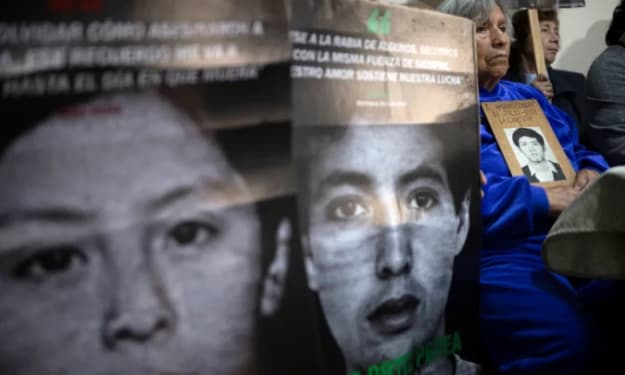
Fury in Peru as Amnesty Law for Human Rights Abuses Sparks Legal, Social Uproar
In a controversial move that has drawn sharp condemnation from human rights advocates, Peru's Congress has passed a law granting amnesty to military and police personnel accused of grave human rights violations committed during the country’s brutal armed conflict from 1980 to 2000. The bill, approved by a congressional commission, extends to those already convicted, under investigation, or awaiting trial, and now awaits the signature of President Dina Boluarte. A Nation Confronts Its Past The Peruvian conflict, fought between state forces and left-wing insurgent groups like the Shining Path and Tupac Amaru Revolutionary Movement, left an estimated 70,000 people dead—many of them Indigenous Peruvians trapped between government forces and rebel fighters. Peru's Truth and Reconciliation Commission documented widespread abuses, including massacres, forced disappearances, torture, and sexual violence, and identified over 4,000 clandestine graves across the country. Despite these findings, the new amnesty bill, championed by Congressman Fernando Rospigliosi from the right-wing Popular Force party, appears to reverse years of hard-won justice efforts. Popular Force is led by Keiko Fujimori, daughter of the former authoritarian president Alberto Fujimori, whose decade-long rule was marked by widespread human rights abuses. Although Fujimori was convicted and jailed for his crimes—including civilian massacres—he was controversially released in 2023 on humanitarian grounds. Voices of the Victims: Seeking International Justice For families of the conflict’s victims, the amnesty law reopens painful wounds. Raida Condor, whose son Amaro Condor was killed in a 1992 military raid at a university campus, stood alongside other victims' families and human rights defenders in Lima on July 10, 2025, voicing fierce opposition to the law. "We’re not only fighting this domestically; we've already begun seeking intervention from international bodies," said Gloria Cano, director of the Pro Human Rights Association. Cano confirmed that her organization has alerted the Inter-American Commission on Human Rights and the Inter-American Court of Human Rights and plans to bring the issue before the United Nations. International Condemnation and Legal Concerns UN human rights chief Volker Turk criticized the legislation, posting on X (formerly Twitter), "Impunity does not hide the crime, it magnifies it." Amnesty International also denounced the bill, warning that the right to justice for thousands of victims would be permanently violated. Human rights organizations estimate that the law could nullify 156 convictions and halt proceedings in more than 600 ongoing cases. It provides a special humanitarian amnesty for individuals over 70 who have been convicted or imprisoned, potentially shielding many senior military and police officials from accountability. Congressman Alex Flores of the Socialist Party spoke out during legislative debates, declaring, "Granting amnesty to military and police officers cannot be a reason for impunity." A Repeated Struggle Against Amnesty Peru’s judiciary and international human rights courts have fought similar amnesty attempts before. In the 1990s, laws were passed to protect security forces from prosecution, but the Inter-American Court of Human Rights struck them down, ruling they violated the right to justice and international human rights standards. Despite these precedents, Peru’s Congress has repeatedly attempted to shield military and police from legal scrutiny. In August 2024, Peru introduced a statute of limitations for crimes against humanity committed before 2002, effectively closing hundreds of investigations. That statute directly benefited figures like Fujimori and numerous military officials implicated in past atrocities. Human rights advocates argue that the new law not only violates Peru's Constitution but also its obligations as a member of the Inter-American Human Rights System. Legal experts expect fierce legal challenges ahead, both domestically and in international courts. Awaiting Presidential Action The bill now awaits President Dina Boluarte’s decision. Boluarte, who has remained publicly silent on the matter, holds the power to either sign the bill into law or veto it. Her response is likely to shape the country’s human rights trajectory and legacy in the years to come. Peru’s Painful Reckoning Peru’s armed conflict left deep scars on the nation, especially among its Indigenous populations. The Truth and Reconciliation Commission’s final report highlighted that the vast majority of victims were Indigenous peasants—people marginalized even in peace, who bore the brunt of the violence between government forces and insurgent groups. As the country debates the future of justice for these victims, human rights defenders warn that forgetting the crimes of the past risks repeating them. For families like the Condors, the amnesty is not a humanitarian act—it is an erasure of truth and justice. Next Steps Lawyers for victims and human rights defenders vow to continue their struggle, both in Peru and on the global stage, to ensure that justice is not buried alongside the victims of the conflict.
By Ikram Ullahabout a year ago in Serve
Iran conflict: What is the impact on British citizens travelling abroad?
**The Iran Conflict and Its Ripples: Impacts on British Travellers** Tensions in the Middle East—particularly intensified activity in and around Iran—are sending shockwaves through international travel. For British citizens abroad or planning to travel, the evolving situation brings a variety of logistical, safety, and financial challenges.
By GLOBAL NEWSabout a year ago in Serve
How Smart Sofa Design Cuts Shipping and Scaling Costs
Sofas are big, beautiful—and brutal on your margins. They don’t flat-pack well. They dominate warehouse space. And for many DTC furniture brands or cross-border distributors, the shipping cost of a single sofa can now exceed its production cost.
By Hammad2211about a year ago in Serve
German Soldiers’ Perspective on American Warfare in World War II
German Soldiers’ Perspective on American Warfare in World War II During World War II the German soldiers who fought against the Allies had varying opinions about their adversaries. While some respected the Americans for their resilience and firepower others found their tactics frustrating if not outright infuriating. A key reason for this frustration was the fundamental difference in how the two sides approached combat. American forces relied heavily on artillery and airpower before engaging in direct combat a strategy that many German soldiers perceived as unfair or dishonorable.
By Adnan Rasheed2 years ago in Serve
A new U.S. Air Force analysis recommends continuing the development of NGAD, as well as terminating the NGAS stealth tanker program which was supposed to support the next gen fighter in contested airspace.
The United States Air Force (USAF) has recently concluded a comprehensive analysis of two major developmental programs: the Next-Generation Air Dominance (NGAD) fighter and the Next-Generation Air Refueling System (NGAS) stealth tanker. After months of internal discussions and strategic reviews, the Air Force has decided to continue the development of the NGAD while recommending the termination of the NGAS program. This decision underscores a shifting perspective on how aerial dominance and refueling strategies will evolve in contested environments, particularly in the face of growing technological advancements and budgetary constraints.
By Adnan Rasheed2 years ago in Serve
Pakistan marks anniversary of shooting down Indian fighter jets.
Pakistan marks anniversary of shooting down Indian fighter jets. On February 27, 2019 Pakistan marked a significant moment in its military history commemorating what it describes as a successful defense operation against Indian aggression. This event known as Operation Swift Retort is remembered as the day when the Pakistan Air Force (PAF) responded to India’s airstrikes in Balakot by engaging and shooting down two Indian fighter jets escalating tensions between the two nuclear armed neighbors. As Pakistan observes the anniversary of this event it highlights the nation’s military preparedness and resolve to defend its sovereignty. The events of February 2019 were set in motion a day earlier when Indian warplanes crossed into Pakistani airspace and dropped bombs in Balakot claiming to have targeted a terrorist training camp. India’s actions came in response to the Pulwama attack which had occurred on February 14, 2019 in which over 40 Indian paramilitary personnel were killed in a suicide bombing. India held Pakistan responsible for harboring the militant group responsible for the attack an allegation Pakistan strongly denied. The airstrikes by the Indian Air Force (IAF) marked the first aerial intrusion into Pakistani territory since the 1971 war significantly raising tensions between the two nations.
By Adnan Rasheed2 years ago in Serve