
Why Your Dog Won’t Come When Called Outside
A simple step-by-step method to get your dog to actually come when called—even with distractions

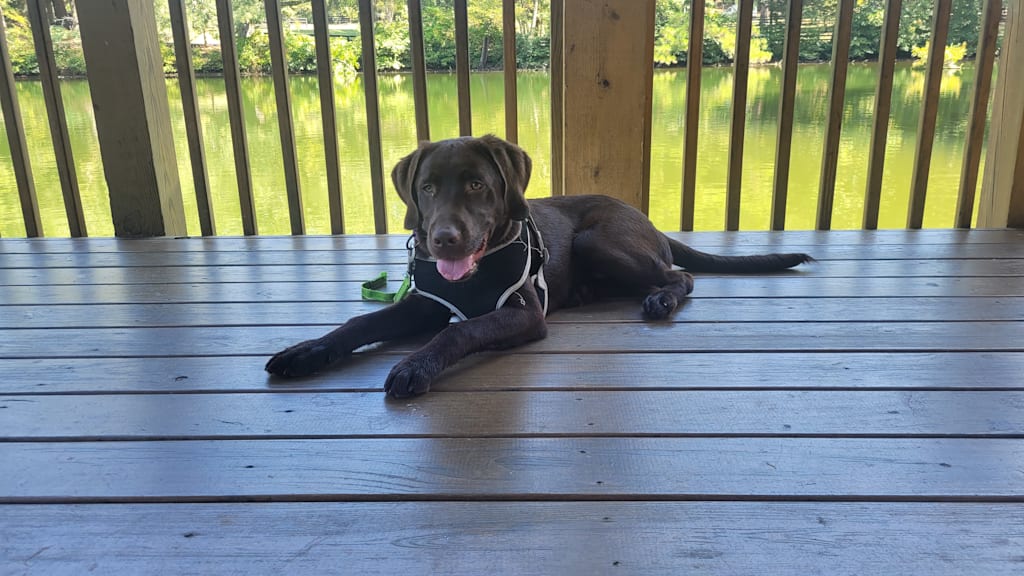
Dog recall training feels solid… until you step outside.
At home, your dog listens.
Outside, they act like you don’t exist.
They keep sniffing.
They watch everything else.
They go the opposite direction.
This is not stubbornness.
It’s a training gap.
--
Why Dog Recall Training Falls Apart Outside
Inside your home, there’s very little competition.
Outside, everything changes.
Your dog is processing:
- Smells everywhere
- Moving objects
- People and dogs
- New sounds
Your voice becomes just one option.
If dog recall training hasn’t been practiced in these environments, your dog will choose what’s more rewarding.
And right now, that’s not you.
--
What Dog Recall Training Actually Means
Recall is not your dog hearing their name.
It’s your dog choosing to disengage from something interesting and come back to you.
That’s a decision.
Not a reflex.
And decisions are built through repetition and clarity—not by saying “come” louder.
--
What Your Dog Needs Before Recall Works
Before expecting reliability outside, your dog needs a foundation.
Your dog should:
- Want to engage with you
- Understand rewards clearly
- Respond consistently indoors
If this isn’t solid, recall will break down the moment distractions appear.
--
Dog Recall Training Step-by-Step
Step 1: Start Indoors
Begin where your dog already succeeds.
Call your dog once.
When they come, reward immediately.
Keep sessions short and clear.
You’re building the meaning of the command.
-
Step 2: Add Distance
Create small challenges.
Call your dog from another room or across the house.
Now your dog is learning to choose you—even with slight effort involved.
-
Step 3: Move Outside (Low Distraction)
Transition to a calm outdoor space.
Examples:
Backyard
Quiet street
Empty field
Use a long leash for safety and control.
Reward heavily every time your dog responds.
This is where dog recall training starts becoming real.
-
Step 4: Gradually Increase Distractions
Slowly raise the difficulty.
Move to:
- Quiet parks
- Neighborhood walks
- Areas with mild activity
If your dog ignores you, you moved too fast.
Go back a step and rebuild.
-
Step 5: Make Coming to You Worth It
Your dog must believe you are more valuable than the environment.
Use:
- High-value treats
- Play
- Praise
If distractions win, recall will fail.
-
What It Looks Like in Real Life
You’re at a park.
Your dog starts sniffing something interesting.
You call them once.
They pause… turn… and come back to you.
You reward them—and then release them again.
Now your dog learns:
Coming to you doesn’t end the fun.
It becomes part of it.
--
Common Dog Recall Training Mistakes
Repeating the Command
Calling your dog over and over teaches them to ignore you.
Say it once.
Then follow through.
-
Ending the Fun Every Time
If recall always means “leash up and leave,” your dog will avoid you.
Instead, reward and release.
-
Moving Too Fast
Skipping steps creates inconsistency.
If your dog struggles, lower the difficulty.
-
Why Dog Recall Training Matters
Recall is not optional.
It’s safety.
Your dog might run toward:
- Another dog
- A person
- A road
In those moments, recall is what protects them.
--
Final Thoughts
Dog recall training doesn’t fail because your dog is stubborn.
It fails because the process wasn’t built for real life.
When you train it step by step, your dog learns to choose you—even with distractions around.
And that’s when recall becomes reliable.
About the Creator
Pup's & Paws
Dog trainer, part-time treat dispenser, full-time translator of canine nonsense. I teach dogs manners and humans patience. Come for the tips, stay for the chaos.
Enjoyed the story? Support the Creator.
Subscribe for free to receive all their stories in your feed.
Comments
There are no comments for this story
Be the first to respond and start the conversation.