
Why Your Dog Is Always “On”
The real reason your dog won’t settle (and what finally creates calm)

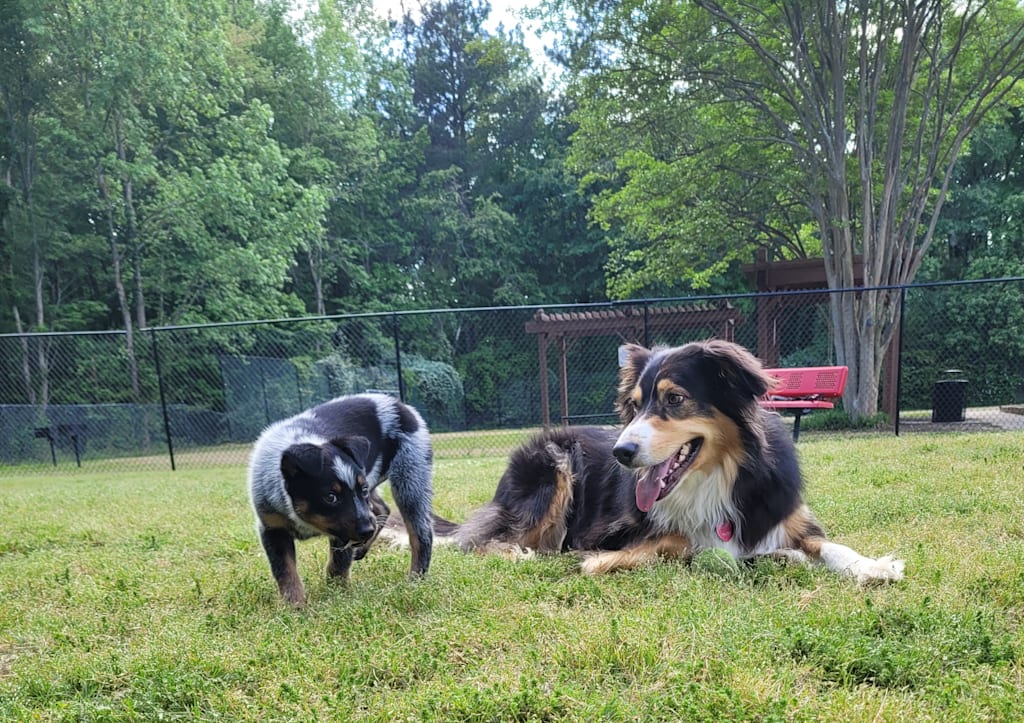
Your dog won’t settle.
They follow you everywhere. Jump on guests. Pace nonstop.
You try to correct it… but it keeps happening.
This is exactly where place training for dogs changes everything.
--
Why Your Dog Can’t Calm Down
Most dogs are never actually taught how to relax.
They’re constantly:
- moving
- reacting
- looking for stimulation
And without realizing it, owners reward that.
Your dog nudges you → you pet them.
They follow you → you talk to them.
They get excited → they get attention.
Meanwhile, calm behavior gets ignored.
So your dog learns one thing:
Being busy works. Being calm doesn’t.
That’s the real problem.
--
What Place Training for Dogs Actually Does
Place training gives your dog a clear job:
Go to one spot. Stay there. Relax.
Not “lie down for a second.”
A real boundary.
Your dog learns:
- where to go
- what to do
- how long to stay
- when they’re released
And once that becomes clear…
Everything starts to settle.
--
How to Start Place Training for Dogs
Step 1: Create the Place
Pick a clear spot:
- • dog bed
- • mat
- • raised cot
Guide your dog onto it.
The moment all four paws are on → mark and reward.
Keep it simple. Just teach:
“Getting on this spot = good.”
-
Step 2: Build Duration
Now your dog needs to stay.
Start small:
- 1–2 seconds
- reward
- release
Then slowly increase time.
If your dog keeps getting off → you went too fast.
Go back, make it easier, and rebuild.
-
Step 3: Add a Down
A standing dog is ready to move.
A dog lying down is starting to relax.
Ask for a down once they’re on place.
Reward calm body language:
- relaxed posture
- soft eyes
- less movement
This is where real calm starts.
-
Step 4: Add Distance
Take one step away.
Return → reward.
Then build:
- more steps
- walking around
- sitting down
If your dog breaks → reset calmly.
No frustration. Just clarity.
-
Step 5: Use It in Real Life
Now place becomes powerful.
Use it when:
- guests come over
- someone knocks
- you’re cooking
- kids are running around
Instead of correcting bad behavior…
You give your dog something clear to do.
--
What It Looks Like in Real Life
Before:
Dog runs to the door.
Jumps on guests.
Won’t settle.
After place training:
Doorbell rings → dog goes to place.
Guest walks in → dog stays calm.
You move around → dog stays put.
No chaos. No constant correction.
Just clarity.
--
Common Mistakes That Slow You Down
Moving Too Fast
Expecting too much too soon kills progress.
Build one layer at a time.
-
Letting Them Break Position
If your dog gets up whenever they want…
Place means nothing.
Be consistent.
-
No Release Word
Your dog needs a clear “you’re done.”
Use something like:
- “break”
- “free”
Say it every time.
--
Only Using It When Things Are Crazy
If you only practice when your dog is already overexcited…
You’re making it harder.
Train when things are calm first.
--
What Changes Once This Clicks
Place training for dogs creates:
- calmer greetings
- less barking and pacing
- better structure at home
- a dog that actually relaxes
And most importantly…
You stop feeling like you’re constantly managing your dog.
--
The Bottom Line
Your dog isn’t “too much.”
They just don’t know how to be calm yet.
Place training for dogs gives them that skill.
And once they understand it…
Everything in your day gets easier.
About the Creator
Pup's & Paws
Dog trainer, part-time treat dispenser, full-time translator of canine nonsense. I teach dogs manners and humans patience. Come for the tips, stay for the chaos.
Enjoyed the story? Support the Creator.
Subscribe for free to receive all their stories in your feed.
Comments
There are no comments for this story
Be the first to respond and start the conversation.