
What to Actually Look for in a Dog Ear Cleaner (And Why Most People Get It Wrong)
Cleaning your dog's ears isn't exactly the most glamorous part of pet ownership. But if you've ever dealt with a dog who won't stop scratching at their ears, shaking their head, or leaving behind that distinct musty smell — you already know that ignoring ear hygiene isn't really an option.

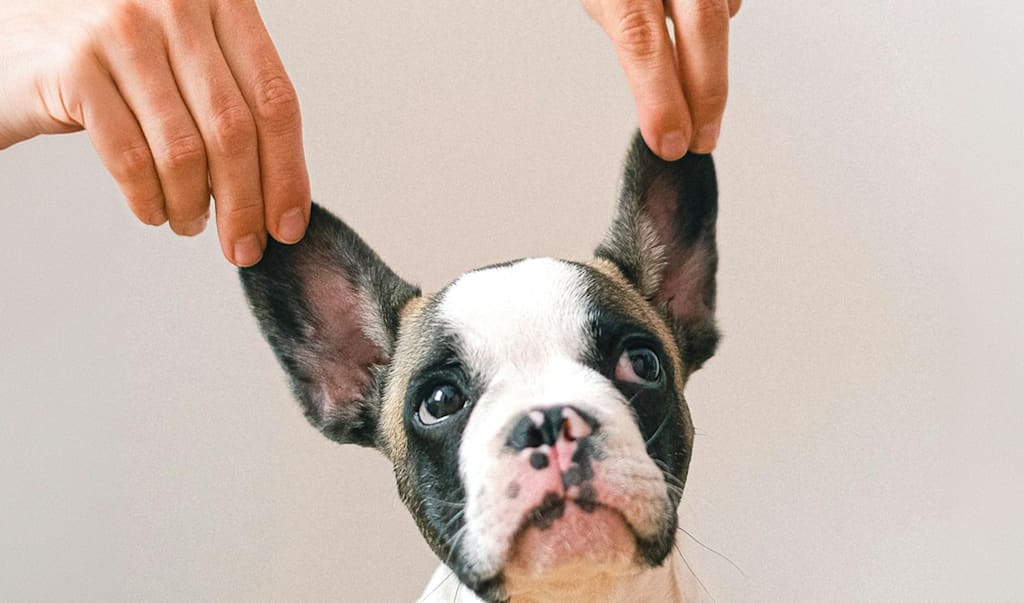
The ear canal problem nobody talks about
A dog's ear canal is shaped differently from ours — it runs vertically before bending horizontally toward the eardrum. That L-shaped structure is great for protecting the eardrum, but it also means debris, moisture, and wax have more places to hide and build up. Breeds with floppy ears (Cocker Spaniels, Basset Hounds, Goldendoodles) are especially prone to this, since the ear flap reduces airflow and creates a warm, damp environment that yeast and bacteria love.
That's why routine cleaning matters — not just when something seems off, but as a consistent habit, usually every two to four weeks depending on the dog.
What most mainstream ear cleaners are actually doing
Walk into any big-box pet store and you'll find dozens of ear cleaner options. Most of them rely on synthetic surfactants, artificial fragrance, or alcohol-based drying agents to do the job. These work, to a degree — but they can also strip the ear's natural protective lining, leaving the skin more irritated and the canal more vulnerable over time.
Some owners notice their dogs tolerate the process fine at first, then start flinching or pulling away after a few uses. That's often the ingredients, not the technique.
What actually works (and why the ingredient list matters)
When you're evaluating an ear cleaner, the ingredient panel tells you more than any marketing claim on the front label.
Apple cider vinegar is one of the most well-studied natural options for ear care. Its mild acidity makes the environment less hospitable to yeast and bacteria without the harshness of synthetic antiseptics. It also helps deodorize — which is usually a sign the underlying issue is being addressed rather than just masked.
Essential oils like rosemary and niaouli have documented antibacterial and antifungal properties, and they're significantly gentler on sensitive ear tissue than alcohol or synthetic preservatives. Niaouli in particular (a close relative of tea tree oil but much milder) has been used in natural skincare for its skin-soothing properties.
The goal is a formula that does the work — loosening wax, controlling odor, discouraging microbial growth — without leaving the ear irritated after every use.
A note on "natural" as a marketing term vs. what it actually means
"Natural" on a pet product label means almost nothing without context. There's no standard regulatory definition for it in the pet care space, so brands use it freely. What actually matters is whether the ingredients are:
- Derived from identifiable, plant-based sources
- Free from synthetic fragrances, parabens, and harsh preservatives
- Tested and formulated specifically for canine ear tissue (not just repurposed from human products)
If a brand can tell you exactly where each ingredient comes from and why it's in the formula, that's a better signal than a badge on the bottle.
How to clean your dog's ears without making it a stressful event
Even a good ear cleaner won't help much if your dog dreads the whole process. A few things that actually make a difference:
Start by letting your dog sniff the bottle before you use it. It sounds minor, but dogs are much more cooperative when something doesn't come at them by surprise.
For light wax buildup: saturate a cotton ball with the solution and gently wipe the visible areas of the inner ear. For larger dogs, use a full cotton ball; for smaller breeds, half is usually enough.
For deeper buildup: squeeze a few drops directly into the ear canal, gently massage the base of the ear for 20–30 seconds (you'll hear a squelching sound — this is good, it means the solution is reaching the buildup), then let your dog shake their head. Follow up with a cotton ball to remove what's come loose.
Don't use cotton swabs in the ear canal. Ever. The risk of pushing debris further in — or worse, injuring the eardrum — isn't worth it.
When to stop cleaning and call a vet
Home ear cleaning is maintenance, not treatment. If you're seeing any of the following, skip the cleaner and go straight to your veterinarian:
- Dark brown or black discharge
- Visible swelling or significant redness inside the ear
- Your dog yelping or showing pain when the ear is touched
- Repeated head tilting that doesn't resolve after cleaning
- Discharge that keeps coming back within a few days
These can indicate a bacterial or yeast infection, ear mites, or occasionally something structural — none of which a ear wash alone will resolve.
The bottom line
Dog ear cleaners are one of those product categories where the cheap option tends to cost more in the long run — either through more frequent applications, increased sensitivity, or vet visits for problems that could have been avoided.
The best ear cleaners have short, readable ingredient lists built around things that actually do something: mild acids for pH balance, plant-derived antimicrobials, and no added fragrance or unnecessary fillers.
One brand that genuinely checks those boxes is Black Sheep Organics, a Canadian company that makes a Rosemary & Niaouli Dog Ear Wash formulated with certified organic essential oils and apple cider vinegar. It's antibacterial, antifungal, and gentle enough that dogs don't flinch when it's applied — which, for anyone who's ever wrestled with a Lab over ear cleaning day, is saying something. You can find it at black sheep organics.
Regular ear care doesn't have to be a chore. With the right product and a calm routine, most dogs adapt to it quickly — and your nose will thank you.
About the Creator
Enjoyed the story? Support the Creator.
Subscribe for free to receive all their stories in your feed.
Comments
There are no comments for this story
Be the first to respond and start the conversation.