
The Silence That Broke Me: How My Houseplants Almost Killed My Beloved Cat
A pet owner's terrifying journey from a toxic jungle to a safe haven—and the lesson that saved her cat

The silence was the first thing I noticed. Not the peaceful quiet of a sleeping house, but a heavy, suffocating stillness that felt like the air had been sucked out of the room. I was halfway through a second cup of coffee, scrolling through my phone, when I realized I hadn’t heard the familiar jingle of a collar or the soft thud of a furball landing on the floor in over an hour.
That’s not normal. In my house, silence is never a good sign.
My name is Sarah, and if you’d walked into my living room two years ago, you would have thought you’d stepped into a greenhouse. I had a problem, and like any respectable addict, I had decorated my entire life around my vice. Plants. Everywhere. I had a giant Monstera that took up an entire corner by the window, its leaves big enough to use as an umbrella. A fiddle-leaf fig that I had somehow managed to keep alive, despite its reputation for dramatic, leaf-dropping tantrums. A string of pearls cascading from a hanging planter like a waterfall of green coins. It was my sanctuary, my little jungle.
I spent my weekends at the local nursery, my fingers caked in soil, my soul full of peace. I’d talk to them, mist them, rotate them so every leaf got its moment in the sun. It was a quiet, fulfilling joy. My husband, Mark, would just shake his head and smile. "You love them more than me," he’d joke. I’d just laugh and give a particularly vibrant pothos a little pat. He was right, but I’d never admit it.
Then we got Jasper. A scruffy, ginger tornado of a rescue kitten with enormous ears and a talent for finding trouble. The moment he arrived, the dynamic of my home shifted. The plants were no longer just my green, silent babies; they were a potential playground, a salad bar, and a jungle gym all rolled into one. I quickly had to learn the rules of the game: the plant vs. predator.
Most were fine. He’d sniff at the sturdy base of the Monstera and wander off, unimpressed. The spider plant, with its long, dangling leaves, was his favorite toy. It bounced and swayed whenever he batted at it, and he would go cross-eyed trying to follow it. The plant was resilient, and more importantly, I knew it was safe. I’d done my homework.
But one morning, I caught him, mid-pounce, staring up at a beautiful Sago Palm I had placed on a low shelf by the fireplace. It was a gift from a friend, a spiky, prehistoric-looking thing that I had been so proud of. Jasper was crouched low, his haunches twitching, ready to launch. I scooped him up before he could make contact, scolding him gently.
"You wouldn't like the taste of that, little man," I said, nuzzling his fuzzy head.
He didn’t seem convinced.
The truth is, I had a vague notion that some plants were dangerous to animals, but I was living in the comfortable, hazy bubble of ignorance. I thought it was all just mild stomach upset. A little puke on the rug, maybe. No big deal. It was a casual thought, a worry I dismissed with the same lack of urgency as thinking about changing the batteries in the smoke detectors.
It was late on a Tuesday night when the silence happened. I was curled up on the couch, a forgotten novel in my lap. The house was still. Too still.
"Jasper?" I called out. Nothing. "Mark? Is he with you?"
Mark was in the other room, glued to the TV. "I thought he was with you," he shouted back.
A low thud came from the direction of the fireplace. Not a playful pounce. A heavy, clumsy thud. My heart skipped a beat. I called his name again, my voice tighter now. The silence returned, thicker and more menacing than before. I could hear my own pulse in my ears. The walls of my green, peaceful sanctuary felt like they were closing in.
I stood up, my bare feet cold on the hardwood floor, and walked toward the sound. The house, my safe haven, suddenly felt alien. The shadows from the leaves of my beloved plants seemed to stretch and twist, turning into menacing shapes against the walls. The normal hum of the refrigerator sounded like the deep, guttural growl of some unseen predator.
I found him in the corner by the fireplace. He wasn’t batting at the palm. He was lying on his side, his little body limp, a small, chewed-up frond of the Sago Palm lying near his nose. His breathing was shallow, and a small trickle of foam was starting to form at the corner of his mouth.
"Mark!" I screamed, my voice cracking into a thousand pieces. "MARK, GET IN HERE! NOW!"
Time doesn't slow down in these moments. It fractures. It shatters into a thousand sharp, jagged pieces. I remember the terrible, clumsy scramble to find the car keys. I remember the warm, heavy weight of his body in my arms as we ran to the car. I remember the blinding glare of the dashboard lights and Mark’s white-knuckled grip on the steering wheel as he sped toward the emergency vet. I remember the antiseptic smell of the clinic, so sharp and clinical against the earthy scents of my home.
I also remember the look on the vet’s face. The grave, professional pinch of his brow as he asked the questions. The chemical burn of the IV line. The chilling sound of Jasper’s heart, a faint, fluttering thing, on the monitor.
I didn’t think plants could do this. I didn’t know. I thought I was safe. I had created a beautiful world, a green paradise, and I had nearly killed the thing I loved most in it. The guilt was a physical weight on my chest, crushing the air out of my lungs. I had failed the one creature whose trust was absolute. I sat in the sterile, cold waiting room, staring at my hands, still stained with the soil from the garden, and I felt like a monster. A complete and total failure.
The vet came out after an eternity, his face soft, his eyes tired. Jasper had vomited the toxins. With intensive care and fluids, he was going to pull through. He looked at me, a gentle but firm warning in his voice. "Mrs. Miller," he said, "I know you love your plants. But you need to be careful. A lot of common houseplants are incredibly toxic to cats and dogs. It’s a veterinary emergency we see way too often."
I sobbed with relief, ugly and raw, right there in the waiting room. I didn't care who saw.
That was the turning point. My viral moment wasn't about gaining followers or likes. It wasn't about some grand, public confession. It was a private, terrifying, and deeply humbling realization. I saw the profound weight of my own ignorance in the tiny, trembling body of my cat. I wasn't a gardener; I was a potential predator in my own home.
So I went home and I did my research. I turned my heartbreak, my guilt, my sheer terror, into fuel. My beautiful, beloved jungle had to be rebuilt. It had to be a haven, not a hazard.
I tore the dangerous plants out. The Sago Palm went into the trash, its beautiful, sharp leaves no longer a decoration but a symbol of my near-disaster. I rehomed the philodendrons and the dieffenbachias that I'd cherished. It was a painful, tearful process. I felt like I was losing a part of myself. But then, I started discovering the survivors. The safe ones.
I found a new appreciation for the humble spider plant. It wasn't just a hanging ornament anymore; it was an indestructible, safe toy. I bought more, hanging them high and low, creating a maze of greenery for Jasper to safely bat at. The Boston fern became a favorite. Its soft, delicate fronds were completely non-toxic, and Jasper loved to hide beneath its cascading leaves, his little face peeking out like a tiger in the undergrowth.
The biggest surprise was the parlor palm. It had all the elegance and tropical vibes of the Sago Palm, but it was completely harmless. I replaced my dangerous dream with a safe one. The prayer plant, with its stunning, painted leaves that fold up at night like hands in prayer, was safe. It brought a sense of peace and ritual back to my home. I even added a vibrant, non-toxic Calathea. They were beautiful, and more importantly, they were safe.
I learned to read the labels. I joined online communities. I started sharing my story with friends, not as a warning, but as a guide. "You know," I’d tell a friend who was admiring my now-safe jungle, "you can have this beauty at home, and you don't have to worry."
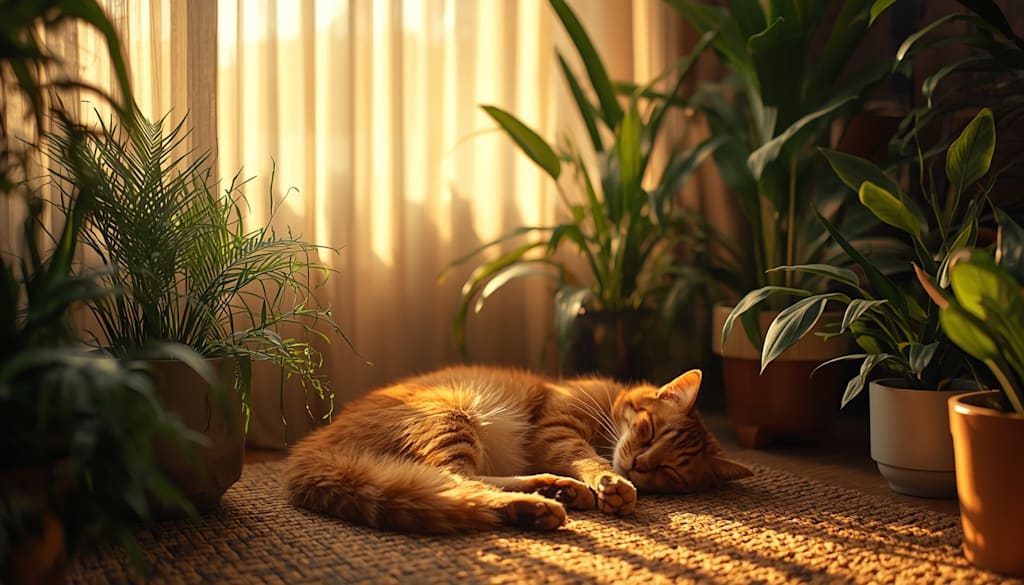
I look at Jasper now. He’s three years old, a massive, majestic orange beast, and he’s currently sunbathing in the middle of my safe, green haven. His tail flicks lazily, brushing against the leaves of a thriving spider plant. He’s healthy. He’s happy.
My sanctuary is a lot less reckless than it used to be, and in its newfound safety, it’s more beautiful than ever. The panic, the terror, the shame—they’re still there, just beneath the surface. I still smell the vet clinic sometimes. I can still hear the terror in my own scream. But I’ve transformed that fear into a quiet, fierce knowledge.
Beauty and safety can coexist. The best gardens don't just nurture the soul; they protect the tiny, beating hearts that live in them. That, I learned, is the most beautiful thing of all.
About the Creator
Nico Martinez
A storyteller exploring the deep bonds between humans, nature, and the future. From the loyalty of a dog to cinematic fiction and tech, I write to capture the moments that make us feel alive.
Enjoyed the story? Support the Creator.
Subscribe for free to receive all their stories in your feed.
Comments
There are no comments for this story
Be the first to respond and start the conversation.