
The Hidden Health Risk Most Dog Parents Overlook at the Vet
By age three, almost 80% of dogs already have signs of periodontal disease, yet most owners have no idea.
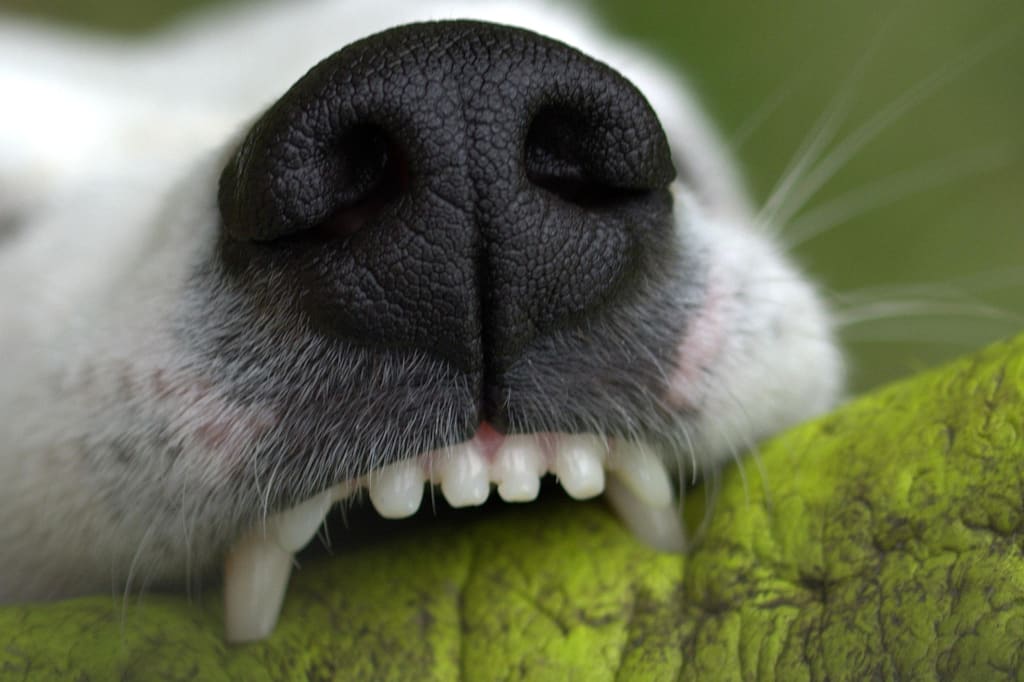
You schedule the vaccines. You keep up with flea and tick prevention. You book a check-up if something seems off. But there is one health risk that most dog owners consistently defer, and vets say it causes more long-term damage than almost anything else they see.
Dental disease.
Not bad breath. Not yellow teeth. The kind of dental disease that quietly destroys gum tissue, erodes jaw bone, and sends bacteria into the bloodstream where it damages the heart, kidneys, and liver.
By age three, around 80 percent of dogs already show signs of periodontal disease. Most owners have no idea.
The reason it goes unnoticed is straightforward: dogs do not show dental pain the way humans do. A dog with advanced gum disease will still eat, still wag its tail, still greet you at the door. That stoicism is exactly what allows the disease to progress for months or years without anyone catching it.
By the time bad breath is obvious enough to notice from across the room, the disease has already been doing damage for a long time.
How it starts
Plaque hardens into tartar in as little as 24 to 72 hours. Once calcified onto the tooth surface, no amount of brushing removes it. What starts as plaque becomes gingivitis, then periodontal disease, then bone loss and tooth loss.
But the damage does not stay confined to the mouth. Bacteria from a chronically infected oral environment can enter the bloodstream and reach major organs. The link between untreated periodontal disease and kidney disease, heart disease, and liver damage in dogs is documented in veterinary research. This is not a cosmetic problem.
There is also the pain factor. Dogs with advanced dental disease are living with significant, ongoing discomfort. Most owners never notice, because dogs mask it completely. They keep eating. They keep playing. The silence reads as fine. It is not.
What a professional cleaning actually does
A proper veterinary dental cleaning requires general anaesthesia. This is not optional for a thorough assessment. Without it, a vet cannot probe gum pockets, take intraoral X-rays, or clean below the gumline, which is where periodontal disease actually develops.
Any cleaning performed without anaesthesia can only address visible surface tartar. It looks cleaner cosmetically, but it misses the clinical point. The disease below the gumline continues untouched.
Under anaesthesia, the procedure includes a full oral examination, gum pocket probing, dental X-rays, ultrasonic scaling, and polishing. If any teeth need extraction, that happens during the same appointment. It is a thorough assessment, not a cosmetic scrub.
How often your dog needs it
For most adult dogs, once a year is the standard recommendation. Small breeds, whose teeth are crowded into undersized jaws, need it every six months because tartar accumulates faster and disease progresses more quickly in a crowded mouth. Larger breeds can typically go 18 months between cleanings.
What you can do between appointments
Daily brushing is the most effective home intervention. Three times a week is the realistic minimum that makes a meaningful difference. Below that, the evidence suggests it does not prevent much.
Use a dog-specific toothpaste. Human toothpaste contains xylitol, which is toxic to dogs. Enzymatic formulas work by dissolving plaque rather than just scrubbing, which makes them more effective and often easier to apply.
Dental chews and water additives have some supporting evidence but are supplementary at best. They do not remove tartar that has already hardened, and they do not replace what a professional cleaning does below the gumline.
The appointment most owners keep deferring
A routine professional cleaning including anaesthesia, scaling, and polishing typically costs between $300 and $700 at a general practice clinic. Urban practices charge more. Extractions push the cost higher.
That number feels significant until you compare it to the cost of treating advanced periodontal disease, tooth root abscesses, or the organ complications that untreated oral infection can cause down the line.
If your dog has not had a professional dental cleaning in the past year, the most useful thing you can do today is call your vet and book one.
About the Creator
Aleksandar Mishkov
Former journalist turned freelance writer with a passion for all-things pet related. Been living with dogs my entire life, currently with an 8 year old male Jack Russell terrier
Enjoyed the story? Support the Creator.
Subscribe for free to receive all their stories in your feed.
Comments
There are no comments for this story
Be the first to respond and start the conversation.