vet
A veterinarian is just a doctor that treats furry, cute patients.
Mount Chiltan and the Markhor: A Wildlife Conservation Miracle in Balochistan
If someone has never seen Balochistan or does not know much about it, they might assume that this mountain is located in some remote area of the province. After all, when wildlife is disappearing across Balochistan, how could such a large number of markhors possibly exist near the province’s largest city? But Mount Chiltan is not only located next to Quetta, the capital of Balochistan the city’s population has expanded right up to its foothills. How Did the Mountain Get the Name Chiltan? It is commonly believed that a dervish once lived in this mountain with his 40 children. Because of these forty children or brothers, the mountain came to be known as “Chiltan”. This is not just hearsay; the same story is even included in school textbooks in Balochistan. However, Nazir Ahmed Kurd, who serves as Deputy Conservator of Forests at Hazarganji Chiltan National Park, disagrees with this explanation. According to him, the story about the 40 brothers is incorrect. “In fact, there are 40 different locations in this mountainous region, each with its own specific name. That is why it is called Chiltan,” he said. He added that they invite officials responsible for the education curriculum to visit and conduct proper research with them so that accurate information about the mountain’s name can be included in textbooks. Markhor – A Species of Wild Goat
By Pets and animals 8 months ago in Petlife
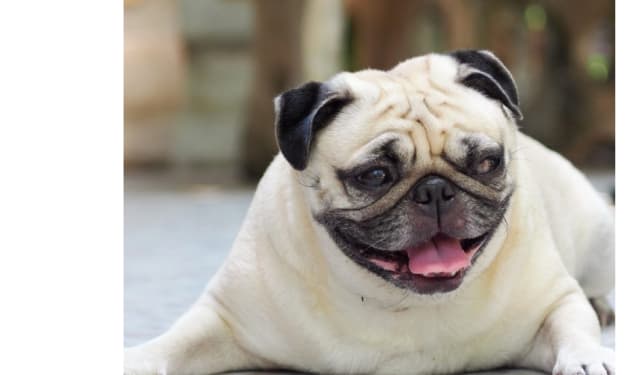
Dogs that are overweight have much higher ocular pressure.
According to a recent study, dogs that are overweight have far higher ocular pressure than dogs that are thin. This disparity brings normally healthy animals closer to levels that have long been associated with diseases that compromise vision.
By Francis Dami8 months ago in Petlife
Sindh Ibex Documentary – Endemic Wild Goat of Pakistan Facts & Habitat
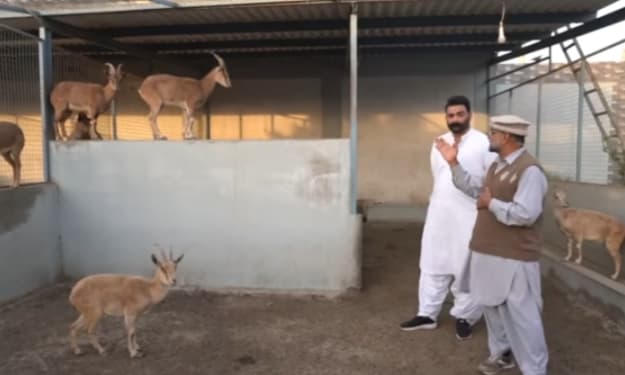
I am currently in the province of Sindh, Pakistan. The district is Thatta, and here in Thatta we have a friend, Mr. Shahid Brohi. He has established a very beautiful wildlife breeding farm here. He has fulfilled all legal requirements, and the farm is registered with the Sindh Wildlife Department. According to international standards, he has built proper enclosures and cages, and he keeps various species of mammals and birds here. Today, I would like to show you an animal that very few people have seen in a zoo or a wildlife breeding farm. This is the Sindh ibex. The Sindh ibex is also known as the Sindh wild goat. This is a female ibex. The difference between the male and female can be identified by their horns. The female’s horns are approximately six inches long, whereas the male’s horns are much longer, curving backward from the head. We will show you the male in another enclosure.
By Pets and animals 8 months ago in Petlife
Swiss Glacier Rescue: Chihuahua Dog Leads Helicopter Team to Trapped Mountaineer
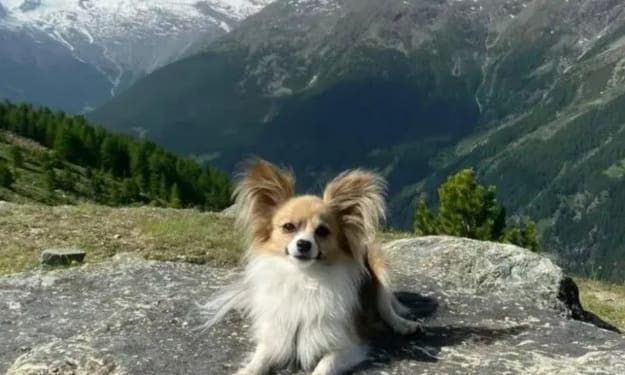
Flip is a small, energetic, and loyal Chihuahua, but he has a very big personality. These are the words Flip’s owner, Jon Goller, uses to describe his dog. Last summer, Jon Goller fell into a crevasse on a Swiss glacier. He was rescued by a helicopter—and the reason was his dog, who stayed by his side even in that terrible moment. Both Flip and Goller love the mountains and mountaineering. When Flip gets tired from walking, his owner puts him in a bag and carries him on his shoulder so they can complete the rest of the journey more quickly. They stop at several spots along the way, eat, and enjoy the surrounding scenery. Goller said, “My dog can walk 20 to 30 kilometers. Fortunately, on the day of the accident I hadn’t put him in the bag, nor was he on a leash, otherwise he might have fallen into the crevasse as well. If that had happened, the rescue teams would never have found me.” Jon is originally from the city of Plzeň in the Czech Republic and had moved to Switzerland about a month before the accident. Goller says, “My parents gave me Flip as a gift—they breed dogs. I had another dog before, but it passed away some time ago. Flip is two and a half years old, and everyone at my office likes him and plays with him. He especially loves playing in the snow.” What happened to Goller? Saas-Fee, also known as the Pearl of the Alps, is a small Swiss village located in the southeastern part of the country. Bruno Kalbermatten, who works with the rescue and helicopter company Air Zermatt, says, “This is not a small area, nor is it empty like a sheet of paper. The snow here is dirty, and finding the crevasse Goller fell into would not have been easy. “We don’t even want to think about what would have happened if Goller hadn’t had his dog with him.” Rescue workers had seen his dog sitting on a rock. Recalling the day, Goller says, “I had sat on a rock to eat lunch. After that, I stood up, took just a few steps, and as soon as I stepped onto the snow, I fell through and got trapped.” The Rescue Operation Goller says, “At first, I tried to get out of the crevasse by myself, but my shoulder was hurting. While trying to climb out, I realized my hand was in severe pain. “I also knew that if I struggled too much, I could sink deeper and cause even more damage.” He then used his walkie-talkie to call for help, and a couple who were on the same frequency heard his voice. Claudia and Ralf not only alerted the rescue personnel about the accident, but also tried to keep Goller calm through the walkie-talkie. However, even the couple did not know the exact location of the crevasse where Goller had fallen. An Air Zermatt helicopter searched for Goller for nearly 40 minutes. They knew the glacier had swallowed him, but then they suddenly found a clue. That clue was a dog sitting on a rock. Bruno, from the company, says, “Suddenly, one of the rescue workers noticed movement on a rock. The pilot flew the helicopter closer and saw a dog sitting on a rock next to a crevasse.” When the helicopter reached the spot, Flip was blown aside by the wind from the rotor blades. Bruno says the small dog was watching all their activities, and when Goller was pulled out with ropes, “the dog began wagging his tail happily.” Goller says that after he was discharged from the hospital, the first people he thanked were Claudia and Ralf, whose help had made the rescue operation possible. “I am not an inexperienced mountaineer, but I had no idea that walking on a glacier could be so dangerous. That day, I learned a hard lesson.”Is this conversation helpful so far?
By Real content8 months ago in Petlife
Saudi Arabia to Issue Passports for Millions of Camels
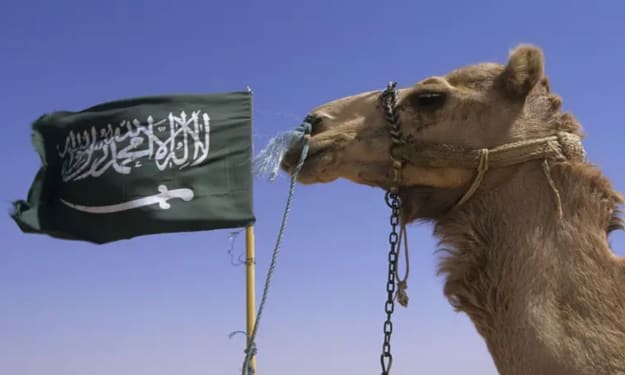
Saudi Arabia has announced that it is issuing passports to millions of the country’s camels, in a move that officials say will help better manage the country’s prized animals. According to Saudi officials, the move will increase the impact of camel farming and create a reliable information asset regarding the identification and ownership of the animals. A video posted on social media by the Ministry of Environment, Water and Agriculture also showed an image of the document. It showed a green passport, which features the country’s coat of arms and a golden image of a camel. In 2024, the government estimated that there were about 2.2 million camels in Saudi Arabia, which contribute more than 2 billion riyals to the country’s economy each year. According to Arab News, there are about 35 million camels worldwide, of which 17 million are in the Arab world. Somalia ranks first among Arab countries, followed by Sudan, Mauritania, Saudi Arabia and Yemen. The camel is part of the national emblem of Saudi Arabia. Camel beauty contests and shows are also held in the country, where the best camels are awarded prizes. The Saudi display on national days, special and historical occasions is incomplete without the presence of camels. The role of camels in Saudi Arabia and the Arab Gulf countries in general has a long history. History of camels If we look at a brief history, we find images from the early years of the 20th century showing that camels were the only means of travel for visiting the holy cities of Mecca and Medina of Islam. Pilgrims and caravans of pilgrims from Afghanistan, Central Asia, South Asia, and even the Far East used to reach Saudi Arabia after long journeys on camels. The tradition of using camels for transportation in the arid deserts of the Gulf is centuries old. A study has found that camel sculptures carved on rocks in Saudi Arabia may be the oldest animal depictions in the world. When first excavated in 2018, researchers estimated that they were made about 2,000 years ago. This estimate was made because of their similarity to artifacts found in the famous ancient city of Petra in Jordan, but later research put the age of these camels at 7,000 to 8,000 years. Determining the exact age of rock carvings has been a major challenge for researchers because, unlike cave paintings, there is often no organic material to support the artifacts. Finding rock art at this level in the region is also rare. In September 2021, a team of international researchers published their findings in the journal Archaeological Science. They analyzed destruction patterns, traces, and animal bones found in the area to determine the new date of the sculptures. The antiquity of these monuments makes them older than the Stone Age, which is 5,000 years old, or the Pyramids of Giza in Egypt, which are 4,500 years old. These monuments were built even before the domestication of camels, which was an important factor in the economic development of the region. At the time these statues were made, Saudi Arabia was not what it is today. Instead of today's deserts, there were vast green and grassy areas with lakes. It is still unclear why these camel statues were made, but researchers believe that they may have been a meeting place for nomadic tribes. Badr bin Saud, a Saudi historian and columnist for the Riyadh newspaper, says that camels have been an integral part of life in the Arabian Peninsula for centuries. "Without camels, survival in this dry and scorching desert would have been impossible." Because of this necessity, camels have contributed to the economy, culture and other aspects of life in the Arab world. As Badr bin Saud says, ‘In the pre-Islamic era, poets like Tarfat Ibn al-Abd mentioned the camel in their poems.’ According to Dr. Badr bin Saud, ‘Camels played such a role in human life that they cannot be ignored. This is why ‘the Prophet of Islam also had a camel named (Qaswa)’ Although the need for camels for transportation has decreased, the love and historical connection between Arab leaders and them remains. King Abdulaziz, the founder of modern Saudi Arabia, had a herd of camels called ‘Al-Ramaat’ and a special camel called ‘Al-Duwayla’. King Salman is also a great lover of camels. Badr bin Saud says, ‘The king once asked Prince Saud bin Muhammad to send him one of his beautiful camels (Manqiyya) on a feast. Saudi Crown Prince Mohammed bin Salman also has a beautiful and well-bred camel named (Al-Sharf). Camels are called the ‘ships of the desert’ because each camel can carry a load of 400 kilograms. In the absence of cars and other modern means of transport, caravans of the Quraysh chiefs in Mecca used to travel to Syria and Yemen on these camels. Traders called ‘aqlat’ traded camels as far as India, Turkey, Morocco and Nigeria 400 years ago. Even a few decades ago, camels were used to extract and refine oil. Camels are divided into several types based on color. Camels range from brown to red in color. Camel experts say that camels from Oman and Sudan are famous for their running ability, while camels from the coastal areas of Saudi Arabia are famous for their abundant milk production. Wealthy Saudi Arabia, which is now investing heavily to compete with the technological and modern world, has not given up on the historical value and cultural color of camels in this regard is trying to make a share of the bat. Currently, a company called (Swani) is investing in the camel milk and powder industry and has already exported its products to 25 countries. They also make ice cream from camel milk. The brand (Abel) makes clothes, handmade bags and shoes from camel wool and skin. Camel skin is considered the strongest and most durable skin after crocodile skin. Under Saudi Arabia's Vision 2030, the camel industry will become one of the country's major non-oil income sources. In addition to income, there is also a sense of history, religious traditions and customs that bring both profit and pride to Saudis.
By Real content9 months ago in Petlife
Dectomax Injectable Draw Off Tube
Dectomax Injectable Draw Off Tube – Complete Professional Guide Introduction to Dectomax Injectable Systems If you’ve ever worked with livestock health products, you already know that the medication itself is only half the story. The tools you use to administer it can make or break your workflow. That’s where the Dectomax Injectable Draw Off Tube quietly shines. It’s not flashy, but it’s one of those farm tools that, once you use it, you wonder how you ever managed without it.
By Thomas Muller9 months ago in Petlife
Canine Lymphoma in Dogs: Earliest Signs with Treatment that Pet Owners Should Know. AI-Generated.
Canine lymphoma in dogs is one of the most commonly diagnosed cancers in dogs, yet many pet owners fail to recognize its early warning signs. Early detection can significantly improve a dog’s quality of life and treatment success. Understanding the symptoms, causes, and available treatment options can help dog owners make informed decisions and act quickly when it matters most.
By David Carter10 months ago in Petlife
How to Manage Flea Allergy Dermatitis in Pets During this Winter Season. AI-Generated.
Many pet owners assume fleas disappear in winter but for pets suffering from Flea Allergy Dermatitis (FAD), colder weather does not always bring relief. Indoor heating, mild winters, and hidden flea life cycles can allow infestations to persist year-round. Understanding how to manage flea allergy dermatitis in pets during winter is essential to maintaining your pet’s comfort, skin health, and overall well-being.
By David Carter10 months ago in Petlife
How to Choose the Right Dewormer for Your Cats – Expert Advice for Optimal Cat Health. AI-Generated.
Internal parasites are a common health concern for cats of all ages. Choosing the best dewormer for cats combined with natural worm prevention strategies is essential for protecting your cat’s digestive health, immunity, and overall wellbeing.
By David Carter10 months ago in Petlife
Flystrike in Rabbits: How to Spot, Treat, and Prevent This Life-Threatening Condition
What exactly is flystrike in rabbits? In simple terms, it’s a dangerous and potentially fatal condition where flies lay eggs on your rabbit—usually near the rear or on open sores—and the hatched maggots begin to eat into the skin. It progresses quickly and can become severe in less than a day, making immediate action critical.
By Kamel Saidani11 months ago in Petlife
Alfalfa Premium Hay Products
When it comes to feeding livestock or small pets, the quality of hay makes all the difference. Alfalfa Premium Hay is one of the most nutrient-rich and energy-dense hay options available. Loved by farmers and pet owners alike, this legume-based hay provides the perfect balance of protein, fiber, and essential minerals to keep animals healthy, strong, and active.
By Thomas Muller12 months ago in Petlife
Understanding Common Canine Behaviors: Why Dogs Eat Non-Food Items. AI-Generated.
Dogs are naturally curious animals, and part of their exploration often involves using their mouths. While chewing on toys, bones, or treats is normal, some dogs develop an unusual habit — eating non-food items such as rocks, dirt, socks, paper, or plastic. This behavior, known as pica, can be puzzling and concerning for pet owners. Understanding why dogs engage in pica and how to address it can help ensure your pet stays healthy and safe.
By Dominion Valley Animal Hospital12 months ago in Petlife