fish
The fact that fish live only in the water make them different from all other animals.
The Silent Killer: Understanding High Blood Pressure
Imagine a deadly threat quietly lurking inside your body — one that doesn’t announce itself with pain or clear symptoms. You feel fine, so you assume you’re safe. Meanwhile, this silent enemy is slowly damaging your arteries, heart, kidneys, and brain. By the time you finally sense something is wrong, it may already be too late. This is the reality of hypertension, also known as high blood pressure — often called "the silent killer." Unlike a heart attack or a broken bone, hypertension doesn’t cause obvious pain or visible signs. That’s what makes it so dangerous. The Stealthy Nature of Hypertension Blood pressure is the force of blood pushing against the walls of your arteries. When it’s too high over time, it can cause serious health problems, including heart disease, stroke, kidney failure, and even vision loss. Globally, over 1.3 billion people live with high blood pressure, yet almost half don’t even know they have it. This lack of awareness allows the condition to progress unchecked, leading to tragic outcomes that could have been prevented. What makes hypertension particularly insidious is that it often develops gradually. You may feel energetic and healthy while damage accumulates beneath the surface. By the time symptoms like headaches, shortness of breath, or chest pain appear, the risk of a catastrophic event — such as a stroke or heart attack — is significantly higher. Who Is at Risk? Anyone can develop high blood pressure, but certain factors increase your risk: Age: The risk rises as we grow older. Genetics: Family history plays a strong role. Lifestyle: Poor diet, excessive salt intake, alcohol consumption, smoking, and lack of exercise all contribute. Weight: Being overweight or obese greatly increases your chances. Chronic conditions: Diabetes and kidney disease often go hand in hand with hypertension. Hypertension doesn’t discriminate — it affects men and women, young and old, across every race and income level. The Power of Early Detection Since high blood pressure rarely announces itself, regular screening is vital. A simple, painless test at your doctor’s office or even at home can reveal dangerous trends long before they become life-threatening. Medical guidelines recommend that adults over 18 have their blood pressure checked at least once every two years, and more often if you have risk factors. How to Take Control The good news is that hypertension can be managed — and even prevented — with proactive steps. Here’s how you can take control before it’s too late: 1. Know Your Numbers Understand what normal blood pressure is (generally below 120/80 mmHg) and monitor yours regularly. 2. Eat Smart Choose a diet rich in fruits, vegetables, whole grains, and lean proteins. The DASH (Dietary Approaches to Stop Hypertension) diet has been shown to be particularly effective. 3. Move Your Body Regular physical activity — even brisk walking for 30 minutes most days of the week — can make a significant difference. 4. Limit Salt and Alcohol Excess sodium and heavy drinking are major contributors to high blood pressure. Reduce your salt intake and drink alcohol in moderation. 5. Manage Stress Chronic stress can raise your blood pressure over time. Techniques such as meditation, deep breathing, yoga, and even spending time in nature can help. 6. Quit Smoking Smoking damages your blood vessels and raises your risk of heart disease and stroke exponentially. 7. Take Medications as Prescribed If your doctor prescribes medication, take it consistently. Never stop on your own, even if you feel fine. Beyond the Numbers Managing high blood pressure is more than just hitting target numbers. It’s about protecting your future self — your ability to walk your daughter down the aisle, play with your grandchildren, or travel the world in retirement. It’s about preserving your quality of life for years to come. We live in a world where many health threats are visible and dramatic. But sometimes, the most dangerous enemies are the ones we can’t see or feel — the ones that creep in quietly and strike when we least expect it. Don’t let high blood pressure steal your life in silence. Take charge today. Check your blood pressure, adopt healthier habits, and encourage your loved ones to do the same. Because when it comes to "the silent killer," awareness and early action are your most powerful weapons.
By Noor Hussainabout a year ago in Petlife
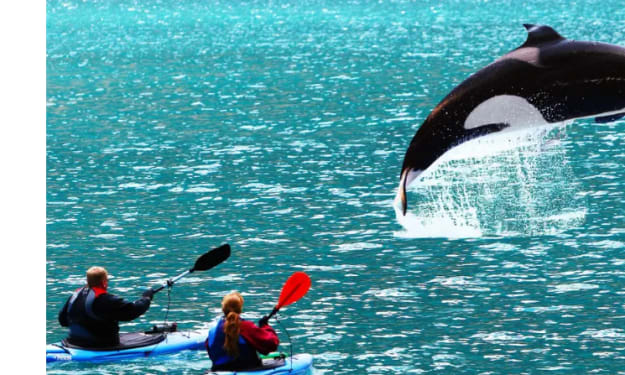
Numerous observations suggest that killer whales are attempting to form bonds with humans.
In an intriguing new study, researchers found that wild killer whales made 34 attempts to feed on humans. These uncommon cases occurred over 20 years and four oceans. Some took place from the shore, some in open water, and still others close to vessels.
By Francis Damiabout a year ago in Petlife
I know that pets are adorable and kids love to play with them - but they can have a very negative impact on our children.
As a parent and pet lover, I'm always torn between two truths: Animals are wonderful companions, and yet, they can inadvertently pose a health risk to young children. Like most families, when we brought our adorable kitten, Simba, and later a playful puppy named Leo, into our home, it brought a new kind of joy. The kids were thrilled. They ran, laughed, and cuddled with the pets from morning to night.
By Echoes of Lifeabout a year ago in Petlife
Now I Know My Dog Has a Lot of Bad Habits
When I brought my golden retriever, Milo, home, I was prepared for some chaos. I read every dog training book I could get my hands on, watched countless videos, and stocked up on toys, treats, and everything else a responsible pet owner should have. I envisioned a sweet, gentle dog who would sit politely, listen to commands, and shower me with affection.
By Echoes of Lifeabout a year ago in Petlife
Smart Feeding: Mike Savage New Canaan’s Koi Tips
Koi fish are more than just beautiful additions to your pond — they are living art that thrives with proper care. Among the most important aspects of koi health is feeding. While it may seem as simple as tossing pellets into the water, koi feeding involves timing, temperature awareness, dietary variety, and observation. As seasoned koi enthusiast Mike Savage New Canaan often shares in his blogs, proper feeding is the difference between average pond fish and vibrant, thriving koi.
By Mike Savage New Canaanabout a year ago in Petlife
How the shark's body develops precisely geometrically
Scientists have been studying the growth and behaviour of sharks and other creatures as they get bigger for millennia. A straightforward geometric principle—surface area develops more slowly than volume—lays the foundation for this investigation. This relationship is captured by the "two-thirds scaling law," which states that surface area scales with volume to the power of two-thirds
By Francis Damiabout a year ago in Petlife
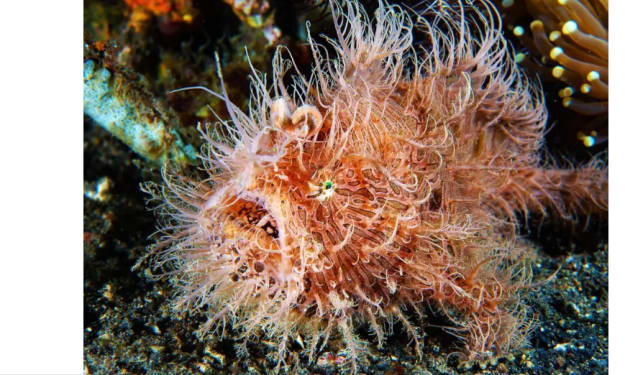
"Hairy frogfish" employ lures to find food while walking on the seafloor.
The hairy frogfish is not so much a hunter as it is a tuft of floating seaweed. However, an anglerfish that can breathe in prey more quickly than most cameras can blink is located beneath the mop of filaments.
By Francis Damiabout a year ago in Petlife
The Healing Power of Pets: How Animals Support Our Mental Wellness
There are some mornings when the weight of the world feels too heavy. The air feels too thick to breathe, the bed too safe to leave. But then I hear the soft padding of paws or feel a cold nose nudge against my arm — and I remember Odin is waiting for me. Not just to be walked, but to be loved. To remind me, without ever saying a word, that I still matter.
By Briana Felicianoabout a year ago in Petlife