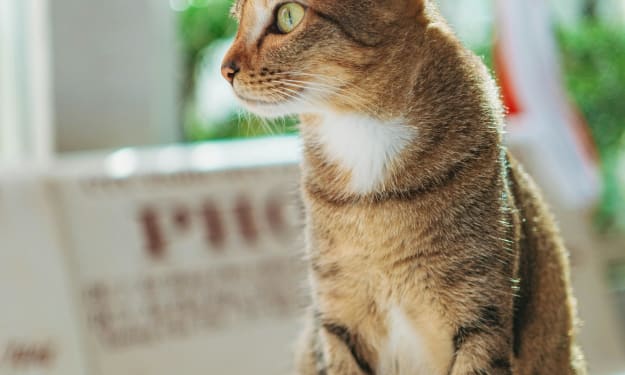
cat
It's been said that people that hate cats will come back as mice in their next life.
Understanding Pet Behavior and Providing the Best Care
write by : jawad Pets are more than just animals living in our homes—they are companions, family members, and sources of joy and comfort. Understanding pet behavior and knowing how to care for them properly is essential to fostering a happy and healthy relationship. Whether you have a dog, cat, bird, rabbit, or another type of pet, learning about their natural instincts, communication styles, and physical needs can improve their quality of life and deepen your bond.
By JAWAD HUSSAINabout a year ago in Petlife
My Parrot Won’t Stop Telling on Me!
When I brought home a parrot named Tango from a rescue shelter, I thought I was just adopting a colorful companion. What I didn’t realize was that I was welcoming the most talkative, nosy, and traitorous bird ever born into my life.
By Muhammad Saeedabout a year ago in Petlife
Maine Coon Cats For Sale Wisconsin
Maine Coon Cats For Sale Wisconsin are in high demand and it's easy to see why! Their bushy tails, expressive eyes, and friendly & loyal nature capture the hearts of cat lovers across the world. They are also popularly known as "Gentle Giants" because of their size and adorable nature. Maine coon cats can be a great choice as domestic pets, cause they can get along with your family well.
By Mega Coonsabout a year ago in Petlife
How to Read Kitten's Tail
Cats are known for their independence and mischievous nature. Their fluffy fur and adorable purring make them fascinating companions. Unlike dogs, cats don't express their emotions through barks. Like my cat, they rarely meow all day long. However, you can read their minds through more subtle forms of communication, such as their tail language.
By Linda Yuleabout a year ago in Petlife
Find Vet Rep Jobs with Top Animal Health Companies
If you are searching for vet rep jobs, you are likely a sales professional passionate about animal health or a veterinarian who intends to enter the pharmaceutical or medical sales industry. Becoming a veterinary sales rep with a leading animal health company can be a very positive step in your career as it gives good salaries, offers flexibility, and has chances to work with cutting-edge products, which will all contribute to improving animal care.
By Bella Jamesabout a year ago in Petlife
How to Get Pet Insurance in Dubai – Step-by-Step Guide (2025)
Pet keeping has seen a boom in Dubai over the last few years, especially among expatriates and families that treat pets as part of the family. The larger the numbers, the more the need to bear their maintenance—financially and medicinally.
By Sarath Menonabout a year ago in Petlife
The Silent Wonder of Nature: A Giraffe’s Journey Through Pregnancy
The giraffe, the tallest land animal on Earth, is not only known for its long neck and elegant stride but also for its incredible and often overlooked reproductive journey. While their towering presence dominates the African savannah, the life of a pregnant giraffe is one of silent endurance, resilience, and natural brilliance. A Long and Silent Journey A giraffe's pregnancy lasts around 15 months (approximately 460 days), making it one of the longest gestation periods among land mammals. During this extended time, the female giraffe (cow) quietly endures the challenges of the wild—harsh weather, scarce food, and threats from predators—while carrying her unborn calf with remarkable strength. Despite her large size, the giraffe carries her calf gracefully, showing little sign of physical discomfort. Her tall frame and strong limbs are well-adapted to support a growing baby without needing long periods of rest. Why Giraffe Pregnancy is Unique The giraffe’s pregnancy stands out for several reasons: The female gives birth while standing, as lying down could be dangerous due to her body structure. The calf is born nearly 6 feet tall and can weigh around 100 pounds (45–50 kg). Within just an hour of birth, the baby giraffe can stand and walk, an essential survival trait in the wild. The Birth: A Fall into Life One of the most fascinating aspects of giraffe birth is the moment of delivery. Since the mother remains standing, the baby giraffe falls from a height of nearly 6 feet to the ground. While this may seem alarming, this fall plays a critical role in the calf’s survival—it helps rupture the amniotic sac, stimulates the baby’s breathing, and prepares it to face the world. This "drop" is nature’s clever way of kickstarting a new life in the wilderness. The First Few Hours: Survival Begins Immediately after birth, the mother giraffe attentively licks and nudges her calf to encourage it to stand up. Within minutes, the calf begins to wobble on its long, fragile legs and starts to walk. These early moments are crucial. In the wild, predators like lions, hyenas, and leopards often target vulnerable newborns. A baby giraffe must be quick to stand and follow its mother, who remains close and fiercely protective. A Mother’s Duty Giraffe mothers are incredibly protective. They remain alert and will often fight off predators using their powerful legs. A well-placed kick from a giraffe can seriously injure or even kill a lion. While the male giraffe (bull) has no role in raising the young, the mother takes full responsibility—nurturing, feeding, and teaching her calf to survive in the wild. Growth and Weaning In the first weeks, the calf relies solely on its mother’s milk. After a few months, it begins nibbling on leaves and gradually transitions to a plant-based diet. By 6 to 12 months, it is usually weaned, although some calves continue to nurse longer if allowed. The calf remains under the watchful eye of its mother for up to 18 months, learning essential survival skills such as identifying food, sensing danger, and navigating the savannah. Nature’s Quiet Miracle The giraffe’s reproductive process is one of nature’s most awe-inspiring yet lesser-known wonders. From a long gestation to a dramatic birth, every step reflects nature’s intelligent design. No medical intervention, no help—just instinct, adaptation, and the will to nurture life. Even with the risk of predators, lack of shelter, and environmental extremes, the giraffe mother endures everything alone. Her journey through pregnancy is a powerful reminder of how resilient and resourceful animals can be. --- Conclusion The life of a pregnant giraffe is not as loud or visible as its towering figure, but it’s a story of strength, sacrifice, and silent love. As the calf takes its first steps under the vast sky of the African plains, it carries forward not just its species, but the enduring spirit of its mother. It is truly one of nature’s most magnificent stories—quiet, but deeply profound.
By Sophia Graceabout a year ago in Petlife
How to use Petosan Toothpaste Kit?
As loving pet parents, we understand that our furry family members deserve the best of care, and that extends far beyond a full food bowl and belly rubs. One often-overlooked, yet critically important, aspect of their well-being is dental hygiene. Left unchecked, plaque and tartar can lead to painful gum disease, tooth loss, and even systemic health issues.
By Thomas Mullerabout a year ago in Petlife
Petkin Fresh Mint Toothwipes for Dogs and Cats
What are Petkin Toothwipes? Petkin Fresh Mint Toothwipes are an innovative solution for pet dental care. Designed for both dogs and cats, these pre-moistened wipes gently clean your pet’s teeth, remove plaque and tartar, and freshen breath—no toothbrush or toothpaste needed. Whether your furry friend hates brushing or you're looking for a convenient way to care for their teeth, these wipes are a game-changer.
By Thomas Mullerabout a year ago in Petlife
The Wolf: The Intelligent and Social Predator of the Wild
The wolf is a magnificent animal known not only for its strength and cunning but also for its highly social nature. It plays a vital role in the ecosystem and is found across forests and snowy regions of North America, Europe, Asia, and the Middle East. There are many types of wolves, with the most famous being the gray wolf. A wolf’s physical build is strong, agile, and built for speed. Its sharp teeth, pointed claws, and piercing eyes make it a superb predator. An adult wolf typically measures between 60 to 90 centimeters in height and weighs between 40 to 50 kilograms. Its sense of smell is exceptionally strong, helping it detect prey from a distance. One of the most remarkable traits of a wolf is its pack system. Wolves are not solitary by nature; they live and hunt in groups called packs. Each pack has an “alpha male” and “alpha female” who serve as the leaders, while the rest of the group follows their lead. These packs work together to hunt, raise young ones, and defend one another. This social structure makes the wolf a unique creature among wild animals. Wolves primarily feed on deer, rabbits, wild boar, and other small to medium-sized animals. When they hunt, the entire pack moves in a coordinated strategy. Some wolves chase and scare the prey, while others lie in wait to ambush. This teamwork enables them to hunt animals much larger than themselves. The relationship between humans and wolves has always been complex. Many people view wolves as dangerous, especially farmers, since wolves occasionally attack livestock. However, in reality, wolves approach human habitats only when their natural prey is scarce or when their habitat is destroyed. Today, wolves are under threat. Deforestation, pollution, and illegal hunting have greatly reduced their population. Many species are now on the verge of extinction. Fortunately, several countries have implemented protective laws and launched breeding and conservation programs in designated safe areas. Wolves also hold a special place in folklore and mythology across the world. Whether it's the children's tale "Little Red Riding Hood" or the traditions of Native American tribes, the wolf often appears as a symbol of bravery, cleverness, or sometimes fear. These stories reflect the deep fascination humans have had with wolves for centuries. The wolf’s nature teaches us important lessons about leadership, teamwork, and sacrifice. It is not just a powerful animal but also one that is loyal, intelligent, and observant. Wolves are crucial to maintaining the natural balance in ecosystems by controlling populations of herbivores and other prey species. Conclusion: The wolf is an extraordinary creature—an emblem of nature’s strength, balance, and beauty. We must do our part to protect and preserve it, not fear it based on myths. Understanding the true nature of wolves can help build respect for this important species and encourage better conservation efforts.
By Sophia Graceabout a year ago in Petlife