book reviews
Book reviews for pet enthusiasts; from pet-related mysteries to general pet care books and more.
The mouse and cat story
Tateusennce upon a time, in a cozy little house on the edge of a forest, lived a clever little mouse named Max. Max was no ordinary mouse — he was smart, quick, and always thinking ahead. He lived under the floorboards and came out only when it was safe. Life would have been perfect for Max, if it weren’t for the big, hungry cat that also lived in the house. The cat, named Whiskers, was known for being sly and patient. He had sharp claws, keen eyes, and a never-ending appetite for mice. Whiskers had tried many times to catch Max, but the mouse always found a way to escape. One sunny morning, Whiskers sat near the hole where Max lived. He thought, “If I stay here long enough, he’ll have to come out, and then—snap! He’s mine!” But Max was watching from the shadows. He saw Whiskers’ tail flicking near the hole and knew the cat was waiting. Max had an idea. He squeaked loudly and said, “Oh dear! I must find food today. I’m so hungry!” He made rustling noises with a few crumbs he had saved and let one roll out of the hole. Whiskers licked his lips. “Aha, he’s coming out!” he whispered to himself. But Max stayed hidden. Hours passed. Whiskers yawned and dozed off, still sitting near the hole. Quietly, Max crept out from another tiny hole in the wall, on the opposite side of the room. He tiptoed across the floor, grabbed some cheese from the kitchen table, and darted back without making a sound. When Whiskers finally woke up, he saw crumbs scattered, the cheese gone, and no sign of Max. Furious, Whiskers decided to change his plan. The next day, he put on a disguise — he rolled himself up in a rug and pretended to be a sleeping log on the floor. His eyes were barely open, just enough to watch. But Max was even more clever. He saw the strange “log” and laughed. “Poor Whiskers, he thinks I’ll fall for that?” He ran to the attic and dropped a heavy book right on the “log.” Whiskers yowled and jumped out of the rug, embarrassed and bruised. The days went on, and Whiskers kept trying. One day, he put on a mouse mask and squeaked like a mouse, hoping Max would come out to investigate. But Max, watching from his hole, threw a rotten peanut at the cat and said, “Nice try, Whiskers. Maybe you should try theater instead!” Tired of failing, Whiskers decided to trick Max with kindness. He left a plate of cheese near Max’s hole with a little note that read: “Dear Max, let’s be friends. No tricks, just treats!” Max was suspicious, but curious. He waited until night, when Whiskers was asleep, and used a toy robot mouse to push the plate of cheese into his hole. When nothing happened, he nibbled a piece. It was delicious — and safe. So, from that day on, Max and Whiskers played a different game. Max would leave Whiskers puzzles to solve, and if he solved them, he’d get a treat. If not, Max would take it for himself. They never became best friends, but they found a way to live together without fighting. Whiskers learned to respect Max’s intelligence, and Max learned that even a cat could be fun — from a safe distance. --- the cat story best friend and child support you me and my heart is the best friend and child support you me to be a great day of the day of the cat story best friend and I am so happy friend and child support you can
By Animals Lifestyleabout a year ago in Petlife
The lifestyle of lines
--- The Lifestyle of Lions: Kings of the Animal Kingdom Lions, often referred to as the "kings of the jungle," are among the most iconic and majestic animals in the world. Found primarily in the grasslands and savannas of sub-Saharan Africa, and in smaller populations in India’s Gir Forest, these big cats are known not just for their strength and courage, but also for their complex social lives. Unlike other cats, lions are social animals that live in structured groups, called prides. Their lifestyle reflects a balance between cooperative behavior and individual roles within their groups. Social Structure and Prides A typical lion pride consists of around 10 to 15 lions, though some can have up to 30 members. The pride usually includes a few related adult females, their cubs, and a small number of adult males. The females in a pride are often sisters or cousins who remain in the same group for life, while males come and go, typically taking over a pride for a few years before being replaced by other dominant males. Male lions, known for their large manes, usually lead the pride but do not stay permanently. A coalition of two or more males may band together to take over a pride from an existing male or coalition. These males will then defend their territory and ensure their genes are passed on by mating with the females. Division of Labor Within a pride, roles are divided by gender. The lionesses are the main hunters. They work together to stalk and ambush prey, using strategy and teamwork. Lions hunt large herbivores like zebras, wildebeests, and buffaloes. Despite their strength, lions are not always successful in hunts, with only about one in four attempts ending in a kill. Male lions, although they may occasionally join a hunt, focus more on protecting the pride’s territory from rival males and predators such as hyenas. Their presence deters threats and gives the pride stability. Males also mate with the lionesses to produce cubs and ensure the continuity of their genes. Feeding and Resting Habits Lions are carnivores and typically eat large amounts of meat in one sitting. After a successful hunt, feeding can become quite competitive. The males often eat first, followed by the lionesses and finally the cubs. This can seem unfair, but it's part of their social hierarchy and survival strategy. Lions are known for their leisurely lifestyles. They rest and sleep for up to 20 hours a day to conserve energy, especially given the effort required during hunting. Most hunting takes place at night or during cooler times of the day, as lions avoid the heat of the African sun. Reproduction and Cubs When a lioness is in heat, she may mate with a male several times over a few days. After a gestation period of around 110 days, she gives birth to a litter of 1 to 4 cubs. Lionesses often isolate themselves from the pride for a few weeks to care for their newborns in safety. Once the cubs are strong enough, the mother brings them back to the pride. Female lions in a pride sometimes nurse each other’s cubs, which increases the cubs’ chances of survival. However, life is still dangerous for young lions, with threats from rival males, predators, and even starvation. Territory and Communication Lions are territorial animals and use scent marking, roaring, and physical patrols to defend their land. A lion’s roar can be heard up to five miles away and serves as both a warning to outsiders and a form of communication within the pride. Conclusion The lifestyle of lions is a fascinating mix of strength, cooperation, and survival. Their structured social groups, hunting strategies, and protective nature have made them both respected and feared in the animal kingdom. Understanding their behavior gives us a glimpse into one of nature’s most powerful predators and highlights the delicate balance of life in the wild. ---
By Animals Lifestyleabout a year ago in Petlife
Monkey And Mango Story You Won't Believe Amazing And interested Story
A Monkey and Mango Story By Suman Once upon a time, in a lush green forest nestled beside a sparkling river, there lived a clever monkey named Momo. This forest was home to many animals, but Momo was known far and wide for his mischief, agility, and love for juicy fruits—especially mangoes. Among the tall trees, one stood out. It was an old, majestic mango tree that bore the sweetest mangoes in the entire region. These mangoes were golden, fragrant, and so delicious that animals from nearby forests would travel just to taste one. Momo had claimed the mango tree as his own. Every day, he would leap from branch to branch, protecting his treasure from other animals. He had tried every trick to keep others away—fake alarms, loud screams, and even pretending the mangoes were poisonous. But deep down, he knew he couldn't stop everyone forever. One fine summer morning, Momo woke up to find the mango tree heavy with ripe fruit. His eyes sparkled with excitement. He danced on the branches, plucked a few mangoes, and began to feast. As he sat enjoying the fruit, he noticed something unusual. A little boy had entered the forest with a basket in hand. The boy, about ten years old, had a kind face and eyes full of curiosity. Momo watched from above as the boy approached the mango tree. “Please, Mr. Monkey,” the boy said gently, “can I have just one mango? My mother is sick and she really loves mangoes.” Momo froze. No one had ever spoken to him so kindly. Animals usually shouted or threw stones to scare him off. This boy, however, was different. He was polite, soft-spoken, and didn’t seem like a threat. But Momo was torn. He didn’t want to share his mangoes. What if everyone started asking? What if the boy returned with more people? The tree wouldn’t be his anymore. Still, the thought of a sick mother waiting for a mango touched his heart. With a hesitant hand, Momo plucked the biggest, juiciest mango and tossed it down. The boy caught it with joy and thanked the monkey from the bottom of his heart. Then, he quietly walked away. Days passed, and Momo couldn’t stop thinking about that moment. He felt something warm inside him—a feeling he wasn’t familiar with. It wasn’t the joy of eating mangoes or chasing away other animals. It was the happiness of helping someone in need. The next day, the boy returned—not to take a mango, but to bring something for Momo. He brought bananas, peanuts, and a small toy made of wood. He placed them under the tree and left without saying a word. Momo was surprised and touched. He climbed down, examined the gifts, and smiled. From that day on, Momo changed. He no longer chased animals away. He allowed birds to perch and squirrels to nibble on mangoes. He still loved his mangoes, but he had learned that sharing brought more joy than keeping everything to himself. The forest animals were amazed at Momo’s transformation. He became a friend to all, and the mango tree turned into a place of harmony and laughter. Even during dry seasons, the tree continued to bear fruit, as if it too was happy with the kindness that now surrounded it. And as for the boy, he often visited the tree with his mother, who eventually recovered. She would sit under the shade and smile at the monkey who once guarded the tree fiercely but had now become its gentle protector. Moral of the Story: True happiness comes not from what we keep for ourselves but from what we share with others. Kindness and generosity can change hearts and bring joy that lasts longer than any treasure.
By Animals Lifestyleabout a year ago in Petlife
World Butterfly Day 2025
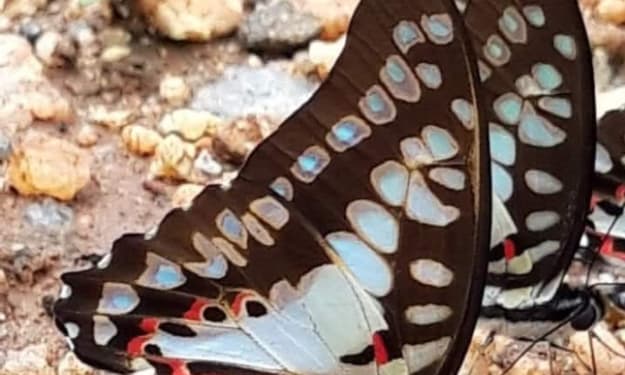
2025 03 14 World Butterfly Day, Inaction Plan and Our Role Every year, March 14 is celebrated as World Butterfly Day. In some countries, it is also known as National Learn About Butterflies Day. This day is not celebrated at the state level in Sri Lanka, but it is another environmental day that is celebrated by butterfly enthusiasts in their own way. There are more than 20,000 species of butterflies worldwide and this day is used to increase interest in them, draw attention to their conservation and learn about butterflies.
By Rohitha Lanka2 years ago in Petlife
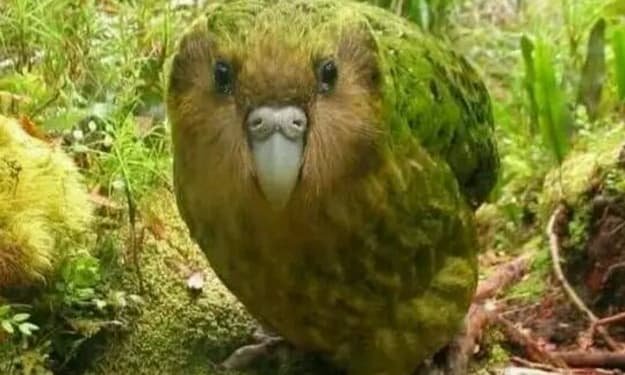
The Struggle of the Kakapo Parrot
Kakapo parrots Although not related to farming, this knowledge is valuable for children. It is very rare for animals like pandas, white rhinos, and mountain gorillas to breed. But there is an animal in New Zealand that is more lazy to breed than all of them. In fact, it is a parrot. A parrot. Known as the Kakapo (night parrot), a parrot
By Rohitha Lanka2 years ago in Petlife
The fire fox
The Fire Fox is an extraordinary yet elusive variant of the common red fox, marked with a rare gene mutation that confers its unique appearance and superb qualities. This variation is so uncommon that it accounts for under 1% of all red foxes globally. This elusive creature has risen to prominence among wildlife enthusiasts and researchers despite its rarity.
By Rohitha Lanka2 years ago in Petlife