bird
A bird's eye view of a life in flight.
My Parrot Won’t Stop Telling on Me!
When I brought home a parrot named Tango from a rescue shelter, I thought I was just adopting a colorful companion. What I didn’t realize was that I was welcoming the most talkative, nosy, and traitorous bird ever born into my life.
By Muhammad Saeedabout a year ago in Petlife
The Incredible Journey of Bear Pregnancy: A Silent Miracle of Nature
Introduction: The bear is a powerful and fascinating creature of the wild, known for its strength, adaptability, and solitary lifestyle. Among the many wonders of nature, the pregnancy journey of a female bear stands out as a unique biological process. It is not just a reproductive phase, but a quiet miracle of nature that showcases maternal instinct, survival strategies, and the delicate balance of ecosystems. --- Bear Species and Their Habitats There are several species of bears including the Brown Bear, Black Bear, and Polar Bear. Each species is found in different parts of the world – from dense forests and mountains to icy tundras and grasslands. While their environments may differ, their reproductive behaviors share several similarities. --- Reproductive Cycle of Female Bears Female bears usually reproduce once every two to three years. Mating takes place during the summer months, typically from May to July. However, a fascinating phenomenon in bear biology is delayed implantation. Although mating occurs in summer, the embryo doesn't immediately start developing in the uterus. Instead, the fertilized egg remains dormant for several months. Only when the female enters hibernation during the cold winter months does the embryo implant in the uterus and the actual gestation begins. This biological feature ensures that the cubs are born during hibernation when the mother is in a safe, undisturbed state. --- Duration of Pregnancy The total gestation period for a bear is around 6 to 8 months, depending on the species. However, active pregnancy – after implantation – lasts only 6 to 8 weeks. The initial months are part of the delayed development phase. This process ensures that the cubs are born in late winter, allowing the mother time to regain strength and nourish the cubs in the safety of the den before venturing out in spring. --- Behavior During Pregnancy As winter approaches, the pregnant female bear prepares for hibernation. She finds a secure place such as a cave, hollow tree, or dug-out den and enters a deep sleep-like state. During this time, she does not eat, drink, or defecate. Her body survives solely on the fat reserves stored during summer. Inside her, the developing cubs grow slowly. Despite her motionless state, the mother's body continues to support the life within her—a remarkable act of endurance and maternal sacrifice. --- Birth of the Cubs Bear cubs are typically born between January and February, while the mother is still hibernating. Cubs are born blind, hairless, and extremely tiny—usually weighing between 300 to 500 grams (about 1 pound). Despite their fragile condition, they instinctively crawl to their mother's teats for milk. The warmth of the den and the mother’s body helps keep them alive. The mother nurses them while still in a semi-sleep state. --- Bond Between Mother and Cubs The bond between a bear and her cubs is strong and protective. The mother stays with her young for up to two years, during which she teaches them essential survival skills such as hunting, foraging, and avoiding predators. She fiercely protects them from threats and often delays mating again until the cubs are independent. This maternal devotion is vital for the cubs’ survival in the harsh wilderness and reflects the emotional and instinctive depth of bear behavior. --- Conclusion The pregnancy of a bear is much more than a reproductive event—it's a masterclass in natural timing, maternal instinct, and environmental adaptation. From delayed implantation to birthing during hibernation, the process is both mysterious and inspiring. Understanding such processes deepens our appreciation for wildlife and emphasizes the need to protect these magnificent animals and their habitats for future generations.
By Sophia Graceabout a year ago in Petlife
The day I thought I lost him forever.
It started like any other day. The sun peeked through the curtains, and Max—my three-year-old golden retriever—rested his wet nose against my cheek, his tail wagging the floor in a familiar rhythm. He was my alarm clock, my shadow, my best friend. But I never imagined that just a few hours later, I would be holding him in my arms and begging the universe not to take him from me.
By Echoes of Lifeabout a year ago in Petlife
Why African Grey Parrots Are the Geniuses of the Bird World
The Ultimate Guide to African Grey Parrot Care: Everything You Need to Know African Grey Parrots are renowned worldwide for their exceptional intelligence and remarkable talking ability. These feathered companions aren’t just pets—they're lifelong friends who can mimic hundreds of words, phrases, and even local bird calls with stunning accuracy.
By Sherryl Araimoabout a year ago in Petlife
My Raccoon Life. AI-Generated.
Late one June morning, I stepped out into the warm Wisconsin sun to find an unusual sight: a tiny, hairless creature nestled beneath the mailbox, lifeless at first glance. As I leaned closer, my heart jolted—its faintly striped tail twitched. It was a newborn raccoon, eyes still closed, soundless but alive. I scooped the cold creature into my hands, brushing away crawling ants, and warmed it against my chest. It stopped struggling and relaxed into my palm. I named her Glory.
By Muhammad Saeedabout a year ago in Petlife
Pet Care: A Complete Guide to Keeping Your Furry Friends Happy and Healthy
Pets bring joy, companionship, and unconditional love into our lives. Whether you have a dog, cat, bird, rabbit, or any other animal, caring for them properly is essential to ensure they live a healthy and happy life. Pet care goes beyond just feeding and watering; it involves understanding their needs, providing regular health checkups, training, and creating a safe environment. This article covers the essential aspects of pet care to help you become a responsible and loving pet owner.
By JAWAD HUSSAINabout a year ago in Petlife
The day I thought I lost him forever.
It started like any normal Tuesday. Milo, my golden retriever, greeted me the way he always did — tail wagging, tongue out, eyes sparkling with the joy of this incomparable dog. I scratched behind his ears, filled his water bowl, and put a few treats in his dish. He ate his food as usual. Nothing seemed wrong.
By Echoes of Lifeabout a year ago in Petlife
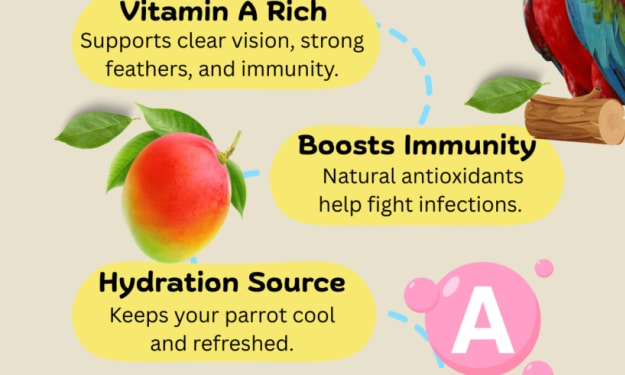
Can Mango Be a Tasty Treat for Parrots? Let’s Find Out!
As a serious pet owner, are your worry about ‘Can Parrots Eat Mango or Not?’ If yes, then it should be. Mangos are a nutritious treat that is best to give to parrots in moderation. You must offer parrots mango at home, especially because they eat it in the wild. Can You Give Mango to Your Parrot? Vet-Approved Advice
By Amelia Koshabout a year ago in Petlife
When my dog got sick, I learned what unconditional love really means.
There’s a unique kind of heartbreak that comes when your dog gets sick. It’s not like watching a friend or relative get sick — it’s different. Dogs can’t tell you where they’re hurting. They can’t describe what they’re feeling. You just see them slow down, go quiet, and look at you with eyes that ask for help — eyes that trust you to make everything better.
By Echoes of Lifeabout a year ago in Petlife
My dog was there when no one else was.
Loneliness doesn’t always come from empty rooms. Sometimes, it creeps in silently, even when you’re surrounded by people. You go about your day, smiling when you need to, replying to messages with emojis and polite phrases — but inside, there’s a pain. A silence that no one else notices.
By Echoes of Lifeabout a year ago in Petlife
The Day My Dog Went Missing — and How He Found His Way Back to Me
When you become a pet parent, there’s a kind of unspoken agreement: I’ll keep you safe, and you’ll stay with me. It’s a promise built on trust, love, and a sense of constant companionship. But what happens when that promise is broken — when your dog suddenly disappears, leaving behind only fear and silence?
By Echoes of Lifeabout a year ago in Petlife