
My Cat Was Convulsing on the Floor, and I Had No Idea if He Was Going to Make It
The terrifying lesson that turned my plant-filled studio into a safe haven for my furry roommate.

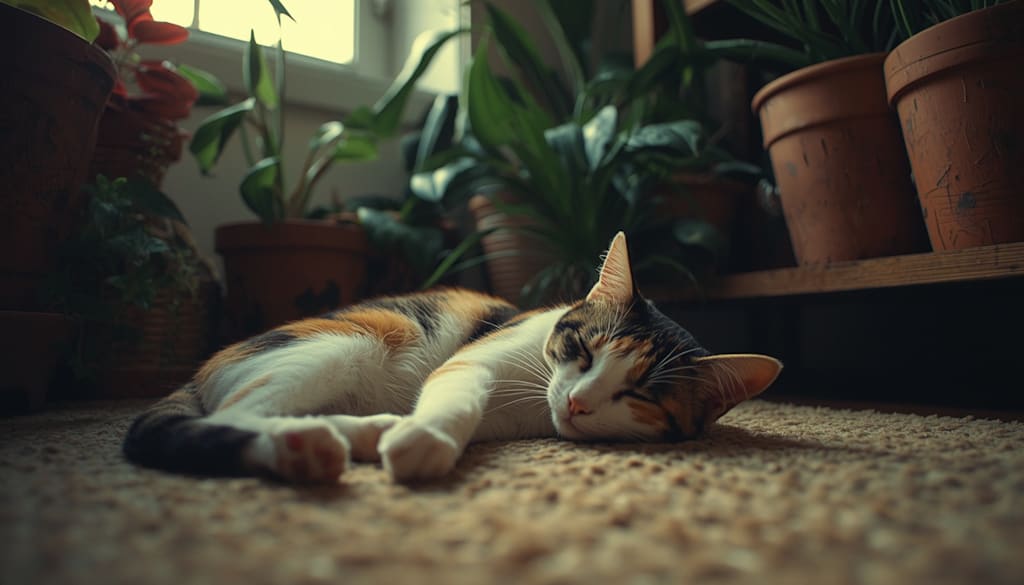
My cat was convulsing on the floor, and I had no idea if he was going to make it.
The vet's office smelled like antiseptic and fear. I remember gripping the cold metal edge of the examination table so hard my knuckles turned white. The fluorescent lights hummed above us, that terrible buzzing sound that seemed to drill into my skull. My heart was pounding so loud I could hear it in my ears. And all I could think about was the stupid plant sitting on my windowsill. The one I bought because it looked pretty. The one I never bothered to check if it was safe.
I suddenly remembered the time my mom's cat ate a lily and spent three days at the emergency vet. She still tells that story at every Christmas dinner, usually right after the turkey comes out and everyone's had too much wine. The way her voice cracks when she describes the IV drips and the waiting. I never understood why she got so emotional about it until that moment, watching my own cat's tiny body tremble on that cold steel table.
That was three years ago. My cat survived, thank God. But I promised myself I would never let ignorance put him in danger again. And that's when I started my obsessive deep dive into low light pet-safe plants for small apartments — because I live in a 450-square-foot studio with one tiny north-facing window, and I refuse to live in a plant-free box just because I have a furry roommate.
The Nightmare That Changed Everything
It was a Tuesday. I remember because I had just opened a new bag of coffee — Ethiopian Yirgacheffe, the good stuff with the blueberry notes — and I was looking forward to a quiet evening. My cat, Milo, was sprawled across my brand-new beige wool rug, the one I'd saved up for months to buy. He looked peaceful. Innocent.
Then I noticed the vomit.
Bright yellow bile, with chunks of green leaf material mixed in. It was scattered across three different spots on the rug — the good rug, the one I specifically told myself I would protect from all cat-related disasters. I knelt down to clean it up, my stomach already turning, and that's when I saw him stumble. His back legs gave out. He collapsed sideways, his pupils dilated, his breathing shallow and rapid.
I don't remember grabbing my keys. I don't remember putting on shoes. I just remember the drive to the emergency vet, running red lights, screaming at other drivers, my hands shaking so badly I could barely grip the steering wheel.
The plant was a Sago Palm. Beautiful, architectural, trendy. And highly toxic to cats. Every single part of it. The ASPCA lists it as one of the most dangerous plants for pets — even a small amount can cause liver failure. I had no idea. I bought it from a trendy plant shop in Brooklyn because it looked cool in the corner of my apartment. I never asked. I never checked.
Milo spent two nights at the vet. IV fluids, charcoal treatments, around-the-clock monitoring. The bill was over two thousand dollars. But honestly? I would have paid ten times that. Watching him slowly come back to life, day by day, was the most relieved I've ever felt in my entire life.
And also the most ashamed.
Why "Just Put It Out of Reach" Is a Terrible Strategy
Here's the thing about cats: they're basically tiny furry ninjas with an Olympic-level vertical jump. I learned this the hard way when Milo somehow got onto my top shelf — the one I thought was completely inaccessible — and knocked over my favorite ceramic planter. It shattered into a million pieces on my hardwood floor at 3 AM. I woke up thinking someone had broken into my apartment.
I also remember the time I tried the "just hang it from the ceiling" approach. Milo stared at that hanging spider plant for three weeks, plotting. Then one day, I came home to find the entire thing on the floor, dirt everywhere, the macrame hanger completely destroyed. He had jumped from the back of the couch, swatted at it mid-air like some kind of feline ninja, and brought the whole operation crashing down.
The point is: elevation is not a guarantee. Curious cats will find a way. The only real solution is to choose plants that won't hurt them if — and when — they decide to take a nibble.
The Only Plants I Trust Around Milo Now
After my nightmare experience, I did actual research. I spent hours on the ASPCA database, cross-referencing every plant I could find. I lurked on Reddit threads where other cat owners shared their horror stories and their victories. I tested plants in my own apartment, watching Milo's reactions, learning what worked and what didn't.
Here's what actually survives in a small, low-light apartment without putting your cat at risk:
The Cast Iron Plant (Aspidistra elatior)
This thing is basically indestructible. It thrives in low light, barely needs water, and the ASPCA lists it as completely non-toxic to cats and dogs. I have one in my bedroom corner, the darkest spot in my entire apartment, and it's been thriving for over two years. The leaves are broad and dark green, and they add this lush, tropical vibe that makes my tiny studio feel like a jungle retreat. It grows to about two feet tall, so it's perfect for small spaces. I water it maybe once every two or three weeks — when I remember, honestly — and it's never complained. If you're a forgetful plant parent like me, this is your plant.
The Parlor Palm (Chamaedorea elegans)
This is the plant that made me fall in love with indoor gardening again. Soft, elegant fronds that add vertical interest without taking up too much floor space. It tolerates low light beautifully and is completely safe for cats. I keep mine on a small plant stand next to my couch, and Milo has never shown any interest in chewing it. It just sits there, looking gorgeous, purifying the air, minding its own business. The fronds are soft and feathery, and they sway slightly when the AC kicks on — it's oddly calming to watch.
The Spider Plant (Chlorophytum comosum)
Okay, confession time. Spider plants are technically safe for cats — the ASPCA lists them as non-toxic — but they're also mildly hallucinogenic to felines. Yes, you read that right. Something about the compounds in spider plant leaves gives cats a mild buzz, like catnip-lite. So while they won't poison your cat, your cat might become obsessed with eating them. Milo goes absolutely feral for spider plant leaves. I caught him chewing on one once, and he spent the next hour rolling around on the floor, purring like a motorboat, completely zoned out. It was funny, but also concerning. So now I keep my spider plant in a hanging basket that's truly out of reach — high enough that even Milo's Olympic-level jumping can't reach it. The trailing "baby" plantlets are adorable, and the plant itself is incredibly forgiving. It thrives in low light and propagates like crazy.
The Calathea Family (Prayer Plants)
These are some of the most beautiful plants I've ever owned, and they're all safe for cats. The leaves have these incredible patterns — stripes, spots, burgundy undersides — and they literally move throughout the day, folding up at night like they're praying. It's mesmerizing to watch. I have a Calathea Orbifolia in my bathroom (they love humidity), and a Rattlesnake Calathea on my desk. Both thrive in low to medium light and have never caused Milo any issues. The one downside? They can be a bit dramatic. If you forget to water them, they'll droop dramatically to let you know they're unhappy. But they bounce back quickly, and honestly, I kind of appreciate a plant that tells me exactly what it needs.
The Ponytail Palm (Beaucarnea recurvata)
This is not actually a palm — it's a succulent — but it's absolutely adorable and completely safe for cats. It has this bulbous trunk that stores water, and a cascade of long, curly leaves that look like a ponytail. It's drought-tolerant, low-maintenance, and thrives in low light. I keep mine on a shelf next to my window, and it's become one of my favorite conversation pieces. Guests always ask what it is. Milo has never touched it.
The Boston Fern (Nephrolepis exaltata)
Lush, feathery, and dramatic. Boston ferns are safe for cats and act as natural air humidifiers. They thrive in low light and add this incredible texture to any room. The downside? They're messy. The fronds drop little brown bits everywhere, and you'll be sweeping up constantly. But if you can handle a little extra cleaning, they're absolutely worth it. I have one hanging in my kitchen, and it makes the whole space feel fresher.
Peperomia Varieties
There are dozens of peperomia varieties, and almost all of them are safe for cats. Watermelon Peperomia, Peperomia Obtusifolia, Peperomia Ginny — they're all compact, low-light tolerant, and completely non-toxic. I have a Watermelon Peperomia on my nightstand, and its round, striped leaves always make me smile. It's small enough to fit anywhere and requires almost no maintenance.
Wait, What About Outdoor Spaces?
If you have a balcony — even a tiny one — you can extend your low-light, pet-safe plant collection outdoors too. Boston ferns do great on balconies, even in shaded corners. Parlor palms add a lovely tropical feel without taking up too much space. And if you want something a bit more colorful, marigolds are completely safe for cats and add cheerful pops of orange and yellow.
Just avoid lilies at all costs. Every part of the lily plant is extremely toxic to cats — even the pollen can cause kidney failure. I don't care how pretty they are. They're not worth the risk.
The Hard Truth: Even "Safe" Plants Aren't Snacks
Here's something I learned the hard way: "non-toxic" doesn't mean "edible." Even pet-safe plants can cause mild gastrointestinal upset if your cat eats too much of them. Vomiting, diarrhea, drooling — it's not fun for anyone. So while you don't need to panic if your cat takes a nibble, you should still try to discourage the behavior.
I keep a small pot of cat grass on my windowsill. Milo can munch on that all he wants, and it satisfies his craving for greenery without putting him at risk. I also use bitter apple spray on the leaves of my more tempting plants — it tastes terrible, and cats learn quickly to stay away.
What I Wish Someone Had Told Me
I wish someone had told me that having plants and having cats doesn't have to be either/or. I spent years living in a plant-free apartment because I was terrified of hurting Milo. I thought I had to choose between a green home and a safe home.
I was wrong.
Low light pet-safe plants for small apartments exist. They're beautiful, they're affordable, and they won't send you on a panicked 3 AM drive to the emergency vet. You just have to do your homework. Check the ASPCA database. Read the labels. Ask questions at the plant shop. And never, ever assume a plant is safe just because it looks harmless.
The Sago Palm looked harmless too.
My Promise to Milo
Three years later, Milo is curled up next to me as I write this. He's purring softly, his little paws twitching in his sleep. He's healthy. He's happy. He's safe.
And my apartment is full of plants. Cast iron plants in the corners. A parlor palm by the couch. Calatheas on every shelf. A ponytail palm on the desk. A Boston fern hanging in the kitchen. It's green, it's alive, and it's completely safe.
I still think about that night sometimes. The way his body convulsed. The smell of the vet's office. The terror of not knowing if he would make it. It's a scar I'll carry forever — a reminder of what happens when we prioritize aesthetics over safety.
But it's also a reminder of how much I've learned. How much I've grown. How I turned that terror into action, and that action into a home that's beautiful and safe for everyone who lives in it.
You can have both. You just have to be smart about it.
- Quick Reference: Low-Light, Pet-Safe Plants for Small Apartments
- Cast Iron Plant: Needs low to medium light. Grows up to 2 feet. Very easy care. Completely safe for cats (ASPCA verified).
- Parlor Palm: Needs low to medium light. Grows 2 to 4 feet. Easy care. Completely safe for cats (ASPCA verified).
- Spider Plant: Thrives in low to bright indirect light. Trailing growth. Very easy care. Safe for cats (ASPCA verified), but may cause mild hallucinations if eaten.
- Calathea (Prayer Plants): Needs low to medium light. Grows 1 to 3 feet. Moderate care. Safe for cats.
- Ponytail Palm: Needs low to bright light. Grows 1 to 3 feet. Very easy care. Safe for cats (ASPCA verified).
- Boston Fern: Needs low to medium light. Grows 1 to 3 feet. Moderate care. Safe for cats.
- Peperomia: Needs low to bright light. Grows 6 to 12 inches. Easy care. Safe for cats.
Step-by-Step: How to Build a Cat-Safe Indoor Jungle
- Check the ASPCA database before buying any plant. Bookmark it. Use it religiously.
- Start with one or two easy plants — Cast Iron and Parlor Palm are foolproof.
- Observe your cat's behavior. Some cats ignore plants entirely. Others are obsessed. Know your cat.
- Place plants strategically. High shelves, hanging baskets, and plant stands can help — but remember, cats can jump.
- Provide alternatives. Cat grass, catnip, and safe chew toys redirect their attention.
- Use deterrents. Bitter apple spray on leaves, citrus peels in the soil, or double-sided tape around pots.
- Keep the ASPCA Poison Control number handy: 888-426-4435.
The Bottom Line
Your home doesn't have to be a plant-free wasteland just because you have a cat. Low light pet-safe plants for small apartments are real, they're accessible, and they can transform your space without putting your furry best friend at risk.
But don't make the mistake I made. Don't assume. Don't guess. Don't buy a plant because it's pretty and figure out the safety part later. Do the research. Ask the questions. Make the smart choice.
Because that 3 AM drive to the emergency vet? That memory of watching your cat suffer because of your own ignorance?
That's not something you ever want to live through.
Trust me.
About the Creator
Nico Martinez
A storyteller exploring the deep bonds between humans, nature, and the future. From the loyalty of a dog to cinematic fiction and tech, I write to capture the moments that make us feel alive.
Enjoyed the story? Support the Creator.
Subscribe for free to receive all their stories in your feed.
Comments
There are no comments for this story
Be the first to respond and start the conversation.