
How Will an ESA Help With Stress and Anxiety
Discover how an Emotional Support Animal can provide daily comfort, reduce feelings of anxiety, ease emotional stress, and help create a calmer and more stable routine for better mental well-being.

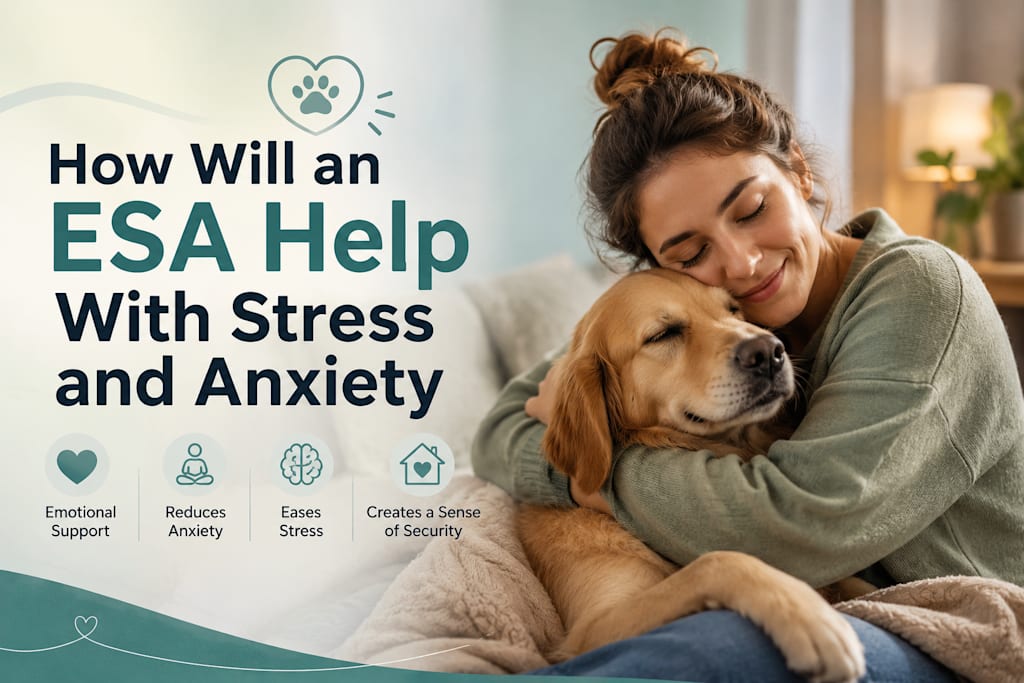
Stress and anxiety affect millions of people every day. They can make it hard to get out of bed, go to work, or spend time with others. If you struggle with these feelings, you might be looking for ways to feel better. One option that many people find helpful is getting an Emotional Support Animal (ESA). But you might wonder: does an ESA really help? How exactly does a pet reduce stress? This article explains how an ESA can help you manage anxiety and stress.
What Is Stress and Anxiety
Before we talk about how an ESA helps, let's understand what stress and anxiety actually are.
Stress is your body's response to pressure. It happens when you face a challenge or threat. Some stress is normal and even helpful. It can push you to finish a project or prepare for an important event. But when stress becomes constant or overwhelming, it causes problems.
Anxiety is different. Anxiety is worry about future events. It often includes a feeling of fear or unease, even when there is no clear threat. You might feel anxious about your health, your job, your relationships, or things that could happen. Unlike regular worry, anxiety does not go away when the threat is gone. Your body stays in a state of alert.
Both stress and anxiety cause physical changes in your body. Your heart beats faster. Your muscles tense up. You might have trouble sleeping. You might feel irritable or have trouble focusing. Over time, chronic stress and anxiety can lead to serious health problems like heart disease, high blood pressure, and depression.
Many people try to manage stress and anxiety with medication, therapy, or exercise. These are all helpful. But for some people, having a pet can also make a big difference.
How an ESA Calms Your Nervous System
One of the main ways an ESA helps with stress and anxiety is by calming your nervous system. Your nervous system has two main parts: the sympathetic nervous system and the parasympathetic nervous system.
When you are stressed or anxious, your sympathetic nervous system turns on. This is called the "fight or flight" response. Your body gets ready to respond to danger. Adrenaline floods your system. Your heart rate goes up. Your muscles tense.
The problem is that your nervous system sometimes turns on this response when there is no real danger. You might be anxious about a work meeting or worried about paying bills. Your body reacts as if a tiger is chasing you.
An ESA helps turn off this response. When you pet your dog or sit with your cat, your parasympathetic nervous system activates. This is called the "rest and digest" response. Your heart rate slows. Your muscles relax. Your body produces calming chemicals like oxytocin and serotonin.
Studies have shown that petting an animal for just ten minutes can lower blood pressure and cortisol levels. Cortisol is a stress hormone. When you have too much cortisol in your body, you feel anxious and on edge. Petting your ESA reduces cortisol and helps your body relax.
Creating a Sense of Calm Presence
Sometimes when you have anxiety, the worst part is feeling alone with your worry. Your mind spins in circles. You think about worst-case scenarios. You feel like no one understands.
An ESA provides a calm, non-judgmental presence. Your animal does not care about your anxiety. It does not try to fix you or tell you everything will be okay. It simply exists peacefully next to you. That peaceful presence can be incredibly grounding.
When you are panicking, you can focus on your animal instead of your anxious thoughts. You can watch your dog breathe. You can stroke your cat's fur. You can feel your rabbit's heartbeat. These physical sensations anchor you to the present moment instead of your worried thoughts about the future.
Many people with anxiety get stuck in their heads. An ESA brings you back to your body and the physical world around you. This is powerful for managing panic attacks and moments of intense anxiety.
Reducing Isolation and Increasing Connection
Stress and anxiety often make people isolate themselves. You might feel too anxious to see friends or go out. This isolation makes anxiety worse. When you are alone with your thoughts, anxiety grows stronger.
An ESA helps break this cycle. Your animal gives you a reason to get out. You need to take your dog for walks. You need to feed your cat. You need to spend time caring for your animal. This keeps you moving and engaged with the world.
Walking your dog also gives you opportunities to interact with other people. You might chat with neighbors or other dog owners. These small interactions help you feel less alone. They remind you that you are part of a community.
Having an ESA also means you always have a companion. When you feel anxious, you have someone right there with you. This can help you feel safer and less afraid.
Providing a Distraction From Worry
When you have anxiety, your mind wants to focus on worries. It is hard to stop thinking about bad things that might happen. Your anxious brain gets stuck.
An ESA provides a healthy distraction. Playing with your dog, brushing your cat, or watching your rabbit hop around takes your attention away from worries. You cannot think about your anxiety while you are focused on your animal.
This is not the same as avoiding your problems. It is a healthy break. By stepping away from your anxiety for a while, you give your nervous system a chance to calm down. Then you can come back to your problems with a clearer head.
Building a Routine and Structure
Anxiety often comes with depression and low motivation. It is hard to get out of bed or do basic tasks. This lack of structure makes everything feel worse.
An ESA needs care every single day. This responsibility forces you to maintain a routine. You have to get up to feed your animal. You have to take your dog outside. You have to play with your pet. You have to keep going even on days when anxiety feels overwhelming.
This structure is helpful. It gives you a reason to take care of yourself. When you are taking care of your animal, you are also taking care of yourself. You are moving your body, getting outside, and staying engaged with life.
Increasing Feelings of Purpose and Worth
Anxiety and stress often come with feelings of worthlessness. You might think you are not good enough or that you do not matter. These thoughts make anxiety worse.
An ESA needs you. Your animal depends on you for food, water, exercise, and affection. This gives you a sense of purpose and responsibility. You are important to your animal. You matter.
Caring for your ESA can rebuild your confidence. Every day you successfully care for your animal is a small victory. Over time, these victories help you feel better about yourself. You realize you can handle responsibility. You have value.
Managing Physical Stress Symptoms
Anxiety and stress cause physical symptoms. You might have a tight chest, stomach problems, headaches, or muscle tension. These physical symptoms can make anxiety worse. You start worrying about your health, which increases your anxiety further.
An ESA helps reduce these physical symptoms. When you are calm and petting your animal, your muscles relax. Your digestion improves. Your headaches might ease. With fewer physical symptoms, you have fewer things to worry about. This can break the cycle of anxiety.
How to Get an ESA for Stress and Anxiety
If you think an ESA would help you, you need to get an official letter from a mental health professional. In the United States, you have the right to an ESA if you have a mental health condition like anxiety or stress that is diagnosed by a professional.
The first step is seeing a therapist, psychiatrist, or counselor. Tell them about your anxiety or stress. Explain how it affects your life. Ask if an ESA might help you. If the professional agrees, they can write you an ESA letter.
For those who cannot easily access a nearby therapist or counselor, online ESA services can be a practical option. Platforms such as RealESALetter help individuals speak with licensed professionals remotely to determine whether they qualify for an Emotional Support Animal letter without needing an in-person visit.
An ESA letter is not just a piece of paper. It is official recognition that your animal is important for your mental health. With an ESA letter, you have housing protections. You can keep your animal with you even in places that normally do not allow pets.
Types of Animals That Can Be ESAs
People usually think of dogs as ESAs, and dogs are wonderful for anxiety. They are affectionate, loyal, and seem to sense when you are distressed.
But other animals can also be ESAs. Some people find cats helpful because cats are calming to be around. Rabbits can be soothing to pet. Some people benefit from guinea pigs, birds, or even fish. The most important thing is that the animal helps your mental health.
Taking Care of Your ESA While Managing Anxiety
If you have severe anxiety, you might worry that you cannot take care of an animal. This is a valid concern. An animal is a responsibility.
Start by being honest with yourself. Can you handle the basics? Can you feed and water an animal? Can you provide a safe space for it? If yes, you might be able to have an ESA.
Remember that an ESA does not need to be a perfect pet. It does not need training or special skills. It just needs to be there for you. Many people find that having an ESA actually motivates them to take care of themselves and the animal together.
Combining ESAs With Other Treatments
An ESA is helpful, but it is not a replacement for professional mental health care. If you have anxiety or stress, you should also see a therapist or psychiatrist. You might also benefit from medication.
The best approach combines multiple treatments. You might take medication, see a therapist weekly, practice relaxation techniques, and have an ESA. All of these things work together to help you feel better.
How Long Does It Take to Feel the Benefits
Some people feel better the moment they get their ESA. Just having a living creature to care for and bond with can be powerful.
For others, it takes time. You need to build a relationship with your animal. As the bond grows stronger, the benefits increase. Most people who have had their ESA for several months notice significant improvements in their anxiety levels.
Be patient with yourself and your animal. The benefits come gradually as you build your relationship.
Conclusion
An ESA can be a powerful tool for managing stress and anxiety. Through calming your nervous system, providing companionship, breaking isolation, and giving your life structure and purpose, an ESA helps you feel better in multiple ways.
Stress and anxiety are serious, but they are also manageable. Many treatment options exist, and an ESA can be one important part of your overall wellness plan.
If you have anxiety or stress, consider talking to a mental health professional about whether an ESA might help you. A licensed professional can evaluate your situation and help you decide if an emotional support animal is right for you.
Your mental health matters. Your suffering matters. Finding ways to feel better, whether through therapy, medication, or an ESA, is an important act of self-care. Take the steps that are right for you and give yourself permission to heal.
About the Creator
Enjoyed the story? Support the Creator.
Subscribe for free to receive all their stories in your feed.
Comments
There are no comments for this story
Be the first to respond and start the conversation.