
How to Register a Dog as an Emotional Support Animal in Texas
The Smart Way to Get an ESA Letter for Your Dog While Living in Texas

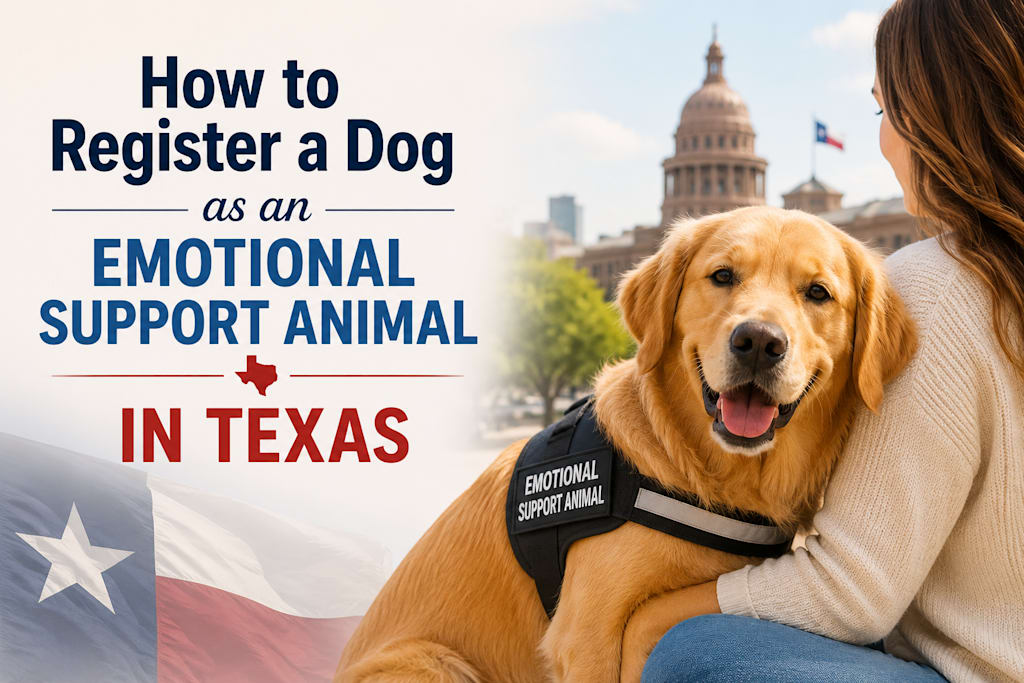
Emotional support animals, often called ESAs, can make a big difference in the lives of people dealing with mental health challenges. These special animals provide comfort and emotional help to their owners without needing extensive training like service animals do. If you live in Texas and want to register your dog as an emotional support animal, you are in the right place. This guide will walk you through the entire process in simple, easy to understand language.
Understanding Emotional Support Animals
Before you start the registration process, it helps to know what an emotional support animal really is. An emotional support animal is a pet that provides comfort to a person through its presence alone. Unlike service animals that are trained to perform specific tasks, emotional support animals do not need special training. They simply need to be calm, gentle, and able to be around their owner most of the time.
The main difference between an emotional support animal and a service animal is important to understand. Service animals are trained to do specific jobs. They might help someone who is blind navigate the world, or alert someone with diabetes about dangerous blood sugar levels. Emotional support animals do not do these specific tasks. Instead, they help people by reducing anxiety, providing comfort during difficult moments, and offering unconditional love and support.
Emotional support animals are protected under federal law, especially under the Fair Housing Act. This law allows people with emotional support animals to live in housing that normally does not allow pets. However, these protections do not extend to public places like restaurants or stores. Your emotional support dog cannot go everywhere that a service dog can go.
Texas Laws and Legal Requirements
Texas has specific rules about emotional support animals that you need to know. The state recognizes emotional support animals as legitimate helpers for people with mental health conditions. However, Texas does not have an official state registration system for emotional support animals. This is very different from what some people think. You cannot officially register an ESA with the Texas government.
What you can do is get a letter from a mental health professional that says you need an emotional support animal. This letter is very important. It is the document that proves your emotional support animal is legitimate. Without this letter, your landlord or housing authority might not give you the housing protections that ESA owners are supposed to have.
Texas follows the rules set by the Fair Housing Act and the Americans with Disabilities Act. Under these federal laws, a mental health professional must say that you have a disability and that your dog helps you with that disability. The letter needs to come from someone like a psychiatrist, psychologist, therapist, or counselor who knows about your condition.
Getting a Letter from a Mental Health Professional
The most important step in having an emotional support animal is getting a letter from a licensed mental health professional. This letter serves as official documentation that you need your dog for emotional support. Without this letter, you will not be able to claim the legal protections that come with having an emotional support animal.
To get this letter, you first need to find a mental health professional. This could be a psychiatrist, psychologist, licensed professional counselor, or licensed clinical social worker. The person must be licensed to practice in Texas. You can find professionals through your insurance company, online directories, or by asking your regular doctor for a referral.
When you contact a mental health professional, tell them that you are seeking an emotional support animal. You will likely need to have at least one session with them before they write the letter. They need to know about your mental health condition and how your dog helps you. Be honest about your struggles and how your pet provides relief and comfort.
The letter from your mental health professional must include specific information. It should state that you have a mental health disability that is recognized in the diagnostic manual used by mental health professionals. It should say that your dog provides assistance or support because of that disability. The letter should be on the professional's letterhead and include their license number and contact information. The professional should also sign and date the letter.
Keep in mind that mental health professionals cannot write letters for animals they have not assessed. They should know you and your situation. Finding a qualified professional in your area is important, but if local options are limited, platforms like RealESALetter offer a way to get matched with licensed mental health providers who can evaluate your situation and provide proper documentation. These online platforms can be useful when you cannot easily find a therapist or counselor through traditional means. Just remember that legitimate services will require a real assessment of your mental health needs and how your dog provides support, not just rubber stamp approval.
Choosing the Right Dog and Building Your Relationship
Any dog can become an emotional support animal if it is calm and helps its owner. Unlike service dogs, emotional support animals do not need to pass special training tests. However, your dog should still have a basic temperament that allows it to be around others without being aggressive or overly anxious.
The best dogs for emotional support work are calm and gentle. Small breeds, medium breeds, and large breeds can all be emotional support animals. Some people choose dogs that are already part of their family. If you already have a dog that brings you comfort, that dog can become your emotional support animal. You do not need to start from scratch with a new puppy or an untrained dog.
If you are getting a new dog specifically for emotional support, consider adopting from a shelter or rescue organization. Many dogs in shelters are calm and loving. Shelter workers can help you find a dog with the right personality for your needs. Adult dogs often settle into their new homes quickly and may already have some basic training.
The most important thing is that you have a genuine bond with your dog and that the dog truly brings you comfort. Spend time with your potential emotional support dog before making a final decision. See how you feel when you are with the animal. Do you feel calmer? Less anxious? Does the dog seem to respond to your moods? These are signs that the dog could be a good emotional support animal for you.
Documentation and Registration Process in Texas
Since Texas does not have an official state registration system for emotional support animals, the main documentation you need is the letter from your mental health professional. This letter is your proof that you have a legitimate emotional support animal. Keep this letter in a safe place and get multiple copies. You may need to give it to your landlord, housing authority, or airline.
Some people choose to get additional documentation like ID cards or vests for their emotional support animals. These items are not required by law in Texas, but they can help others understand that your dog is an emotional support animal. However, understand that these items do not give your dog any extra legal rights. They are simply helpful tools for communication.
When looking for ID cards or vests, buy from companies that are honest about what they offer. Some companies mislead people by suggesting that their products provide legal protection or special access rights. The truth is that only the letter from your mental health professional provides real legal protection under fair housing laws.
You should know that there is no official Texas database where you register your emotional support animal. Anyone who claims to offer official Texas registration is likely running a scam. Focus on getting the proper letter from a real mental health professional instead. That is where your real protection comes from.
Using Your Emotional Support Animal Letter for Housing
The main reason people get letters for emotional support animals is to live in housing that normally does not allow pets. If you rent your home and your landlord does not allow animals, your emotional support animal letter can change that. Under fair housing laws, landlords must allow emotional support animals even if they have a no pet policy.
To use your letter for housing purposes, give a copy to your landlord or property manager. Include a written request for a reasonable accommodation. Explain that you have a disability and that your dog provides support for that disability. Attach your letter from the mental health professional. Be professional and clear in your request.
Landlords cannot charge pet fees or require pet deposits for emotional support animals. They also cannot ask you to remove the animal just because they do not like pets. However, they can ask to see your documentation. They can also set reasonable rules about the animal's behavior. If your dog is aggressive or damages property, the landlord may have grounds to ask for removal.
Keep copies of all written communication with your landlord about your emotional support animal. If there is a dispute, this documentation will help protect your rights. If your landlord refuses your reasonable accommodation request unfairly, you may want to talk to a fair housing agency or attorney about your options.
What You Cannot Do With an Emotional Support Animal
Understanding the limits of emotional support animal rights is just as important as understanding the rights themselves. Emotional support animals do not have the same access rights as service animals. You cannot bring your emotional support dog into grocery stores, restaurants, shopping malls, or most public businesses. These places can ask you to leave if you have your ESA with you.
Service animals that are trained to perform specific tasks can go into public places with their owners. Emotional support animals cannot. The main exception is housing. Landlords must allow emotional support animals in their rental properties. Many airlines will also allow emotional support animals in airplane cabins if you have proper documentation.
Some airlines now require stronger documentation for emotional support animals. They may ask for a more detailed letter that says your dog is suitable for air travel. Call the airline in advance to ask about their specific requirements. Airlines have changed their rules because too many people misrepresented their pets as emotional support animals.
Do not try to pass off your emotional support animal as a service animal. This is illegal in many states and dishonest. Service animals have special training and perform important work. Claiming your dog is a service animal when it is not can harm people who have real service animals. Keep the distinction clear.
Getting an ESA letter in Texas starts with understanding what an emotional support animal is and what rights you have. The most important step is getting a letter from a licensed mental health professional who knows your situation. This letter is your official documentation and provides you with protection under fair housing laws. Focus on building a genuine relationship with your dog and keeping proper documentation. With these steps, you can legally have an emotional support animal in Texas and enjoy the many benefits that come with it.
About the Creator
Enjoyed the story? Support the Creator.
Subscribe for free to receive all their stories in your feed.
Comments
There are no comments for this story
Be the first to respond and start the conversation.