
How to Identify Toxic vs. Safe Plants for Dogs Before You See That Pink Foam
A golden retriever, a sago palm, and the $1,800 vet bill that taught me everything I wish I'd known yesterday.

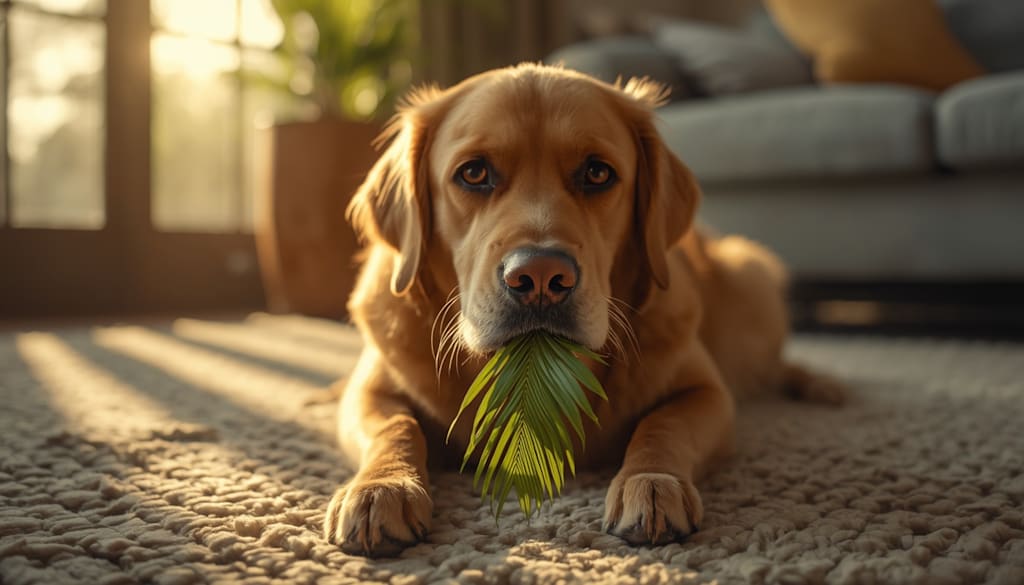
I heard that wet, rustling, crunching sound. You know the one. It’s the sound that makes your blood run cold before your brain even catches up.
I looked over from my spot on the couch and saw my golden retriever, Murphy, with his face buried in my brand-new potted sago palm. The one I bought two days earlier because the girl at the nursery said it was "low maintenance" and "looked modern." She didn't mention that every single part of that plant is a ticking time bomb for dogs.
In that exact moment, I realized I had absolutely no idea how to identify toxic vs. safe plants for dogs. I screamed his name. He looked up at me with those big dumb brown eyes, a piece of dark green leaf hanging from his lip like a cartoon cigar.
That's when I remembered the story my neighbor told me last Thanksgiving. She talked about how her Labrador ate one sago palm seed and spent four days in the ICU with liver failure. She still has the $4,700 vet bill taped to her fridge. I always thought she was being dramatic.
I wasn't laughing anymore. I was frantically trying to remember how to identify toxic vs. safe plants for dogs on the fly, and my brain was completely blank.
Murphy started drooling within twenty minutes. Not normal drool. It was thick, ropey, almost foamy. He kept pawing at his mouth like something was stuck in his throat. I called my vet and she told me to get him to the emergency clinic immediately.
Driving there, I couldn't stop thinking about the time he chewed up my brand-new white Nike Air Max sneakers last Christmas Eve. I'd left them by the back door for exactly thirty seconds. He turned them into shredded white confetti and threw up pinkish foam all over my mom's cream wool rug. She still brings it up every Christmas dinner. "Remember when Murphy redecorated my living room?" she'll say, and everyone laughs. I used to laugh too.
I wasn't laughing now, desperately trying to remember how to identify toxic vs. safe plants for dogs while flying through yellow lights.
If you want to know how to identify toxic vs. safe plants for dogs, you have to start with the worst offenders. The ASPCA Animal Poison Control Center reported that plants were the sixth most common pet toxin in 2025. That’s thousands of panicked pet parents just like me.
Here are the ten deadliest ones you absolutely need to recognize before you bring anything green into your house.
Number one is the sago palm. This is the one that almost killed Murphy. Every part is toxic, but the seeds are the most dangerous. Ingesting just one seed can cause liver failure and coma. When you’re learning how to identify toxic vs. safe plants for dogs, this is Public Enemy Number One.
Number two is oleander. It has beautiful pink, white, or red flowers, but all parts contain cardiac glycosides that cause severe vomiting and abnormal heart rhythms. It’s a critical test in how to identify toxic vs. safe plants for dogs because it looks so harmless.
Number three is azalea and rhododendron. These flowering shrubs are garden staples, but they affect the heart's ability to function properly.
Number four is lily of the valley. Those tiny white bell-shaped flowers smell like heaven but can put your dog through hell with seizures and heart problems.
Number five is tulips and hyacinths. The bulbs are the most dangerous part because dogs love digging them up.
Number six is autumn crocus, which causes gastrointestinal bleeding and bone marrow suppression.
Number seven is foxglove, containing digitalis that affects the heart.
Number eight is dieffenbachia, or dumb cane. It causes intense oral irritation.
Number nine is pothos, or devil’s ivy, which burns the mouth and throat.
Number ten is chrysanthemums, or mums, which cause vomiting and skin irritation.
Memorizing these ten is the first step in how to identify toxic vs. safe plants for dogs, but it’s not the only step.
Here’s the thing nobody tells you when you're trying to figure out how to identify toxic vs. safe plants for dogs. Some plants that seem completely innocent are actually dangerous.
I had aloe vera on my kitchen windowsill for years. I used it for sunburns. I thought it was practically a medicine. Turns out, aloe vera causes vomiting and diarrhea in dogs.
I also had a peace lily in my bedroom. Gorgeous plant. Completely toxic. And English ivy? The stuff that climbs up the side of half the houses in my neighborhood? Toxic.
I felt like an idiot. I'd been surrounding my dog with danger for years because I never bothered to learn how to identify toxic vs. safe plants for dogs properly.
So let me save you the heartache. Here is the exact, practical framework I wish someone had given me. If you're serious about how to identify toxic vs. safe plants for dogs, follow these steps religiously.
Step one is to check the ASPCA toxic and non-toxic plant list. This is the gold standard. Bookmark it and use it before you buy any plant. This is non-negotiable in how to identify toxic vs. safe plants for dogs.
Step two is to learn the scientific names. Common names can be confusing. "Lily" could mean a dozen different plants, some toxic, some not. Scientific names remove the guesswork when you're learning how to identify toxic vs. safe plants for dogs.
Step three is to know the symptoms of plant poisoning. Watch for vomiting, diarrhea, drooling, lethargy, seizures, or difficulty breathing. Call your veterinarian or the Pet Poison Helpline at (855) 764-7661 immediately.
Recognizing these symptoms is part of how to identify toxic vs. safe plants for dogs in an emergency.
Step four is to remove toxic plants from your home and yard. This is the only foolproof prevention method.
Step five is to supervise your dog outdoors. Curiosity kills the cat, but it sends the dog to the emergency room.
Part of learning how to identify toxic vs. safe plants for dogs is also knowing what's actually safe. You don't have to live in a plant-free wasteland.
For flowers, marigolds, sunflowers, snapdragons, zinnias, and gerbera daisies are all safe. For herbs, basil, rosemary, thyme, and mint are generally safe. For shrubs, camellias, magnolias, and Japanese maples are safe. For houseplants, spider plants, money trees, bamboo, and orchids are safe for both dogs and cats.
Knowing these options makes how to identify toxic vs. safe plants for dogs a positive experience, not just a terrifying one.
Back to Murphy. We got to the emergency vet at 11:47 PM. I remember the exact time because I looked at the clock on my dashboard and thought, this is going to be a long night.
The vet tech took one look at him and rushed him to the back. I sat in the waiting room for what felt like hours. There was a woman with a cat in a carrier who kept crying softly. The coffee machine in the corner smelled burnt and stale. Somebody's phone kept buzzing with text messages nobody was answering.
Sitting there, I kept Googling "how to identify toxic vs. safe plants for dogs" over and over on my phone, kicking myself for not doing it sooner. I thought about all the times I'd been careless. The time I left a bag of grapes on the coffee table. The time I planted tulip bulbs without thinking twice. The time I bought that sago palm because it was on sale.
If I had just known how to identify toxic vs. safe plants for dogs, I could have saved myself this nightmare. I felt so stupid. So ashamed. I broke down right there in that cold plastic chair. A stranger handed me a tissue without saying a word.
The vet finally came out and told me they'd induced vomiting and Murphy had passed the plant material. They were keeping him overnight for observation. He was going to be okay. I cried in my car for twenty minutes before I could drive home.
When I finally picked him up the next morning, he was groggy and confused. He wagged his tail when he saw me, but it was a weak wag, like he was exhausted from the whole ordeal. The vet handed me a bill for $1,847. I paid it without blinking.
On the drive home, I stopped at a coffee shop to get myself something strong. The barista asked how my day was going. I told her my dog almost died from a plant. She looked at me like I had three heads.
I still have that sago palm. It's sitting in my garage in a trash bag, waiting for me to figure out how to dispose of it properly. I can't bring myself to throw it away because I feel guilty for buying it in the first place. But I can't keep it in the house either.
It's been three months and it's still there. Every time I walk past the garage, I see that bag and I remember that night. The smell of burnt coffee. The sound of that woman crying over her cat. The way Murphy looked at me with those big dumb eyes, completely unaware that he'd almost died because of my ignorance.
If you're reading this and realizing you have toxic plants in your home, don't beat yourself up. I did the same thing. Most people do. We don't know what we don't know.
The important thing is that you're learning now. You're actively searching for how to identify toxic vs. safe plants for dogs, and that means you care. That means you're a good pet parent.
If you're struggling with how to identify toxic vs. safe plants for dogs, don't panic. Go check your house. Check your yard. Look up every plant you own on the ASPCA list. The best prevention is to remove toxic plants from your home and yard and supervise your dog outdoors.
This entire experience taught me how to identify toxic vs. safe plants for dogs the hard way, so you don't have to.
Murphy is fine now. He's currently sleeping on my feet as I write this, snoring like a freight train and occasionally twitching his legs like he's chasing something in his dreams. He has no idea how close he came to not being here.
But I do. And every time I see a new plant at the nursery, I pull out my phone and double-check how to identify toxic vs. safe plants for dogs before I even think about buying it.
The fear never really goes away. But the knowledge? That stays forever. And now, it stays with you too.
About the Creator
Nico Martinez
A storyteller exploring the deep bonds between humans, nature, and the future. From the loyalty of a dog to cinematic fiction and tech, I write to capture the moments that make us feel alive.
Enjoyed the story? Support the Creator.
Subscribe for free to receive all their stories in your feed.
Comments
There are no comments for this story
Be the first to respond and start the conversation.