
How to Get an Emotional Support Animal in Nebraska
A Simple Guide to ESA Qualification, Nebraska Housing Rules, and Getting Proper Emotional Support Animal Documentation

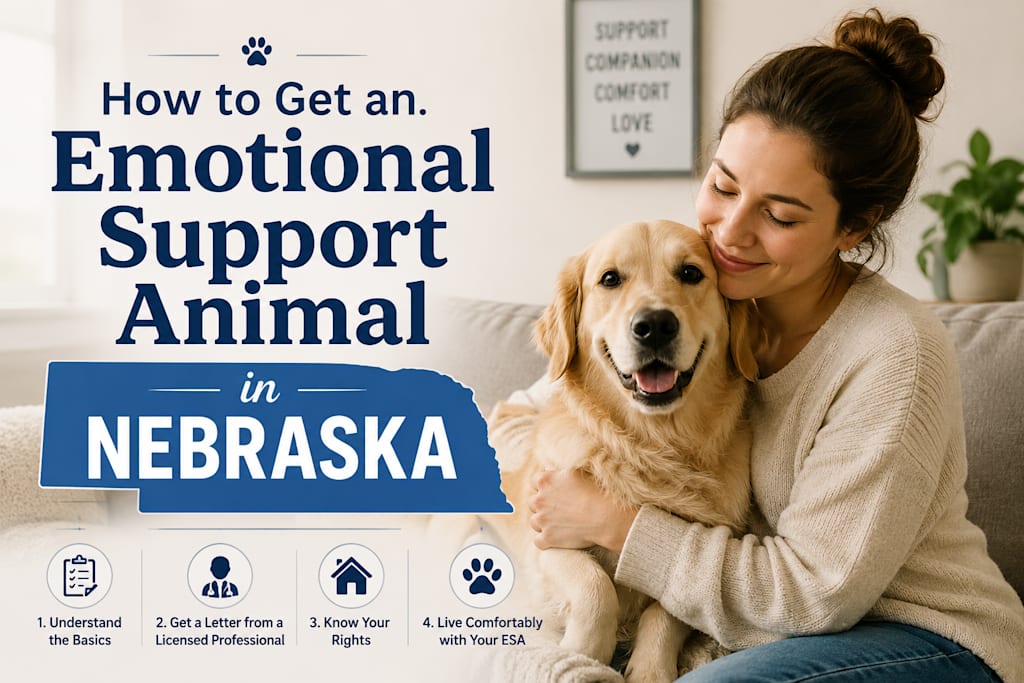
Living with anxiety, depression, or other mental health challenges can feel heavy. For many people in Nebraska, having an emotional support animal (ESA) makes daily life easier. These animals offer comfort, calm, and companionship that can ease the weight of mental and emotional struggles. If you live in Nebraska and think an ESA could help you, this guide will walk you through every step in plain language.
What Is an Emotional Support Animal?
An emotional support animal is a pet that gives comfort to someone with a mental or emotional disability. Unlike service dogs, ESAs do not need special training to perform tasks. Their main job is simply to be there for you. Their presence helps reduce symptoms of anxiety, depression, post-traumatic stress disorder (PTSD), and other conditions.
Most people choose dogs or cats as their ESA, but any animal you can legally own in Nebraska can serve this role. The animal must be friendly, well-behaved, and not cause harm or damage to property.
Are ESAs Legal in Nebraska?
Yes, but with some important details to know. Nebraska does not have its own state laws that specifically protect emotional support animals. Instead, ESA owners in Nebraska are protected by federal law, mainly the Fair Housing Act (FHA). This federal law makes sure people with disabilities can live with their support animals, even in housing that does not normally allow pets.
It's also important to know that misrepresenting an animal as a service animal or ESA in Nebraska is against the law. Doing so can lead to fines of up to $1,000 and even up to six months in jail. So always be honest and only seek an ESA letter through proper channels.
Who Qualifies for an ESA in Nebraska?
Not everyone qualifies for an emotional support animal. To be eligible, you must have a diagnosed mental or emotional disability that affects your daily life. Some common conditions that may qualify include:
- Anxiety disorders
- Depression
- Post-traumatic stress disorder (PTSD)
- Panic disorder
- Bipolar disorder
- Phobias
- Attention deficit disorders
- Autism spectrum disorder
- Chronic stress
A licensed mental health professional must decide if your condition is serious enough to benefit from an ESA. There is no fixed list of qualifying conditions, so the decision depends on your personal situation and how the animal will help you.
Step-by-Step Guide to Getting an ESA in Nebraska
Getting an emotional support animal in Nebraska is a clear process. Follow these steps to do it the right way.
Step 1: Find a Licensed Mental Health Professional
The first and most important step is to talk to a licensed mental health professional who is allowed to practice in Nebraska. This can be a:
- Psychologist
- Psychiatrist
- Licensed therapist
- Licensed clinical social worker
- Primary care doctor
The professional must hold a valid Nebraska license. If you already see a therapist or counselor, you can simply ask them about getting an ESA letter. If you do not have one, you can find a local provider or use a trusted online service that connects you with Nebraska-licensed professionals.
Step 2: Schedule an Evaluation
Once you find a provider, you will need to set up an appointment for an evaluation. This can happen in person or through a video call (telehealth). During this meeting, the professional will ask you questions about your mental health, your daily life, and how you think an ESA would help you.
Be honest and open during this evaluation. The provider needs a clear picture of your situation to make the right decision. This is not about getting a quick approval. It is about making sure you truly need the support of an animal.
Step 3: Get Your ESA Letter
If the mental health professional believes you would benefit from an emotional support animal, they will write you an ESA letter. This is the only document you actually need. Nebraska does not have an official ESA registry, and any website that claims to "register" your ESA for a fee is a scam.
A valid ESA letter should include:
The provider's name, license number, and contact details
The state where they are licensed (Nebraska)
The date the letter was written
A statement saying you have a mental or emotional disability
A note explaining that an ESA is part of your treatment
The provider's signature and letterhead
Many people use online platforms to find licensed professionals. One trusted resource where you can learn more about the process is RealESALetter, which provides helpful guides on connecting with proper providers and understanding what makes a letter valid.
Step 4: Choose Your Emotional Support Animal
After getting your letter, you can choose your ESA. If you already have a pet, that pet can become your emotional support animal. If you do not, you can adopt one from a shelter, rescue group, or breeder.
Pick an animal that fits your lifestyle. Think about your living space, your schedule, and your ability to care for the animal. A calm, friendly pet will work best as an ESA. The animal does not need any special training, but basic obedience helps a lot, especially if you live in an apartment.
Step 5: Inform Your Landlord (If Needed)
If you rent your home and want to live with your ESA, give your landlord a copy of your ESA letter. Under the Fair Housing Act, landlords must make reasonable accommodations for tenants with ESAs. This means:
- They cannot deny you housing because of your ESA
- They cannot charge pet deposits or pet fees for your ESA
- They cannot enforce breed or weight limits on your ESA
They cannot ask for medical records or specific details about your disability
There are a few exceptions. A landlord can say no if your animal would cause serious damage, threaten the safety of others, or if the building has fewer than four units and the owner lives there.
Where Can You Take Your ESA in Nebraska?
This is one of the most misunderstood parts of having an ESA. In Nebraska, emotional support animals do not have the same public access rights as service dogs. ESAs are not allowed in restaurants, stores, hotels, theaters, hospitals, or other public places unless those places already allow pets.
Service dogs, on the other hand, are protected under the Americans with Disabilities Act (ADA) and can go almost anywhere. ESAs are protected only in housing.
What About Air Travel?
Sadly, the rules for flying with an ESA changed in January 2021. Airlines no longer have to treat emotional support animals as service animals. This means most airlines now treat ESAs as regular pets. You will likely need to pay pet fees, follow size and weight rules, and your animal may have to travel in a carrier under the seat or in the cargo area.
If you need an animal with you while flying, you might want to look into a Psychiatric Service Dog (PSD). These are trained to help with mental health conditions and still have full air travel rights.
Beware of ESA Scams
Sadly, many websites try to take advantage of people looking for ESA letters. They promise instant approval, online certificates, registration numbers, and ID cards. None of these things are required by law. The only thing you need is a real ESA letter from a licensed provider in Nebraska.
Stay away from any service that:
- Promises instant approval without an actual evaluation
- Sells fake ID cards or certificates
- Claims to "register" your ESA in an official database
- Does not connect you with a licensed mental health professional
- Has no real consultation process
A real ESA letter takes time. The provider must speak with you, learn about your condition, and make a real clinical decision.
Costs to Expect
Getting an ESA letter in Nebraska usually costs between $100 and $200, depending on the provider. If you already see a therapist, they may write the letter as part of your regular care, which can save you money. Online services often have set prices, and some offer money-back guarantees if you do not qualify.
You should also think about the cost of caring for your animal, including food, vet visits, grooming, and supplies.
Renewing Your ESA Letter
ESA letters are usually valid for one year. After that, you will need to get a new evaluation and a fresh letter. Some landlords and providers may accept letters older than one year, but it is best to keep yours current to avoid problems.
Before You Begin
Getting an emotional support animal in Nebraska is a meaningful step toward better mental health. The process is straightforward when you follow the right steps and work with licensed professionals. Take your time, be honest about your needs, and avoid any service that seems too good to be true.
An emotional support animal can change your life in wonderful ways. With the right preparation and proper documentation, you and your furry (or feathered, or scaly) friend can enjoy the comfort and protection that Nebraska law and federal rules provide.
About the Creator
Enjoyed the story? Support the Creator.
Subscribe for free to receive all their stories in your feed.
Comments
There are no comments for this story
Be the first to respond and start the conversation.