
How to Get a Letter of Recommendation from a Doctor for an ESA
Understanding Eligibility, Evaluation, and Approval for ESA Documentation

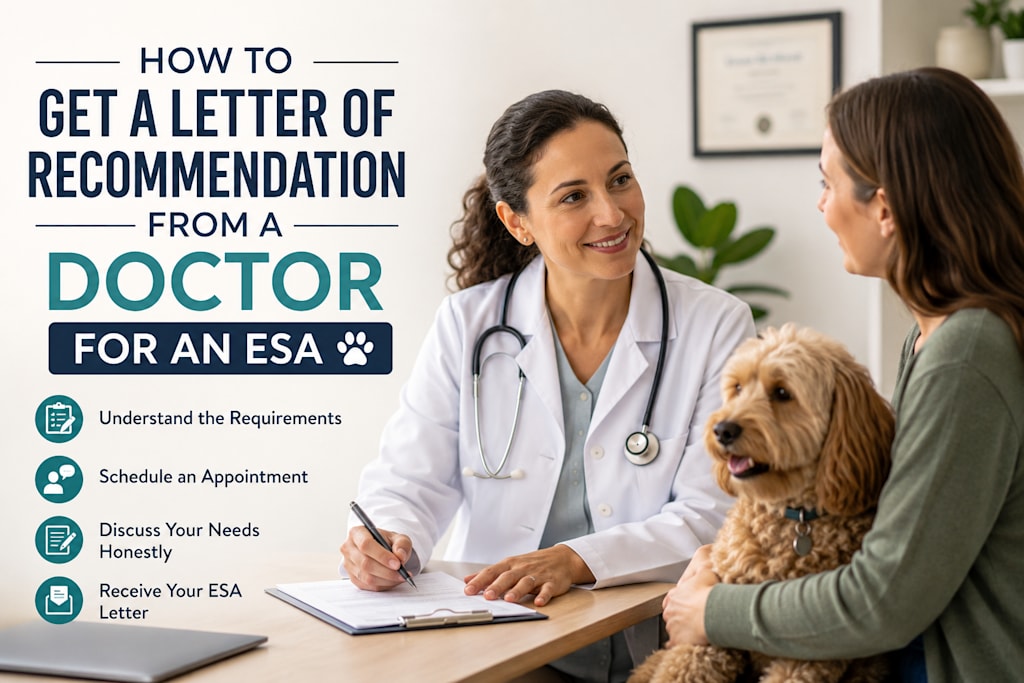
If you have a mental health condition that causes you significant distress, you might benefit from an Emotional Support Animal (ESA). An ESA is different from a service dog. It does not need special training. Instead, the main thing an ESA does is provide comfort through its presence. A cat, dog, rabbit, or other animal can be an ESA if your doctor agrees that it helps your mental health.
To have a legal ESA, you need a letter from a doctor or mental health professional. This letter is important. It tells landlords, housing providers, and others that you have a legitimate need for your animal. Without this letter, your pet is just a pet. With the letter, your animal gets certain legal protections under housing laws.
Getting this letter might seem confusing at first. But the process is straightforward when you know what steps to follow. This article will walk you through everything you need to know.
What Is an ESA Letter?
An ESA letter is an official document written by a licensed healthcare professional. This professional must be qualified to diagnose mental health conditions. Usually, this means a psychiatrist, psychologist, therapist, or counselor. In some states, other professionals like nurse practitioners or clinical social workers can write these letters too.
The letter states that you have a mental health condition. It also explains that having your specific animal helps ease your symptoms. The letter does not need to go into great detail about your condition. It just needs to confirm that your animal provides emotional support that improves your mental health.
The letter acts as proof. When you move to a new apartment or need housing accommodations, you can show this letter. It helps protect your right to have your ESA with you, even in places that normally do not allow pets.
Why You Need This Letter
Many people do not realize how important an ESA letter is. Think of it this way: without the letter, your landlord can say no to your animal. They can charge you pet fees. They can threaten to evict you. With an ESA letter, they cannot do these things. The letter gives you legal protection.
In the United States, the Fair Housing Act protects people with disabilities and mental health conditions. An ESA letter proves you fall under this protection. It means your animal is not just a pet. Your animal is a support tool for your health, similar to how someone might use a wheelchair or hearing aid.
The letter also helps in other situations. Some workplaces might ask about your animal. Some landlords might question why you have a pet. An ESA letter answers these questions with official proof.
Finding the Right Mental Health Professional
The first step is finding a licensed healthcare professional who can write an ESA letter. This is important because not all professionals are willing or able to do this.
Start by calling your current doctor or therapist. If you already see someone for mental health care, ask them directly. Say something simple like: "I am interested in getting an Emotional Support Animal. Can you write a letter for me?" Many professionals will say yes, especially if they already know your situation.
If you do not have a current healthcare provider, you need to find one. You can ask your primary care doctor for a referral to a mental health professional. You can also check with your insurance company. They can give you a list of therapists or psychiatrists in your area that they cover.
Another option is calling your local mental health clinic. Many communities have low-cost clinics where you can see a professional. They often can write ESA letters for people they evaluate.
One resource that exists for this purpose is RealESALetter, which connects people with licensed healthcare professionals who are experienced in writing ESA letters. This can be helpful if you are having trouble finding someone locally or if you prefer to complete the process online. These services typically involve a consultation where a professional evaluates your need for an ESA.
What to Expect During Your Consultation
When you meet with a healthcare professional to discuss an ESA letter, they will need to assess your situation. This is a normal part of the process.
First, they will ask about your mental health. They want to understand what conditions you have and how they affect your daily life. Be honest about your struggles. Explain how anxiety, depression, PTSD, or other conditions impact you. The professional is not there to judge you. They are there to help.
Next, they will ask about your animal. Tell them what type of animal you have or plan to get. Explain how the animal helps you. Maybe your dog helps you feel calm when you are anxious. Maybe your cat helps you get out of bed on bad days. Maybe your rabbit gives you something to care for when you feel hopeless. These are all valid reasons.
The professional might also ask practical questions. How long have you had the animal? Do you plan to keep the animal with you in your home? Do you take it with you sometimes? These questions help the professional understand your specific situation.
The entire consultation usually takes less than an hour. It is similar to a regular therapy session or doctor's visit. Some professionals can do this in person. Others might offer phone or video consultations, which can be easier if you live far away or have difficulty leaving your home.
Important Requirements for a Valid ESA Letter
Not every letter will work. Housing providers and others will look for specific things in an ESA letter. Understanding these requirements helps you know if your letter is correct.
A valid ESA letter must include certain information. First, it must be written on the professional's official letterhead. This letterhead should have their name, license number, and contact information. This proves the letter comes from a real, licensed professional.
Second, the letter should state that you have a mental health condition. It does not need to name the specific condition if you want privacy. It just needs to say that you have a qualifying condition that the professional has diagnosed.
Third, the letter should explain that your animal helps you. It should describe the relationship between your condition and how your animal helps you feel better. It might say something like: "This animal helps reduce my anxiety" or "This animal provides comfort during panic attacks."
Fourth, the letter should state that the professional believes you have a disability or mental health condition that substantially limits your daily life. This connects your condition to housing protection laws.
Finally, the letter should be dated and signed by the professional. Some professionals put an expiration date on the letter. Usually, letters are good for one year, though they can be longer.
What the Letter Should NOT Say
Just as important as what should be in the letter is what should not be in it. Some letters are written incorrectly and will not hold up when you need them.
The letter should not say that your animal has special training. ESAs do not need training. If the letter says your animal is a "service dog" or has been "trained," it is wrong. Service dogs are different from ESAs.
The letter should not contain vague language. Words like "might help" or "could assist" are not strong enough. The language should be direct: "This animal provides emotional support" or "This animal helps my mental health."
The letter should not be generic. If it looks like it was copied and pasted for many people, it might not be accepted. Your letter should be specific to you and your situation.
The letter should not be written by someone who is not licensed. A letter from a friend, family member, or non-licensed person does not count. Only licensed mental health professionals can write valid ESA letters.
Getting Your Letter
Once you have decided to work with a professional, the process is simple.
If you already have a relationship with your doctor or therapist, just ask them. Many will write the letter for free or for a small fee. They might include it as part of your regular care.
If you are working with a new professional through an online service or clinic, they will usually write the letter as part of your consultation. You might get it right away, or it might come by email within a few days. Ask when you can expect it.
Keep the letter safe. Make several copies. You will need it for housing applications, landlord requests, and other situations. Store one copy at home and keep another somewhere safe, like a cloud storage account.
Using Your Letter
Once you have your ESA letter, you know your rights. When you apply for housing, you can include the letter with your application. You can tell a landlord that you have an ESA and provide the letter as proof. You do not need to disclose details about your mental health.
If a landlord says no to your ESA, you can use your letter to show you have legal protection. If you are already in a home and need to prove your animal is an ESA, the letter is your proof.
The Real Benefits of Having a Letter
Getting an ESA letter from a doctor is an important step if you need an emotional support animal. The process involves finding a licensed mental health professional, meeting with them to discuss your needs, and getting them to write a formal letter.
The letter proves that you have a mental health condition and that your animal helps you. With this letter, you have legal protections for your ESA under housing laws. You can keep your animal with you, even in places that normally do not allow pets.
Remember, the goal of an ESA letter is not to fool anyone. It is to get the recognition and protection you deserve when you have a genuine need for emotional support from an animal. If you meet the criteria and a professional agrees, an ESA letter can significantly improve your quality of life and your housing options.
Taking this step is about taking care of your mental health. Your emotional support animal deserves to be with you, and you deserve the peace of mind that comes with official recognition of that need.
About the Creator
Enjoyed the story? Support the Creator.
Subscribe for free to receive all their stories in your feed.
Comments
There are no comments for this story
Be the first to respond and start the conversation.