
Don't Let 'Perfect' be the Enemy of 'Good'
Part One: Starting to Train the Good Dog

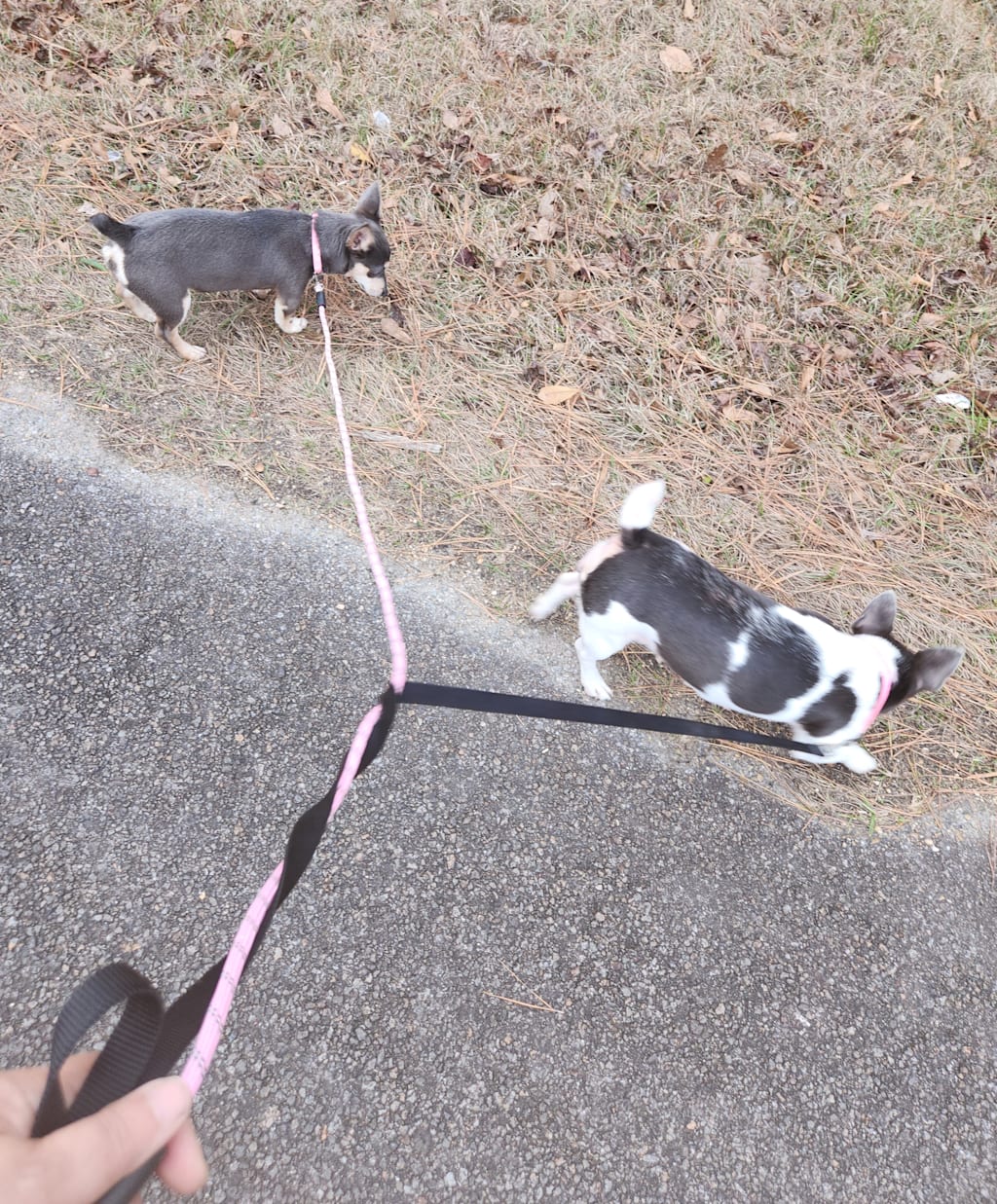
Any trainer--or anyone who owns multiple dogs over time--can tell you that for every dog that can count the chicken nuggets left in a package of ten, you're going to get three who get their foot stuck in their collar scratching at their ear. You buy a collie thinking that you're going to get a dog that can save Timmy from the well. What you end up with a dog that allows the Frisbee to smack her between the eyes and who thought she had to herd the bookcase into the corner. You know the type. The type that gets lost crossing the floor to the food dish. You despair that your dog will never learn how to sit, let alone achieve a straight automatic sit. A down-stay might as well be advanced algebra. You look at the Reels of Belgian Malinois crossing tightropes between buildings and of agility dogs and of obedience dogs that can clear a jump, pick up the right glove, and sing the second movement of Carmina Burana while making a beeline to a centered front without a hitch. And you think, "why can't I have that perfect dog?"
Why indeed? Other than thousands of dollars and thousands of hours training and reading and researching and practicing, combined with minute knowledge of canine behavior, chaining, back-chaining, chain foundations, warehouses full of "cookies," as well as obsessive attention to every syllable in the rules and regulations, what do those perfect dogs and their owners have that you and yours don't have? Probably nothing. On the other hand, I guarantee that those Maligators bump into walls sometimes. It's nature. Do you know how long it took to get that dog to run up the wall, leap off it, and grab the rope? Me neither, but I can guess. We're shown the result, not the process.
Early Training
The fact is that by the time most of us get around to training our pet dogs, they have already developed boatloads of bad habits. The first place that we try to start, when our dogs have already matured and are strong enough to pull us down the street is "heel." We've seen those videos of dogs gazing up at their owners as they proudly prance in perfect position, dropping themselves into an attentive sit the second both the handler's feet come together. Unfortunately, we try to achieve this after months of our dogs running feral and only having a passing acquaintance with a leash. I guarantee you that virtually every dog who has achieved an obedience trial champion title (OTCH) has benefitted from early leash training and lessons in attention and both verbal and physical signals.
If your dog is still a puppy, both of you will benefit from adding a leash and collar to your lives as soon as possible. He doesn't have to learn how to walk on it right away, but a puppy benefits greatly by learning to allow a collar being placed around his neck and understanding that a leash limits his access to the world around him. Sure, he's bound to hit the end of the leash and buck like the sourest rodeo bronc that ever lived, but he'll adjust. If you don't give in and tell him how sorry you are for putting him through that, the bucking and pulling will stop in a minute or less. Dogs do what benefits them the most and bucking benefits nothing. Move a step or two, and it will be rinse/wash/repeat. In just a few repetitions, with calm words from you and no other response, your little Pookie will suddenly get the idea to walk toward you. That's the time to instantly reward him with a bit of a treat. After a couple of rewards, Pookie will be staying close enough to you to stay in range of the treat hand.
Congratulations! You've just taken your first step toward "Good."
If you have a pet dog, that's where Pookie can stay. Perfection isn't all it's cracked up to be. The vast majority of dog owners will never go to Europe for the FC I Obedience World Championship, making that extreme level of perfection is unnecessary. All the average pet owner wants is to walk his or her leashed dog quietly down a street, unbothered by distractions and, most of all, not pulling their arms from the socket. Going a bit beyond that, to get a reliable heel and automatic sit, is going above and beyond the call of duty. If that's what your goal is in life, then go for it! I will never discourage a person from training his or her dog.
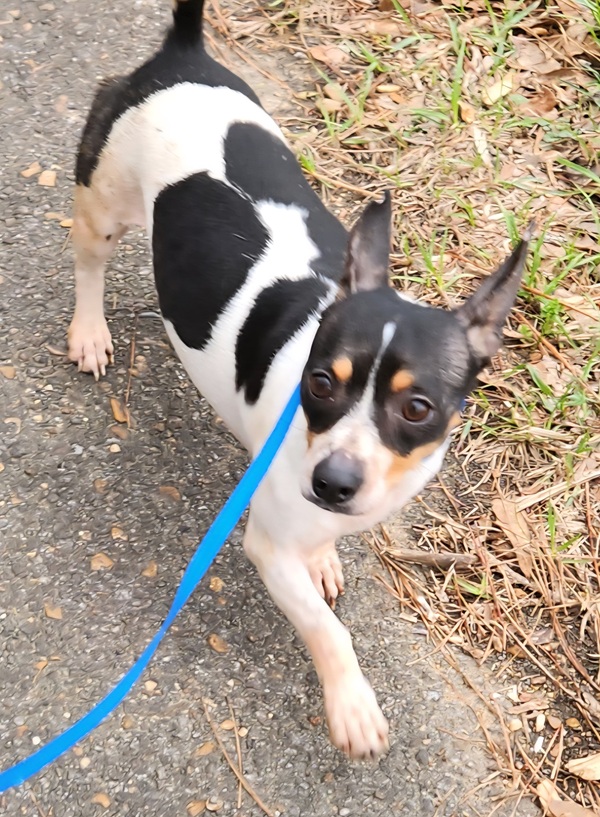
With a good command over walking on a loose leash, your dog can still be a "good" dog, if not a perfect obedience powerhouse. If you want to set your sights a little higher, think about using 4H dog training or the Canine Good Citizen program as guidelines. Both of these sets of guidelines are perfect for setting a dog and owner up for success, moving the dog up the line little bit by little bit. Remember, in these instances, you're only competing against yourself and your own dog, even if you covet that CGC title for Pookie. Don't be afraid to take baby steps. To take steps back when you're moving your dog up the training ladder too quickly. To praise more. To take days off for just fun and play instead of training. Your dog is a good dog. It just takes time to carve that good dog out of the block of marble in front of you.
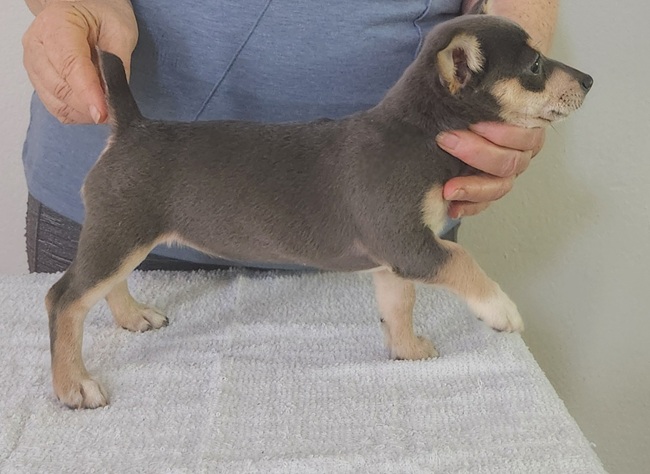
The advantage to training your dog to be a good dog instead of a perfect one is that it removes a lot of stress from both of you. That goofy thing that Pookie did, you know, sitting up instead of a perfect three-point sit, becomes a funny story instead of a roadblock. It gives you a moment to laugh, as well as a challenge, rather than a defeat. The advantage of "good" is that the goalposts are always moving forward. What was "good" last week, remains "good." You will never have less than a good dog aiming for "good," because "good" can never become "bad." It's just imperfect. There's nothing wrong with imperfection if it can bring you and your dog closer to being a working team.
I'm planning a series of articles on training a "good" dog, so I'll go into more detail as they progress. The aim of these articles is not to discourage people from aiming for perfection, if that's what they want from their dog. The aim is to make the journey towards perfection just a little less stressful--and to reassure trainers that it's okay to demand just a little less, if perfection seems out of reach. Let's start our walk, as we reach for our goals together.
Remember!
To have a good dog you must:
- Know your dog and his or her limitations. These things change with age, so your training will change as your puppy or young dog matures. Badger at 10 is not the same dog he was as a puppy, but he can still learn tricks.
- Understand what motivates your dog. Your dog will do what benefits him the most, what brings him enjoyment. A motivator can be food, praise, play, and exploration/opportunities. Training without a clear idea behind your dog's motivation will add an extra layer of frustration to your efforts.
- Use measurable steps. For example, whether your definition of a good dog is one that can sit and wait for supper or sit and wait in the obedience ring, understand that that skill is measurable in terms of seconds and minutes, inches and feet. Start with a baseline (ex. five seconds sitting one inch in front of your feet) and progress every time you feel comfortable doing so until you're practicing at your goal.
- Define success. There are different successes in training. When your dog performs a correct behavior for the first time, that's a success. When your dog repeats a correct behavior, that's a success. When your dog repeats a correct behavior 75% of the times it's asked to perform it, then the training is a success and it's possible to progress forward. When the dog is performing at your desired level, that's a success. All successes are part of having a "good" dog.
- Start with a reasonable plan and a defined goal. That doesn't mean you need to keep to any linear movement, but you need to recognize your successes when you arrive at them. A reasonable plan recognizes small, daily steps and larger, long-term movements.
- When training seems like it's getting in the way with your relationship with your dog, it's okay to take a break. Set aside some time to throw a ball or to take a walk without being worried about sits and stays.
- It's okay to backtrack. Dogs do not learn in a linear fashion. They forget. They backslide. If your dog suddenly can't sit-stay for 30 seconds, go back to ten. I promise: it will be easier the second time around.
- Relax. Training a "good" dog is just for funsies.
Happy Training!
Resources:
HowDoITrainMyDog. (2026). Dog Training Regression: Why It Happens & How to Prevent It. https://www.howdoitrainmydog.com/blog/dog-training-regression-why-it-happens-how-to-prevent
Patterdale, S. (2026). AKC.com. How to Find What Motivates Your Dog to Work. https://www.akc.org/expert-advice/training/what-motivates-your-dog-to-work/
About the Creator
Kimberly J Egan
Welcome to LoupGarou/Conri Terriers and Not 1040 Farm! I try to write about what I know best: my dogs and my homestead. I'm currently working on a series of articles introducing my readers to some of my animals, as well as to my daily life!
Enjoyed the story? Support the Creator.
Subscribe for free to receive all their stories in your feed. You could also become a paid subscriber, letting them know you appreciate their work.
Comments
There are no comments for this story
Be the first to respond and start the conversation.