
Types of Fabrics Explained: The Fabric You Never Think About Is Quietly Running Your Life
From the shirt on your back to the sheets you sleep on, almost nobody understands the different types of fabrics they wear every day — here's the short version
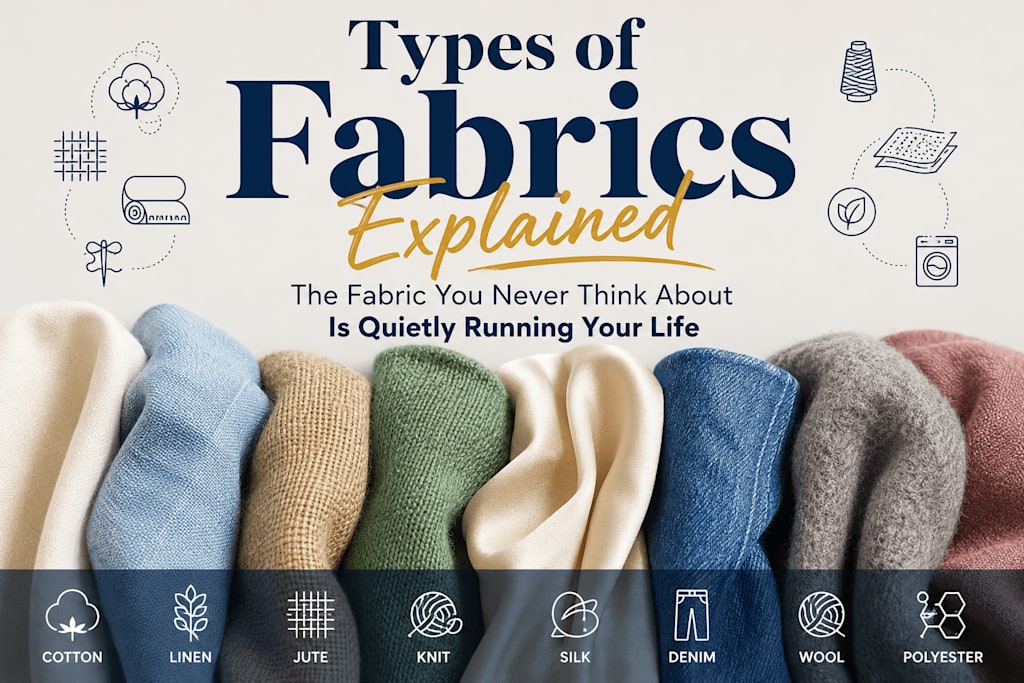
Pick up any piece of clothing in your closet right now and ask yourself a simple question: what is this actually made of, and why? Most people can't answer beyond "cotton, I think" or "it says polyester on the tag." That's not a personal failing. It's just that fabric, despite touching every single hour of our lives, remains one of the least understood materials most people interact with daily — and most of us never learn the basic types of fabrics that make up almost everything we own.
I've spent time around apparel manufacturing long enough to know that fabric choice isn't a minor detail tucked away after the "real" design decisions. It's the decision everything else depends on. Here's the short version of the types of fabrics that actually matter, and why.
Natural fabrics are older than civilization, and they still win on specific jobs
Cotton remains the most-used natural fiber on earth for a good reason: it breathes, it's soft against skin, and it takes dye beautifully. Its weaknesses are just as real — it wrinkles, it shrinks if you're not careful, and it takes a genuinely heavy environmental toll in water and pesticide use during cultivation. Linen, made from the flax plant, breathes even better than cotton and is one of the oldest woven fabrics in human history, but it wrinkles aggressively and most people now reach for a cotton-linen blend instead of pure linen for that reason. Wool insulates even when wet, which is a genuinely remarkable property no synthetic fully replicates, and silk remains the smoothest, most luxurious natural fabric available, though its delicate care requirements and price point keep it firmly out of activewear and into special-occasion territory. Among all the types of fabrics in regular use, these four natural fibers are the oldest and still the most recognizable by feel alone.
Synthetic fabrics solved problems nature never had to solve
Polyester didn't exist a century ago, and now it's the most-produced fabric type on the planet. It resists wrinkling, dries fast, and holds color well, all because it's essentially a type of plastic spun into thread. That same plastic origin is exactly why it doesn't breathe the way natural fabric does unless it's specifically engineered with moisture-wicking technology. Nylon brings genuine strength and abrasion resistance, which is why it shows up in backpacks and outerwear far more than t-shirts. Spandex, in tiny percentages, is the reason your jeans and leggings move with your body instead of fighting it — most stretch garments contain only two to five percent spandex blended with another fabric, not spandex alone, which would feel like a swimsuit and a sauna at the same time. These synthetic types of fabrics now dominate activewear precisely because natural fiber alone couldn't meet the performance demands modern clothing is expected to handle.
Blended fabrics exist because no single fiber does everything well
This is the part most people miss entirely when they think about types of fabrics. A poly-cotton blend isn't a compromise or a downgrade — it's a deliberate engineering choice that takes cotton's softness and polyester's wrinkle resistance and gets both at once. Cotton-spandex gives you the natural feel of cotton with just enough give to move comfortably. Tri-blend fabric, mixing cotton, polyester, and rayon, is why the softest vintage-feeling t-shirts you've ever worn probably weren't pure cotton at all. Blended fabrics are arguably the most common types of fabrics in everyday clothing today, even though almost nobody shops with that category in mind.
Fabric construction matters as much as fiber type, and almost nobody talks about it
Here's something genuinely underappreciated: the same fiber knitted or woven differently behaves completely differently, which means the type of fabric isn't only about what it's made from. Jersey knit, the basic t-shirt fabric, is lightweight and stretchy. Interlock knit is thicker and more stable, which is why it shows up in higher-end polos and structured garments. French terry, with its looped underside, is what makes a sweatshirt feel substantially different from a basic t-shirt even when both might be cotton-based. Fleece is brushed to raise a soft nap that traps warmth. None of this is about the raw fiber at all — it's entirely about how that fiber was constructed into cloth, which is the part most explanations of fabric types skip over completely.
Sustainable fabrics have moved from niche to default, fast
Organic cotton, recycled polyester made from plastic bottles, bamboo fabric, and Tencel from sustainably sourced wood pulp have all gone from marketing footnotes to genuine purchase drivers, especially among younger consumers actively researching what they're buying before they buy it. This isn't a passing trend. It's a permanent shift in what "good fabric" means, and it's reshaping which types of fabrics brands choose to build entire collections around.
Why understanding the types of fabrics is worth your time
The next time you buy a shirt, a legging, or a hoodie, you'll actually understand why one costs more than another, why one feels different after a year of washing, and why "100% cotton" sounds simple but is really just the first of about a dozen decisions that determined how that garment will perform, age, and feel against your skin for as long as you own it.
Fabric is never just fabric. It's a hundred quiet engineering decisions wearing a t-shirt's disguise. If any of this sparked genuine curiosity about the different types of fabrics rather than just mild trivia, the full breakdown — every fiber, every blend, every construction type, GSM weights and all — is worth a deeper read.
About the Creator
Enjoyed the story? Support the Creator.
Subscribe for free to receive all their stories in your feed.
Comments
There are no comments for this story
Be the first to respond and start the conversation.