
The Perception Curve
A Philosophy of Perception, Judgment, and Understanding Under Uncertainty
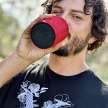
Corey W. Harland a medically retired soldier with over 10 years of military service, including two combat deployments to Afghanistan. He holds two Associate of Arts degrees, an Associate of Applied Science, and a Bachelor’s degree, with a background in linguistics, communication, and instructional development. Alongside his academic and professional work, Harland writes philosophical essays, poetry, and reflective literary works centered on perception, discipline, communication, and human understanding.
The Perception Curve began as a philosophical exploration of how people think, judge, communicate, and develop understanding under uncertainty. While much of that work approaches these ideas through philosophy, psychology, and structured reasoning, Harland also believes many of the same lessons can be taught through stories that are accessible to younger readers.
Literary Lessons from Cedar Cove is part of a companion mini-series that adapts these themes into child-friendly narratives focused on observation, patience, communication, safety, empathy, and thoughtful decision-making. Rather than presenting formal pedagogy alone, the series uses literary storytelling, animals, nature, and simple experiences to help younger audiences explore the relationship between fast thoughts, slow thoughts, and growing understanding.
Through both series, the goal remains the same: to encourage clearer thinking, stronger communication, and more thoughtful engagement with the world around us…
————————————————————
Corey W. Harland
The Perception Curve
A Philosophy of Perception, Judgment, and Understanding Under Uncertainty
Understanding rarely fails because information is absent. It fails because it is assumed too quickly.
We tend to believe that thinking improves in a straight line. We learn, we refine, and we arrive at clearer conclusions over time. In practice, it does not unfold that way. What appears to be understanding often begins as assumption. It feels complete before it has been tested. Only when something does not hold does the process begin again. This pattern is not just an intellectual concern. It has a cost. It shapes how we spend time, both our own and that of others.
This series presents a framework for how perception, belief, and knowledge evolve under uncertainty. It follows the movement from initial clarity into fracture, from fracture into doubt, and from doubt into disciplined understanding. What emerges is not certainty, but a more controlled way of thinking that allows for action without illusion. The value of this process is not only in arriving at better conclusions, but in avoiding the waste created by premature ones.
When understanding is assumed too quickly, time is lost. Decisions are made on incomplete information. Communication becomes inefficient, requiring correction and repetition. Effort is spent defending positions that have not yet been tested. In this way, poor thinking does not remain isolated within the mind. It extends outward, affecting others. Time is consumed not by complexity, but by error that could have been avoided through patience and evaluation.
As Daniel Kahneman explains in Thinking, Fast and Slow, the mind favors rapid conclusions that feel coherent before they are accurate. This tendency allows for speed, but it often sacrifices precision. When left unchecked, it leads to repeated correction. What appears efficient in the moment becomes inefficient over time. A conclusion reached too quickly must be revisited. A misunderstanding must be clarified. Each instance adds to the cost.
This is where disciplined thinking becomes practical. To slow the process at the right moment is to preserve time later. To question an idea before acting on it reduces the need to correct it after. This is not hesitation for its own sake. It is control. It recognizes that time is not only spent in action, but also in correction, revision, and recovery.
The same principle applies beyond the individual. Communication, leadership, and instruction all rely on clarity. When understanding is assumed rather than confirmed, others are required to compensate. They must interpret, adjust, and often repeat what should have been clear. In this sense, the responsibility to think clearly extends beyond personal benefit. It becomes a matter of respect. To refine one’s understanding is to reduce unnecessary burden on others.
This idea aligns with the philosophical tradition that places discipline at the center of thought. As Aristotle suggests in Nicomachean Ethics, virtue is developed through consistent practice, not isolated insight. The discipline to think carefully, to evaluate before concluding, and to remain open to revision is not an abstract ideal. It is a practical necessity. It shapes outcomes, interactions, and the use of time itself.
The perception curve, then, is not only a framework for understanding how we think. It is a way to reduce the cost of thinking poorly. It does not eliminate error, but it shortens the distance between error and correction. It replaces repetition with refinement and assumption with evaluation.
To follow this curve is to recognize that clarity has value beyond correctness. It preserves time. It respects the effort of others. And it allows understanding to develop without unnecessary loss.
Works Cited
Kahneman, Daniel. Thinking, Fast and Slow. Farrar, Straus and Giroux, 2011.
Aristotle. Nicomachean Ethics. Translated by Terence Irwin, Hackett Publishing, 1999.
————————————————————
Literary Lessons from Cedar Cove:
Child-Friendly Stories About Thinking, Understanding, and Growing
Near the great cedar forests and coastal waters by Lions Gate, there was a small village called Cedar Cove. Young bear cubs, river otters, ravens, and fox kits all lived there together with their families. The elders of the village often taught the young ones that understanding the world was just as important as exploring it.
Old Raven, who watched over the village from the cedar trees, always said:
“Fast thoughts can protect you. Slow thoughts can guide you. Wise animals learn when to use both.”
At first, the young cubs thought this sounded strange. How could slowing down help someone move faster?
One spring afternoon, two black bear cubs named Kai and Nita hurried down to the salmon river with their otter friends. The snow had melted high in the mountains, and the river was moving faster than usual.
Kai saw the shining water and immediately thought:
“Jump in! It looks fun!”
That was a fast thought.
But Nita stopped at the riverbank. She remembered the lessons from the elders.
She used slow thinking instead.
She asked herself:
Is the current stronger today?
Are the rocks slippery?
Is there an adult nearby?
Is this a safe place to swim?
Nita picked up a branch and placed it into the water. The branch rushed away quickly.
“The river is stronger today,” she said.
Kai looked surprised. He had not noticed.
The cubs decided to move farther downstream where the water was calmer and safer. Kai realized that taking a few extra moments to think carefully helped avoid danger later.
The next morning, the cubs rode their bikes along the coastal road near the bridge. Kai raced ahead quickly down a hill.
His fast thought said:
“Go faster!”
But suddenly, a truck began backing out near the road.
This time, Kai’s fast thoughts had changed because he had practiced safety many times before.
Without stopping to panic, he quickly:
slowed his bike,
checked both directions,
and squeezed the brakes.
The truck passed safely.
Later that evening, Old Raven explained:
“Slow thinking teaches fast thinking. The more carefully you practice now, the safer your fast choices become later.”
A few days later, during the village lantern festival, a strange fox approached the young animals.
“Come help me find something in the forest,” the fox said kindly.
Kai almost followed immediately.
His fast thought said:
“He seems nice.”
But Nita slowed down again.
She asked:
Do we know him?
Did we tell our parents?
Why is he asking children instead of adults?
The cubs politely refused and went to find their families instead. The strange fox quickly disappeared into the forest.
That night, the cubs learned another lesson:
Fast thoughts often trust appearances.
Slow thoughts ask questions.
Not every fast thought is bad. One winter evening, smoke suddenly rose from a nearby cabin. The village alarm bells rang loudly through Cedar Cove.
This time there was no time to stop and carefully debate what to do.
The cubs remembered their safety practice.
Their fast thoughts immediately said:
Stay low under the smoke
Move toward the exit
Stay together
Call for help
Because they practiced slowly many times before, their fast thoughts knew what to do when danger came quickly.
Before the cubs went home for the night, Old Raven looked out over the dark cedar trees and glowing village lights.
“Understanding does not grow all at once,” he said softly. “Sometimes we think too quickly and must correct ourselves later. But when we practice patience, observation, and careful thinking, our fast thoughts begin to work together with our slow thoughts.”
The cubs listened carefully as the waves rolled against the shore below the bridge.
And from then on, the young animals of Cedar Cove tried to remember:
Slow down when learning.
Think carefully before deciding.
Practice good habits often.
So when life moves quickly, wisdom can move quickly too.
-Be Safe, Be Kind-
P.S.
Please comment below on your thoughts feelings and suggested topics as the series moves along.
About the Creator
Corey W Harland
Slow is smooth, and smooth is fast.
Strength through endurance,
Mastery through discipline,
Power through intensity.
Titles and achievements fade,
Character is what endures.
Enjoyed the story? Support the Creator.
Subscribe for free to receive all their stories in your feed. You could also become a paid subscriber, letting them know you appreciate their work.
Comments
There are no comments for this story
Be the first to respond and start the conversation.