Inspiration
Charles Stanley House: History, Legacy, and Lasting Influence
Who Was Charles Stanley? Nestled in the quiet residential neighborhood of Atlanta, the Charles Stanley House is more than just a traditional brick house. It stands as a powerful symbol of a life devoted to faith, service, and reflection. As the longtime First Baptist Church pastor, Charles Stanley influenced millions across the world.
By Mindblowingagencyabout a year ago in Men
Michael Savage of New Canaan: 2025's Tastemaker
In a world flooded with influencers and fleeting trends, few individuals stand out as true tastemakers, people who shape culture rather than simply follow it. Michael Savage of New Canaan, Connecticut, is one of those rare voices. In 2025, his influence spans across art, fashion, design, wellness, and personal expression, making him not just a collector or businessman, but a cultural force.
By Mike Savage New Canaanabout a year ago in Men
The Weight Of Silence
A Journey Through Doubt to Self-Discovery I was 28 when I realized I’d been living someone else’s life. It wasn’t a dramatic revelation—no thunderclaps or epiphanies in the rain. It was quieter, heavier, like a stone settling in my chest. I was sitting in my cubicle, staring at a spreadsheet that seemed to mock me with its endless rows of numbers. The hum of the air conditioner, the clatter of keyboards, and the occasional laugh from a colleague down the hall—it all felt like a world I didn’t belong to.
By Nirupam Kushwaha about a year ago in Men
Michael Savage’s Weekend Tour Through New Canaan
Nestled in the heart of Connecticut, New Canaan is more than just a picturesque town, it’s a place where creativity, community, and comfort come together. And when you explore it through the eyes of Michael Savage from New Canaan, you begin to see a whole new side of the town, one shaped by curiosity, refined taste, and a love for the finer details of life.
By Mike Savage New Canaanabout a year ago in Men
The Weight He Carried
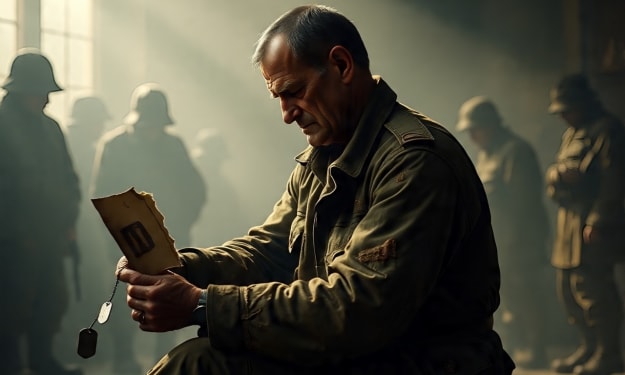
The village was quiet now. What had once echoed with gunfire and shouted commands was now still, its dust settling in the corners of broken buildings and shattered windows. In the middle of what remained stood a soldier, silent, motionless, staring at a torn photo in his hand. His name was Elias. He had survived. Not everyone did. They called it a "successful mission." Objectives met, area secured, threats neutralized. That’s what the report would say. But the report wouldn’t mention the boy with the soccer ball who ran too close. It wouldn’t describe the sound of a friend’s last breath. It wouldn’t talk about the fire in Elias’s chest that never left—not from bullets, but from guilt. War had marked him in ways no medal could redeem. Before the uniform, Elias had been someone else entirely. A dreamer. A mechanic. A man who loved the smell of oil and grease, who believed in small towns and big promises. He joined to protect something—to matter. He never imagined how much of himself he would lose trying. There was one thing that kept him grounded during his deployments: letters. She wrote every week. Her name was Ava. She didn’t fill the pages with questions or worry. She filled them with memories—of rainy days spent under blankets, of dancing barefoot in the kitchen, of dreams they hadn’t lived yet. Elias never wrote back. Not because he didn’t want to, but because he didn’t know how to explain the things he saw. How do you describe the sound of silence after an explosion? How do you tell someone you love that you’ve stopped dreaming altogether? One morning, after a long night of rain and restless sleep, Elias was walking back from patrol when it happened. His unit was ambushed just before dawn. In the chaos, his closest friend, Cole, was hit. Elias tried to drag him back behind cover, but there was blood—too much. Cole grabbed his wrist, stared into his eyes, and said just three words before going still: “Don’t forget me.” He never did. When Elias finally returned home, everyone said the same thing: “You’re lucky.” “You made it.” “Welcome back.” But he didn’t feel lucky. The world seemed too loud, too fast. He found it hard to breathe in quiet rooms. Crowds made his skin crawl. Every shadow felt like it carried a memory. He saw Ava again. She ran to him, threw her arms around him, held him like a lifeline. But he couldn’t hold her back—not the same way. There was a wall now, invisible but solid. They tried. Dinners. Walks. Quiet nights under starlight. But Elias had changed. His body was home, but parts of him had never made it back. One evening, Ava found him sitting alone on the floor, their wedding photo in one hand and Cole’s dog tags in the other. She sat beside him. For a long time, neither of them spoke. Then he whispered, “I should have done more. I should’ve saved him.” She didn’t tell him it wasn’t his fault. She didn’t offer hollow comfort. She just leaned her head on his shoulder and said, “You’re still saving him, every day you remember.” Healing didn’t come all at once. It never really does. But little by little, Elias started to find pieces of himself again. In laughter that returned without warning. In the warmth of Ava’s hand in his. In the quiet, steady beating of his own heart. He began writing letters—not to send, but to say what he never could before. Some were to Cole. Some to the boy with the soccer ball. Some to the part of himself he left behind. And in that silence, something softened. Not erased, not forgotten—but carried. Because some weights are too heavy to put down. But with love, you learn how to carry them.
By Jibran Khanabout a year ago in Men
The Garage Grind: How Cold Concrete Beats Shiny Gyms
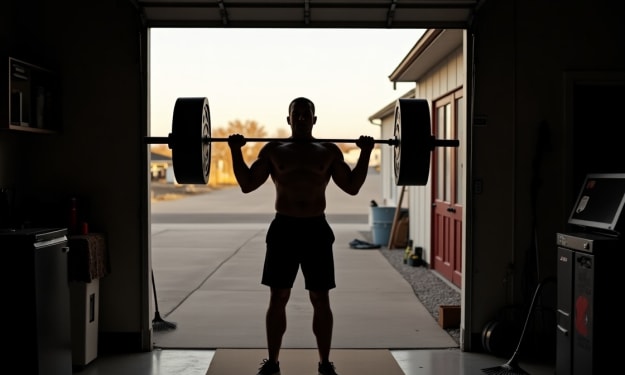
Look, I tried the whole "real gym" thing. You know the drill: shiny machines reflecting overly-ambitious New Year's resolutions, the faint smell of industrial cleaner mixed with… is that cologne? Or protein farts? Hard to tell. And the soundtrack? Grunts, clanging metal, and the constant, low hum of a hundred conversations you really don't want to overhear. Plus, waiting for the bench press felt like queuing for the last lifeboat on the Titanic. Not exactly motivating.
By Ziafat Ullahabout a year ago in Men