Health
Should You Pee After Masturbation? The Surprising Link to Prostatitis Every Man Should Know
Let’s face it—masturbation is a normal part of male health. But if you're someone who tends to rush to the bathroom right after, here’s something you might not know: peeing too soon after masturbation could actually increase your risk of prostatitis.
By Jane Smithabout a year ago in Men
The Truth About "Ideal Sex Duration": What Really Matters in the Bedroom
In many parts of the world, especially across East Asia, conversations about sex are often cloaked in silence. It’s not that people don’t care—far from it. It’s more like there’s an invisible rule: everyone knows it’s important, but no one talks about it openly. And while cultural norms can shape our attitudes, they also leave us with some persistent misconceptions. One of the most common? That the longer sex lasts, the better it is.
By Amanda Chouabout a year ago in Men
Can Diet and Exercise Help Treat Prostatitis?
Prostatitis, a condition causing inflammation of the prostate gland, is becoming increasingly common, especially among younger men leading sedentary lifestyles. If you’re dealing with symptoms like frequent urination, discomfort, or pelvic pain, you might be wondering: Can diet and exercise really make a difference? The answer is a resounding yes! By combining targeted nutrition and movement with treatments like the Diuretic and Anti-inflammatory Pill, you can support your body’s healing process and reclaim your health. Let’s dive into how everyday choices can become powerful allies in managing prostatitis.
By Healthylifestyleabout a year ago in Men
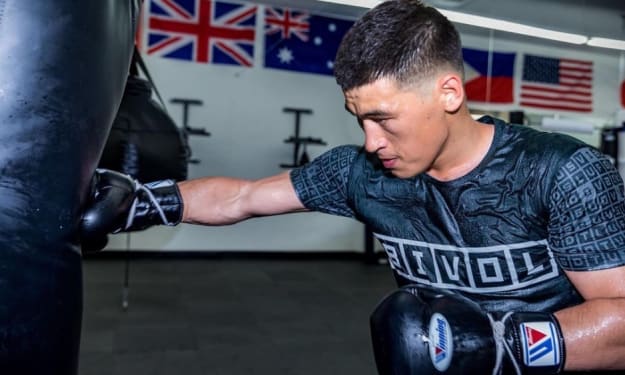
The Science Behind Soviet-Style Boxing
When you think of Soviet-era sports, you might picture stoic athletes, brutal training regimens, and a borderline obsession with biomechanics — and you wouldn’t be wrong. Soviet-style boxing was no exception. It was methodical, efficient, and built on a foundation of science over spectacle.
By Muhumed Tagouriabout a year ago in Men
“Conviction is the New Currency” — A Candid Interview with Investor & Strategist Morgan Cheatham
At the intersection of deep tech, digital health, and ethical investing stands Morgan Cheatham, a rising force in venture capital who isn’t here to chase trends — he’s here to shape the next decade. As a partner at one of the most forward-thinking VC firms in the country, Cheatham brings a rare blend of clinical insight, product intuition, and strategic foresight into one mission: backing founders who build with purpose.
By New Generation about a year ago in Men
Morning Erections and Prostatitis: Is There a Link to Sexual Function?
Morning erections are often seen as a subtle "barometer" of male sexual health. So, when a man with prostatitis notices his morning wood becoming less frequent—or disappearing altogether—it's understandable that alarm bells start ringing. But what’s really behind this change? Is prostatitis truly to blame? And does a missing morning erection always spell trouble for your sex life? Let’s break it down.
By Jane Smithabout a year ago in Men
How Often Should You Have Sex? A Realistic Guide for Every Age Group
Let’s face it — talking about how often we should be having sex can feel awkward, even taboo. But it’s a question many of us quietly wonder about, especially when life gets busy, bodies change, or relationships evolve.
By Amanda Chouabout a year ago in Men
What Is a Sex Doll?. Content Warning. AI-Generated.
Introduction Sex dolls (also known as love dolls or erotic dolls) are becoming more popular than ever. You might have seen them online, in ads, or even heard friends talk about them. But what exactly is a sex doll?
By Daniel R. Drummondabout a year ago in Men
Is Your Prostatitis Bacterial or Non-Bacterial? Here’s How to Know for Sure
Prostatitis is one of those conditions that can turn a man’s life upside down. The discomfort, the awkward symptoms, the confusion around what’s really going on—it’s enough to make anyone frustrated. But did you know there’s more than one type of prostatitis? And that knowing which kind you have could completely change how it’s treated?
By Health For Youabout a year ago in Men
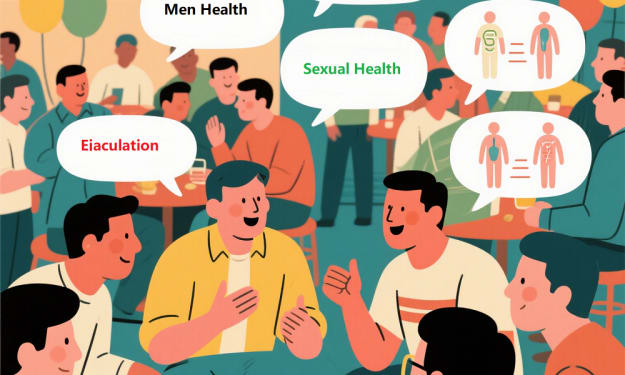
Why More Men Are Talking About Ejaculation Control—And What It’s Doing for Their Health
Let’s face it: most guys don’t grow up learning how to talk openly about their bodies, especially when it comes to something like ejaculation. It’s either brushed off as “normal teenage stuff” or buried under layers of shame, jokes, or silence.
By Healthylifestyleabout a year ago in Men
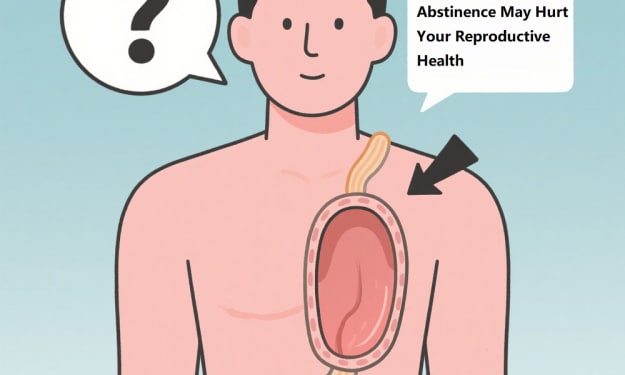
The Truth About Abstinence: Why "Saving It Up" Might Be Hurting Your Reproductive Health
Let’s face it—when it comes to men’s reproductive health, most conversations are either whispered jokes or awkward silences. Yet, the reality is that many men worry deeply about their sexual performance, fertility, and long-term vitality. One popular belief that continues to float around is that abstinence—especially for long stretches—is somehow beneficial. It’s thought to “save energy,” “boost sperm quality,” or even “increase testosterone.” But how true is that?
By Jane Smithabout a year ago in Men
"The Lion of the Mountains: The Untold Story of a Pashtoon Warrior's Courage"
In the unforgiving highlands of the Hindu Kush, where the air is thin and the silence speaks louder than words, lived a man whose name still echoes in the valleys like a war cry. He wasn’t a king, nor a general, nor a man of wealth—but in the hearts of his people, he was something far greater. His name was Gul Rahman, known to his tribe as Sher-e-Koh—The Lion of the Mountains. Born into a humble family in a remote village in Kunar, Afghanistan, Gul Rahman was the son of a shepherd and the grandson of a man who once fought in the First Anglo-Afghan War. He grew up with no formal education, but he was schooled by nature, by hardship, and by the fierce pride of his Pashtoon bloodline. The code of Pashtunwali—honor, courage, hospitality, and revenge—was etched into his soul before he could even walk. Life in the mountains was never easy. Winters were cruel, and the political winds that swept through Afghanistan brought nothing but unrest. Gul Rahman saw foreign troops march through his lands, saw warlords rise and fall, and watched helplessly as corruption crept like poison into the veins of his homeland. But it wasn’t until his village was raided by a corrupt local militia that the lion in him awakened. It was a cold night when the militia arrived. They came under the pretext of searching for insurgents, but everyone in the village knew they were only there to loot and intimidate. Gul Rahman's younger sister, barely sixteen, was dragged out of their home, accused of harboring a fugitive. He pleaded, argued, even fell to his knees—but his words fell on deaf ears. The militia commander smirked and slapped him across the face. That night changed everything. The next morning, Gul Rahman left the village quietly, saying nothing. For weeks, no one heard from him. Rumors began to swirl—that he had fled, that he had gone mad with grief, or that he had gone to the city to seek justice. The truth was more startling: Gul Rahman had gone into the mountains to train. He gathered a small group of trusted friends—men with old rifles, deep scars, and nothing left to lose. They became a guerrilla unit, not affiliated with any political group, nor driven by ideology. Their only mission was to protect their people from oppression—be it from foreign forces, corrupt leaders, or criminal gangs. Gul Rahman became their leader, not by title but by sheer will and bravery. His tactics were brilliant. Using the knowledge of the mountains passed down by his ancestors, he ambushed convoys, disarmed roadblocks, and freed prisoners from illegal jails. He never attacked civilians and never allowed looting. He forbade his men from harming women or children, even in retaliation. “If we lose our honor,” he once said, “we lose our right to call ourselves Pashtoons.” It wasn’t long before the legend of the Lion of the Mountains began to spread. Songs were sung about him in teahouses. Tribal elders told stories of how he once fought off twenty armed men with a broken rifle and a dagger. Children in the valleys whispered about the man who could outrun horses and disappear into thin air. But legends come at a cost. One fateful night, Gul Rahman’s unit was ambushed by a joint force of militia and rival warlords who had grown tired of his interference. Outnumbered and outgunned, Gul Rahman refused to retreat. He fought alongside his men, holding the line long enough for the civilians nearby to escape. He was shot twice, once in the chest and once in the leg. Still, he kept fighting until he fell. They say when his body was found, he was smiling. His death sparked outrage across the region. Thousands of Pashtoons, many of whom had never even met him, marched in protest. They carried his body wrapped in the flag of the Pashtoon resistance and buried him at the peak of his favorite mountain. A simple stone marks the grave, but people come from far and wide to leave flowers, to say prayers, and to whisper their thanks. Today, Gul Rahman is not remembered as a terrorist, a rebel, or even a soldier. He is remembered as a man—a man who stood when others bowed, who spoke when others stayed silent, and who fought not for power, but for his people. In a world where heroes are often measured by medals and monuments, Gul Rahman’s legacy lives on in the hearts of the forgotten, in the lullabies of mothers, and in the pride of every young Pashtoon who dares to dream of justice. Because courage is not born in palaces—it is forged in the fire of suffering, carved into the stones of the mountains, and written in the blood of men like the Lion of the Mountains.
By Nizam khanabout a year ago in Men