Fatherhood
The Time I Ghosted My Therapist
I had been seeing Dr. Evans for about six months. She had kind eyes, a no-nonsense attitude, and a frighteningly accurate way of cutting through my sarcasm like a laser-guided missile aimed directly at my emotional baggage. Week after week, I showed up to her office pretending I was just there for fun, like therapy was a quirky hobby I picked up between failed relationships and spontaneous existential crises.
By Noor Hussainabout a year ago in Men
A Silent Strength, A Selfless Heart Happy Father's Day
The smell of coffee and old wood filled the air as Daniel walked through the doorway of his childhood home. The house hadn’t changed much over the years—still modest, still tucked in the quiet part of town where lawns were trimmed by hand and neighbors waved from their porches. But the one thing that always made this house feel like more than just bricks and beams was the man who lived inside it: his father.
By Noor Hussainabout a year ago in Men
"The Lion of the Mountains: The Untold Story of a Pashtoon Warrior's Courage"
In the unforgiving highlands of the Hindu Kush, where the air is thin and the silence speaks louder than words, lived a man whose name still echoes in the valleys like a war cry. He wasn’t a king, nor a general, nor a man of wealth—but in the hearts of his people, he was something far greater. His name was Gul Rahman, known to his tribe as Sher-e-Koh—The Lion of the Mountains. Born into a humble family in a remote village in Kunar, Afghanistan, Gul Rahman was the son of a shepherd and the grandson of a man who once fought in the First Anglo-Afghan War. He grew up with no formal education, but he was schooled by nature, by hardship, and by the fierce pride of his Pashtoon bloodline. The code of Pashtunwali—honor, courage, hospitality, and revenge—was etched into his soul before he could even walk. Life in the mountains was never easy. Winters were cruel, and the political winds that swept through Afghanistan brought nothing but unrest. Gul Rahman saw foreign troops march through his lands, saw warlords rise and fall, and watched helplessly as corruption crept like poison into the veins of his homeland. But it wasn’t until his village was raided by a corrupt local militia that the lion in him awakened. It was a cold night when the militia arrived. They came under the pretext of searching for insurgents, but everyone in the village knew they were only there to loot and intimidate. Gul Rahman's younger sister, barely sixteen, was dragged out of their home, accused of harboring a fugitive. He pleaded, argued, even fell to his knees—but his words fell on deaf ears. The militia commander smirked and slapped him across the face. That night changed everything. The next morning, Gul Rahman left the village quietly, saying nothing. For weeks, no one heard from him. Rumors began to swirl—that he had fled, that he had gone mad with grief, or that he had gone to the city to seek justice. The truth was more startling: Gul Rahman had gone into the mountains to train. He gathered a small group of trusted friends—men with old rifles, deep scars, and nothing left to lose. They became a guerrilla unit, not affiliated with any political group, nor driven by ideology. Their only mission was to protect their people from oppression—be it from foreign forces, corrupt leaders, or criminal gangs. Gul Rahman became their leader, not by title but by sheer will and bravery. His tactics were brilliant. Using the knowledge of the mountains passed down by his ancestors, he ambushed convoys, disarmed roadblocks, and freed prisoners from illegal jails. He never attacked civilians and never allowed looting. He forbade his men from harming women or children, even in retaliation. “If we lose our honor,” he once said, “we lose our right to call ourselves Pashtoons.” It wasn’t long before the legend of the Lion of the Mountains began to spread. Songs were sung about him in teahouses. Tribal elders told stories of how he once fought off twenty armed men with a broken rifle and a dagger. Children in the valleys whispered about the man who could outrun horses and disappear into thin air. But legends come at a cost. One fateful night, Gul Rahman’s unit was ambushed by a joint force of militia and rival warlords who had grown tired of his interference. Outnumbered and outgunned, Gul Rahman refused to retreat. He fought alongside his men, holding the line long enough for the civilians nearby to escape. He was shot twice, once in the chest and once in the leg. Still, he kept fighting until he fell. They say when his body was found, he was smiling. His death sparked outrage across the region. Thousands of Pashtoons, many of whom had never even met him, marched in protest. They carried his body wrapped in the flag of the Pashtoon resistance and buried him at the peak of his favorite mountain. A simple stone marks the grave, but people come from far and wide to leave flowers, to say prayers, and to whisper their thanks. Today, Gul Rahman is not remembered as a terrorist, a rebel, or even a soldier. He is remembered as a man—a man who stood when others bowed, who spoke when others stayed silent, and who fought not for power, but for his people. In a world where heroes are often measured by medals and monuments, Gul Rahman’s legacy lives on in the hearts of the forgotten, in the lullabies of mothers, and in the pride of every young Pashtoon who dares to dream of justice. Because courage is not born in palaces—it is forged in the fire of suffering, carved into the stones of the mountains, and written in the blood of men like the Lion of the Mountains.
By Nizam khanabout a year ago in Men
The Power of Gratitude: A Simple Habit That Transforms the Mind
In a fast-paced world filled with stress, distractions, and constant comparisons, it's easy to overlook the small joys in life. Amidst the hustle, we often find ourselves chasing what we don’t have—more success, more money, more approval. But what if the key to happiness and peace of mind lies not in gaining more, but in appreciating what’s already present?
By Esther Sunabout a year ago in Men
"The Fire Within: Living Life as a High-Testosterone Individual"
Testosterone is often hailed as the "male hormone," but it's much more than a biological buzzword. Found in both men and women—albeit in higher levels in men—testosterone is a key hormone that affects not only physical attributes but also behavior, motivation, emotions, and even social dynamics. People with naturally high testosterone levels often lead lives marked by distinct energy patterns, emotional responses, social interactions, and physical traits. This article explores the life of a high-testosterone individual from a human, non-scientific perspective, delving into the real-life experiences and challenges that come with this hormonal profile.
By Farhan Rafidabout a year ago in Men
Eternally Yours: A Love That Time Couldn't Touch
Rain pattered against the glass dome of the museum’s time exhibition, a soothing rhythm that blended with the hush of visitors' footsteps. Elise wandered between artifacts—dusty clocks, faded letters, broken compasses—pieces of history once held by hands now long gone. She wasn't looking for anything in particular. Or at least, that’s what she told herself.
By Muhammad Hashimabout a year ago in Men
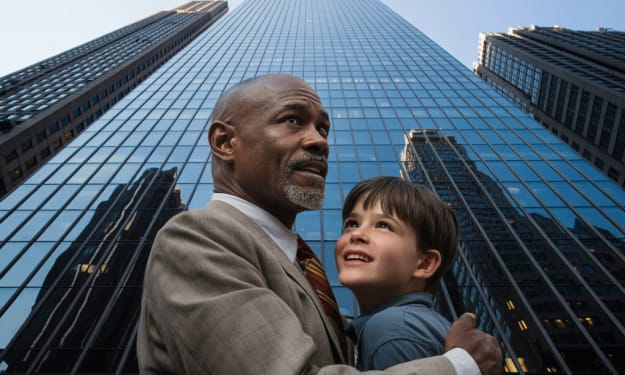
From Homeless to Wall Street
The city never sleeps, but for some, it never stops hurting either. For Darren Cole, the streets of New York weren’t just sidewalks and subway tunnels—they were home. Not by choice, but by consequence. At 15, Darren wasn’t worried about missing homework or prom invitations. He was worried about whether the shelter he stayed in would have a bed that night, or whether he’d eat anything other than a bruised banana for dinner. While other kids his age played video games or scrolled through their phones, Darren studied strangers’ habits, learned how to navigate between danger and dignity, and counted his change like it was gold. He wasn't a criminal. He wasn't addicted. He was just a kid—abandoned by a system, forgotten by a family, but not by hope. --- The First Fall Darren’s mother, Clarissa, had once worked as a cashier in Brooklyn. His father had long disappeared, leaving behind little more than shouting matches and bruises. Clarissa fought to stay clean, but after losing her job, addiction knocked louder. Darren remembered the day she left their apartment, eyes hollow, saying she’d be back. She never came home. By the end of that week, eviction notices covered their door. Darren bounced between couches, then shelters. Eventually, he landed in one of the roughest youth centers in the Bronx, where broken kids grew up fast or got swallowed whole. Still, something inside Darren refused to give in. --- Books and Backpacks He carried one possession everywhere: a black backpack. Inside were two changes of clothes, a small flashlight, a photo of his mom, and three books—two borrowed from a library he was technically banned from, and one he’d found on a bench titled The Intelligent Investor by Benjamin Graham. The words didn’t make much sense at first. Stock, equity, dividends—it was a foreign language. But it felt like power, and Darren wanted power—not to control others, but to control his life. He read by streetlamps. He asked questions in shelters. He listened in fast-food shops to men in suits talking about “leverage” and “hedge funds.” While sweeping floors or doing dishes at odd jobs, he played podcasts about financial markets on a broken MP3 player. He wasn’t surviving anymore. He was preparing. --- The Breakthrough Job At 17, after being kicked out of another shelter for defending a younger boy, Darren ended up sleeping on the floor of a 24-hour laundromat. A diner nearby noticed him showing up every morning to wash off in the restroom. The manager, Jorge, offered him a job washing dishes. “You can’t look like a raccoon forever,” Jorge joked, handing him an apron. Darren worked harder than anyone else. Double shifts, no complaints. On breaks, instead of texting or smoking, he read finance books. One night, a man in a navy-blue suit noticed him reading Common Stocks and Uncommon Profits. “You’re reading Phil Fisher?” the man asked. “I’m trying,” Darren replied. “Wall Street sounds like another planet, but I want to go there.” The man left a business card on the table and said, “Come see me. Maybe we’ll find a way.” --- GED and Grit Darren used the next year to pass his GED. He worked nights and studied during the day. With his mentor’s help—the same man from the diner, Michael Rothstein, an analyst at a mid-tier finance firm—Darren got an unpaid internship at a community investment office. It wasn’t glamorous. He fetched coffee and updated spreadsheets. But he listened. He learned how markets moved, what a good portfolio looked like, and how a single sentence in a financial report could shake entire industries. He never forgot where he came from. Every time someone talked about "risk tolerance," he’d quietly think, Try sleeping next to a cracked window in winter with rats chewing through your coat. Perspective made him fearless. --- Education and Identity Darren applied to dozens of colleges. He was rejected 17 times. Then came a letter from Baruch College. It was an acceptance with partial financial aid. He cried—not because he was in, but because someone finally saw him as more than a “shelter kid.” He studied finance during the day, worked nights, and slept only 4 hours a day. He interned for a financial literacy nonprofit and volunteered at shelters to teach budgeting skills. He remembered what it was like to be ignored, so he made sure no one felt invisible around him. At 23, he graduated with honors. --- Wall Street Arrival His first Wall Street job wasn’t in a glass office. It was a small firm that believed in his hunger and gave him a shot. He worked as a junior analyst, then a trader. Some colleagues made jokes behind his back about his “public school vocabulary” or lack of a Hamptons background. He ignored them. Within two years, Darren was one of the top performers at the firm. He didn’t gamble like others. He analyzed risk like a man who’d lived it. --- Building the Future At 29, Darren launched his own firm—Cole Capital—with a focus on ethical investing and community reinvestment. He hired other underprivileged youth, trained them in finance, and mentored them personally. He also founded “Floor to Future”, a nonprofit that helps homeless teens get financial education, job skills, and emotional support. He visited shelters in person. Not in a limo. On foot. Once, a young boy with the same tired eyes Darren once had asked, “How did you go from here to… there?” Darren knelt down, smiled, and said, “By never believing this was the end.” --- Legacy Beyond Money Darren’s story made headlines. He was invited to speak at universities, featured in Forbes, and praised by politicians. But he stayed humble. He bought his mother a small home in Florida after she recovered in rehab. He visited her every few weeks. “You made it,” she said once through tears. “No,” Darren replied. “We both survived. That’s what matters.” --- Conclusion: The Power of One Step Darren often says that success isn’t a single mountain you climb—it’s a series of steps taken in darkness, with no guarantee of light. But one step, and then another, took a boy from a shelter floor to a skyscraper’s top floor. He is proof that dreams aren’t fragile—they’re resilient, like the people who carry them through storms, loss, and silence.
By Doctor marwan Dorani about a year ago in Men
Erectile Dysfunction: Understanding the Condition and How to Manage It Effectively
Erectile dysfunction (ED), also known as impotence, is a disorder that debilitates thousands of men all over the world. With all this, ED is still a sensitive subject for many men, with many shying away from seeking help for embarrassment, fear of being judged, or lack of knowledge of the condition. However, ED is a medical condition, and there are a wide variety of causes, all of which can be well managed or treated if handled correctly.
By Aidan Mariamabout a year ago in Men