Brotherhood
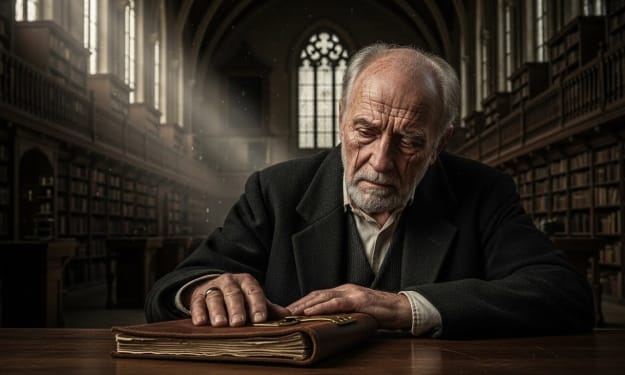
Unwritten Script. AI-Generated.
There is a script for being a man. An old, dog-eared script passed down through generations. It has chapters on stoicism, on being a provider, on fixing things with your hands, on swallowing fear and grief until they become a hard, silent stone in your gut.
By The 9x Fawdi11 months ago in Men
The Asymmetry of Consequence
A society cannot survive when truth applies to one group but not another. Every civilization that endures is built on shared accountability, equal justice, and balanced consequence. When one group is shielded from correction while another carries the full weight of judgment, corruption takes root. Today, that imbalance has become deeply gendered. Men are punished for failure, while women are protected from it. Men are held to the standard of results, while women are measured by intentions. The scales of consequence are no longer even, and the results are visible everywhere.
By Peter Thwing - Host of the FST Podcast12 months ago in Men
Men Are Not Utilities
Society praises men for what they produce but rarely for who they are. From childhood, men are taught that their value comes from their performance. They are measured by their paycheck, their strength, their endurance, and their ability to provide. They are expected to sacrifice without complaint, to solve problems without emotion, and to keep standing no matter how much weight they carry. What society calls manhood is often servitude disguised as virtue.
By Peter Thwing - Host of the FST Podcast12 months ago in Men
Generations were taught to hide the storm.
For centuries, men were told that feeling is weakness. Women were told the same – and punished for it. Tears, grief, joy, desire: all policed. Women’s hearts were called “too much,” men’s hearts were called “off-limits.”
By THE HONED CRONE12 months ago in Men
The Garden After the War
Across the ages, we’ve played out this wound—the fall from Eden, the wars of gods and lovers, the burning of witches, the crucifixion of truth. But the myths are shifting now. The garden is not lost; it waits within us. Every healed heart is a seed, every honest union a bloom. We are rewriting the story of creation—not from power over, but power with. This is the new genesis.
By THE HONED CRONE12 months ago in Men
The Seed of Patience
The Seed of Patience In a small village surrounded by green hills and flowing streams, there lived a farmer named Yusuf. His hands were rough from years of work, and his face carried the calm strength of someone who had learned to live with the rhythm of the earth.
By Wings of Time about a year ago in Men
CNY Blue Devils: The Future of Arena Football in Upstate New York
Arena football has found a new heartbeat in Upstate New York — and it’s wearing blue. The CNY Blue Devils, one of the newest franchises in the WIF Arena Football Conference, are quickly establishing themselves as a rising force both on and off the field. The Brotherhood based team in their inaugural is eager to take the field.
By AFC ARENACOVERAGE1about a year ago in Men
A Story Beyond Stereotypes
M Mehran For centuries, the idea of what it means to be a man has been written in bold, unbending lines. Men were supposed to be strong, stoic, providers—the unshaken pillars of family and society. They weren’t meant to cry, to falter, or to admit weakness. But today, a quiet revolution is happening. Men are learning to rewrite their own story, one that embraces not just strength but also vulnerability, kindness, and authenticity. --- The Weight of Old Expectations Marcus remembered the first time he was told to “man up.” He was six years old, tears welling in his eyes after falling from his bicycle. His father, loving but stern, handed him the bike again and said the words that would echo through Marcus’s childhood: “Men don’t cry.” From then on, Marcus carried that weight. At school, he played tough even when he felt scared. As a teenager, he bottled his feelings, terrified that showing them would mean weakness. By the time he reached adulthood, Marcus had become the picture of composure—but inside, he often felt like a storm. This is the story of many men. They are taught early on that masculinity is about suppression rather than expression. And while strength is valuable, denying emotions creates silent struggles that no one sees. --- A Shift in Perspective It wasn’t until Marcus became a father himself that he began to question the script. One evening, his little boy, Daniel, ran into his arms, crying after being bullied at school. For a moment, Marcus almost repeated the same words his father once told him. But then he paused. Instead, he held his son close and whispered, “It’s okay to cry. It just means your heart is working.” That simple moment changed everything. Marcus realized strength wasn’t about hiding tears; it was about being honest, about having the courage to face emotions instead of burying them. --- Men in a Changing World Across the globe, the definition of masculinity is shifting. Men are no longer confined to roles of warriors and breadwinners—they are artists, nurturers, partners, caregivers, and dreamers. They are allowed to embrace both resilience and softness, logic and empathy. Consider David, a nurse who once faced ridicule from friends for choosing what they called a “woman’s profession.” Today, he leads a team in a bustling emergency ward, saving lives daily. His work demands both technical skill and deep compassion—qualities that once would have been dismissed as “unmanly.” Or take Jamal, a stay-at-home father who takes pride in raising his daughters while his wife thrives as an entrepreneur. “Being there for them every day is my biggest achievement,” he says. His story proves that manhood isn’t diminished by nurturing; it’s amplified by it. --- Breaking the Silence One of the most significant challenges men face today is mental health. Studies show that men are less likely to seek help for depression or anxiety, often because they fear it will make them appear weak. This silence has cost too many lives. But change is happening. Support groups, podcasts, and campaigns are encouraging men to talk openly about struggles. Public figures—from athletes to actors—are breaking the stigma by admitting their own battles with mental health. These conversations are dismantling the dangerous idea that men must carry everything alone. Because the truth is simple: asking for help doesn’t make a man less. It makes him human. --- A New Definition of Strength Strength is no longer about stoicism alone. It’s about standing up for what’s right, even when it’s unpopular. It’s about being a present father, a supportive partner, a loyal friend. It’s about showing kindness in a world that often rewards cruelty. Real men are not measured by how much they can suppress but by how much they can give. Their strength is in their compassion, their persistence, their willingness to grow and evolve. --- The Men We Need Today Today’s world doesn’t need men who are trapped in outdated roles. It needs men who are self-aware, empathetic, and unafraid to break molds. Men who know that love is not weakness, that listening is not submission, that partnership is not loss of power. Marcus, David, Jamal, and countless others like them are proof that manhood is not one-size-fits-all. It is as diverse as the men themselves. --- Final Thought To be a man is no longer about carrying the world in silence. It’s about carrying it with honesty, with resilience, and with heart. Men are not less when they feel, when they nurture, or when they step away from old stereotypes—they are more. Because real masculinity is not about denying humanity. It’s about embracing it fully.
By Muhammad Mehranabout a year ago in Men
The Strength in Silence: A Story About Men
M Mehran In the quiet town of Brookside, where mornings smelled of coffee and freshly baked bread, men were taught to be strong, to carry burdens without complaint, and to hide emotions behind stoic faces. Among them was Daniel Hayes, a man of thirty-two, whose life was a study in contradictions. To the outside world, he was the model of strength—successful at work, reliable at home, admired by friends. But behind the confident smile was a man wrestling with doubts, fears, and dreams he never voiced. Daniel worked as a firefighter, a job that demanded courage in the face of danger. Every day, he raced into burning buildings, pulled children from collapsing homes, and comforted families devastated by loss. To his colleagues, he was fearless, a hero defined by action rather than words. Yet at night, when the sirens faded and the city slept, Daniel’s mind replayed moments that haunted him: the child he couldn’t save, the father who blamed himself for a house fire. Across town lived Marcus, a single father and mechanic. Life had dealt him a rough hand: a divorce that left scars deeper than visible, a teenage son who barely spoke to him, and a small workshop that barely kept the lights on. He rarely spoke of his struggles. Men, he had learned, weren’t supposed to cry or complain—they were supposed to fix problems, even when they had no idea how. One evening, fate brought Daniel and Marcus together. A massive storm had flooded Brookside, trapping residents in their homes. Daniel and his team were called in to rescue those stranded by rising waters. Marcus had stayed behind to secure his workshop, unaware that the flood would turn dangerous. As Daniel’s team navigated the swollen streets, they found Marcus clinging to a roof, water rushing around him. Without hesitation, Daniel dove into the torrent, pulling him to safety. Later, as they sat on the dry pavement, shivering and soaked, something unusual happened. Marcus, a man who had buried his emotions for years, said simply, “I was scared.” Daniel nodded, a small smile breaking through his usual reserve. “Me too,” he admitted. It was a moment of rare honesty, a shared acknowledgment that fear didn’t make them weak—it made them human. That night marked the beginning of a friendship neither man expected. Over cups of coffee in the firehouse kitchen and oil-stained afternoons in the workshop, they began to share stories they had long kept silent. Daniel spoke of the weight of saving lives, the sleepless nights haunted by choices he could not undo. Marcus spoke of loneliness, of trying to raise a son who resented him, of the quiet desperation of keeping a life together when everything seemed to crumble. In their conversations, they discovered a truth often overlooked: men carry invisible burdens. Society tells them to endure, to be pillars of strength, to never waver. But strength isn’t measured by silence or unshakable courage. Real strength lies in acknowledging vulnerability, in leaning on others when the weight becomes too heavy to bear alone. Inspired by their own journey, Daniel and Marcus started a small support group for men in Brookside. They called it “The Quiet Strength.” The meetings were simple—a circle of chairs in the community hall, warm lights, and honest conversation. At first, only a handful of men attended, hesitant and unsure. But word spread. Slowly, men began to share: a husband struggling with mental health, a father facing unemployment, a young man unsure of his purpose. What began as a modest gathering grew into a movement. Men found solace in sharing their stories, in hearing that they were not alone, that admitting fear or doubt did not diminish their value. Daniel and Marcus watched with quiet pride as their town changed, one conversation at a time. Through these experiences, both men realized that heroism doesn’t always come from acts of bravery in a blaze or the ability to survive life’s storms. Sometimes, it comes from the courage to be honest, to express pain, and to build connections that transform lives. Daniel still fought fires. Marcus still fixed engines. But both now understood a deeper truth: men are strong not because they never fall, but because they rise together, supporting one another in ways that silence never could. In Brookside, strength had been redefined. It was no longer just muscles and fearlessness. It was kindness, honesty, and courage of a different kind—the courage to be human. And in embracing that courage, Daniel and Marcus discovered a freedom they had never known: the freedom to be themselves, unafraid, and unashamed. Because sometimes, the greatest story a man can tell is the story he has been too afraid to speak.
By Muhammad Mehranabout a year ago in Men