
Menswear Market Is Being Reshaped by Comfort, Digital Fashion, and Changing Male Identity
From streetwear and athleisure to premium tailoring and luxury fashion, the global menswear industry is evolving alongside modern lifestyle trends.

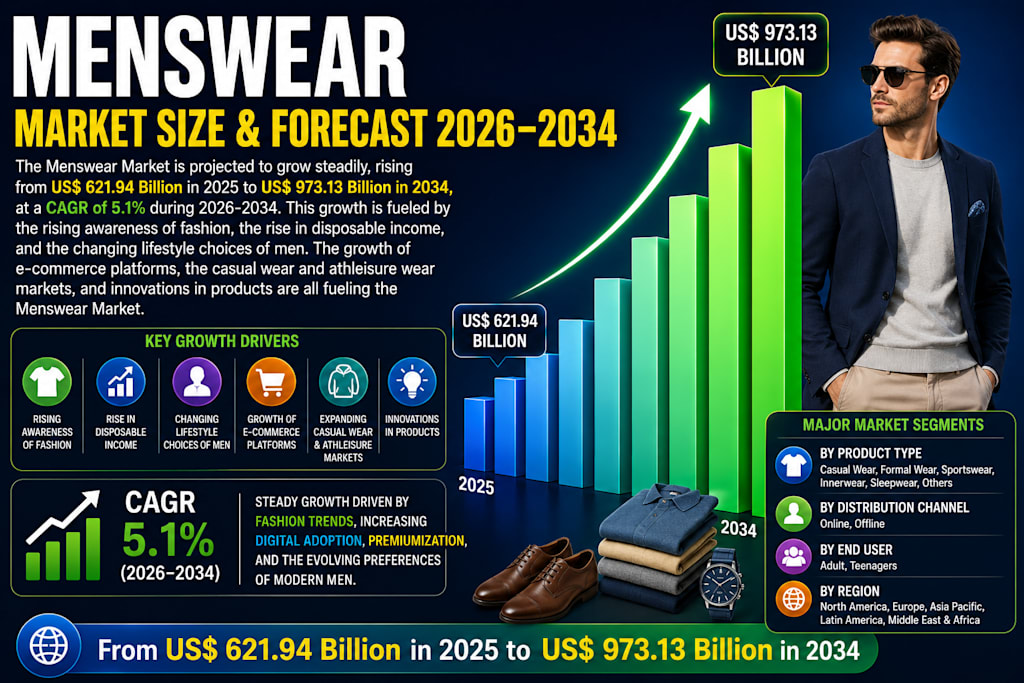
Menswear Market Is Expanding With Changing Fashion Trends
The global menswear market is experiencing steady growth as men become increasingly fashion-conscious and lifestyle preferences continue evolving worldwide. According to Renub Research, the menswear market is projected to grow from US$ 621.94 billion in 2025 to US$ 973.13 billion by 2034, registering a CAGR of 5.1% during 2026-2034. Rising disposable incomes, changing consumer behavior, expanding e-commerce channels, and growing demand for casual and athleisure wear are among the major factors driving market expansion.
The menswear industry is no longer limited to traditional formal clothing. Modern consumers are increasingly looking for comfort, flexibility, individuality, and style across every category of apparel, from business wear and streetwear to sportswear and premium fashion.
Menswear Is Becoming a Form of Self-Expression
Menswear today covers a broad spectrum of products including shirts, trousers, jackets, denim, T-shirts, activewear, footwear, bags, and accessories specifically designed for men. The industry now blends classic tailoring with modern fashion trends to offer greater variety and personalization.
Fashion is increasingly viewed by men as a form of self-expression rather than simply a functional necessity. Social media, celebrity culture, influencer marketing, and digital fashion platforms have significantly changed how men approach clothing and personal style.
Consumers across multiple age groups are now actively experimenting with fashion trends, whether through luxury tailoring, casual streetwear, or performance-focused athleisure products. This growing fashion awareness is helping reshape the global menswear landscape.
Fashion Awareness Among Men Is Increasing Rapidly
One of the strongest drivers behind the menswear market is the rising level of fashion consciousness among male consumers. Men are paying closer attention to grooming, appearance, and style choices than ever before. Digital platforms such as TikTok, Instagram, and online fashion communities have accelerated exposure to global fashion trends.
The report highlights the massive popularity of the #MensFashion category on social media, demonstrating how digital culture is influencing purchasing behavior. Micro-influencers and fashion creators are helping introduce niche brands and emerging styles to mainstream audiences.
As fashion becomes more connected to personal identity and lifestyle, brands are increasingly focusing on innovative designs, hybrid clothing categories, and versatile collections that align with modern consumer expectations.
E-Commerce Is Transforming the Menswear Industry
The rapid growth of e-commerce and digital retail platforms has become one of the biggest catalysts for the menswear market. Online shopping offers convenience, wider product selection, personalized recommendations, and easy price comparisons, all of which appeal strongly to modern consumers.
Technologies such as AI-powered styling tools, virtual try-on systems, mobile shopping apps, and social commerce are improving the overall digital shopping experience. Subscription-based services and fast delivery models are also encouraging repeat purchases and stronger customer loyalty.
Global fashion brands are increasingly expanding through direct-to-consumer strategies that reduce dependence on physical retail stores while improving brand engagement and profitability. As internet penetration and digital adoption continue rising worldwide, e-commerce will remain a major growth engine for menswear.
Casual Wear and Athleisure Are Reshaping Demand
The growing popularity of casual wear, lifestyle apparel, and athleisure is fundamentally changing the menswear industry. Modern work environments, flexible office dress codes, and work-from-home culture have reduced reliance on traditional formalwear while increasing demand for versatile and comfortable clothing.
Athleisure combines fashion, comfort, and performance, making it highly attractive to health-conscious and active consumers. Men increasingly prefer clothing that can transition seamlessly between work, exercise, travel, and social activities.
Manufacturers are responding by developing breathable fabrics, stretch materials, sustainable textiles, and multi-functional designs that align with modern lifestyles. As comfort-driven fashion becomes mainstream globally, casual and athleisure categories are expected to continue growing strongly.
Sustainability Is Becoming More Important in Fashion
Sustainability and ethical sourcing are becoming increasingly important factors influencing menswear purchasing decisions. Consumers are paying greater attention to environmentally responsible production methods, recycled materials, and transparent supply chains.
Brands are investing in circular fashion initiatives, sustainable fabrics, and eco-friendly manufacturing processes in response to growing consumer awareness around textile waste and environmental impact.
This shift is especially noticeable among younger consumers who increasingly prioritize both style and sustainability when selecting fashion products.
Competition and Rapid Trend Cycles Create Challenges
Despite strong growth opportunities, the menswear industry faces intense competition and rapidly changing fashion trends. Global brands, fast-fashion retailers, direct-to-consumer startups, and luxury labels all compete for consumer attention in an increasingly crowded marketplace.
Fashion cycles are becoming shorter, forcing brands to innovate constantly and release new collections more frequently. Misreading consumer trends can result in excess inventory, heavy discounting, and financial losses.
Smaller brands often struggle with the operational demands of product design, supply chain management, logistics, and marketing in such a fast-moving industry.
Supply Chain Disruptions Continue to Pressure the Industry
Supply chain instability remains another major challenge for the menswear market. Rising raw material costs, labor shortages, transportation delays, and geopolitical tensions continue affecting production schedules and operational costs.
At the same time, sustainability requirements and ethical sourcing expectations are increasing complexity across global supply chains. Brands must balance affordability, quality, speed, and sustainability while maintaining operational resilience.
Managing flexible and transparent supply chains has become essential for long-term competitiveness in the modern fashion industry.
Top Wear Continues to Lead the Market
The top wear segment remains one of the largest and fastest-moving categories within the menswear industry. Shirts, T-shirts, jackets, hoodies, sweaters, polos, and outerwear are purchased frequently and serve as core wardrobe essentials for consumers worldwide.
The growing influence of streetwear and athleisure trends has further strengthened demand for casual tops and lifestyle apparel. Innovations in wrinkle-resistant fabrics, moisture management, lightweight materials, and relaxed fits are also helping brands attract modern consumers seeking comfort and convenience.
As fashion trends continue evolving rapidly, top wear categories are expected to remain highly dynamic and commercially significant.
Bottom Wear Is Evolving With Lifestyle Changes
The bottom menswear segment includes jeans, chinos, trousers, joggers, shorts, and track pants. Demand for these products is being driven by changing workplace dress codes, comfort-focused fashion, and increased interest in casual and athleisure lifestyles.
Relaxed fits, stretch fabrics, and versatile styling options are becoming increasingly popular. Denim remains a staple category, while joggers and casual trousers continue gaining popularity because of their flexibility and comfort.
As consumers prioritize adaptable everyday clothing, bottom wear categories are expected to maintain steady long-term growth.
Premium and Luxury Menswear Are Expanding Globally
The premium menswear segment is growing as consumers seek better craftsmanship, durability, fit, and timeless style. Urban professionals and fashion-conscious consumers are increasingly willing to invest in high-quality wardrobe staples that balance luxury appeal with long-term value.
Luxury menswear is also experiencing strong demand, driven by rising affluence, global fashion exposure, and the growing importance of personal branding. Luxury brands are focusing heavily on customization, exclusivity, heritage, and premium materials to attract high-end consumers.
Online luxury retail platforms and digital marketing strategies are further expanding access to premium menswear globally.
Offline Retail Still Holds Strong Importance
Despite rapid e-commerce growth, offline retail continues to play a major role in the menswear industry. Many consumers still prefer visiting physical stores to evaluate fabric quality, fit, comfort, and overall shopping experience before making purchases.
Department stores, shopping malls, specialty fashion retailers, and branded outlets remain especially important for premium and luxury menswear segments. Omnichannel retail strategies that combine online convenience with physical shopping experiences are becoming increasingly important for fashion brands.
The United States Leads While India Emerges Rapidly
The United States remains one of the largest menswear markets globally because of high consumer spending, diverse lifestyle preferences, and strong brand presence. Casual wear, sportswear, athleisure, and smart casual fashion dominate demand, supported by flexible work culture and evolving lifestyle habits.
The United Kingdom market combines traditional tailoring heritage with modern streetwear and fashion trends. Sustainability and ethical fashion are also becoming increasingly important among British consumers.
India is emerging as one of the fastest-growing menswear markets due to its young population, rising disposable incomes, rapid urbanization, and growing fashion awareness. Demand for western wear, ethnic fashion, fusion wear, and athleisure products continues expanding rapidly across both urban and non-urban regions.
Saudi Arabia is also witnessing strong growth as younger consumers adopt modern fashion trends while balancing traditional cultural influences.
Competition Is Intensifying Across Global Fashion Brands
The menswear market includes major companies such as Nike, Inc., Adidas AG, H & M Hennes & Mauritz AB, Levi Strauss & Co, Ralph Lauren Corp, PVH Corp, Hugo Boss Group, and Under Armour Inc. These brands are investing heavily in digital retail, sustainability, product innovation, personalization, and omnichannel strategies to strengthen their competitive positions.
Collaborations between fashion brands, sportswear companies, influencers, and lifestyle creators are also becoming more common as brands seek stronger engagement with younger audiences.
Final Thoughts
The menswear market is evolving rapidly as fashion, comfort, technology, and lifestyle trends continue reshaping consumer behavior worldwide. According to Renub Research, the market is expected to grow from US$ 621.94 billion in 2025 to US$ 973.13 billion by 2034, driven by rising fashion awareness, expanding digital retail, and increasing demand for casual and athleisure apparel. As men increasingly use fashion as a form of identity and self-expression, the menswear industry is likely to remain one of the most dynamic and innovation-driven segments within the global fashion market.
About the Creator
Enjoyed the story? Support the Creator.
Subscribe for free to receive all their stories in your feed.
Comments
There are no comments for this story
Be the first to respond and start the conversation.