
I Like Proving People Wrong: The Women Who Picked Up the Drill
They’re done waiting for someone else to fix the sink.
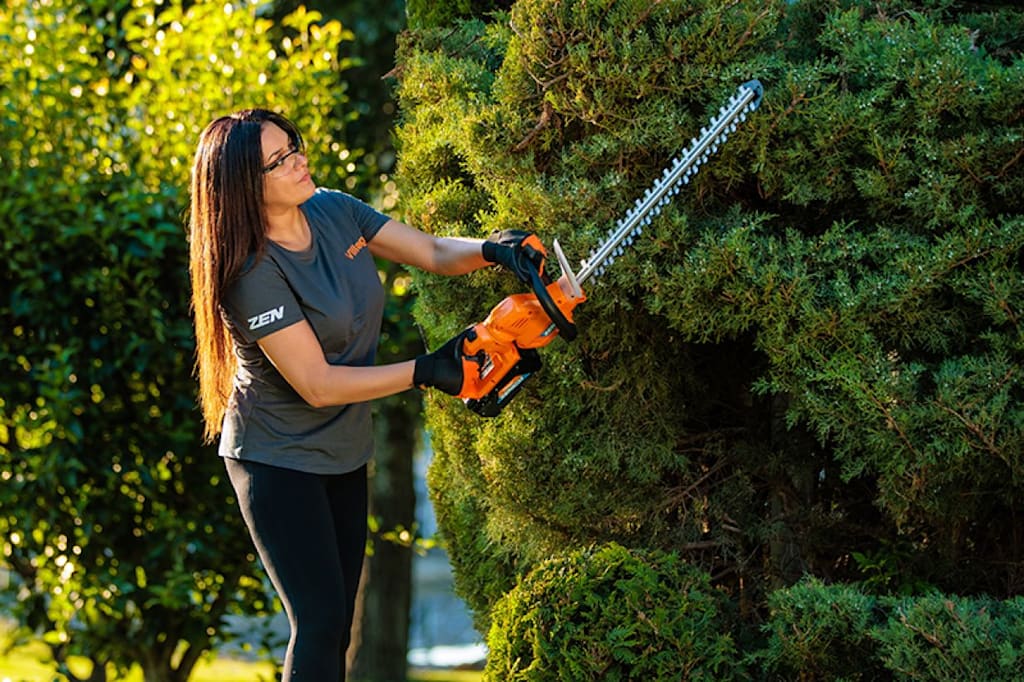
Jasmine Gurney stands in front of a fence with an orange-and-black power tool in her hand. She is eight months pregnant. On Instagram, she has posted about jobs that would tire most people. She has torn out partition walls, replaced floors, built a fence, insulated and boarded a loft, built a garden studio, made cabinets, moved sockets, and built her son’s first bed. She is building him a treehouse. Before the baby arrives, she is finishing a custom wardrobe.
She is 33, from Bedfordshire, and used to work in marketing. “I like proving people wrong,” she says. When people online doubted her, she says, it pushed her more. “I want other women to see they can do it too,” she says. “I’ve done these jobs while pregnant. I’ve done them with my eldest in a baby carrier. I just want people to see we can do it, we’re interested in it. And a lot of the time we’re sick of waiting six months for a husband to finally pick up a tool and do it for us.”
For the past decade, DIY content has flooded social platforms. YouTube tutorials show how to patch a cracked wall or build a built-in seat from scratch. DIY was long treated as a man’s territory. Now a group of women influencers is encouraging a new generation to pick up tools and handle the work themselves.
Jasmine’s social media account began to grow during the pandemic. People could not get tradespeople into their homes, so they learned to do the jobs themselves. Lockdowns ended long ago. The demand for this content has not. One reason is a shortage of skilled tradespeople. Another is the cost of living, which has squeezed household renovation budgets.
In 2024, the UK home retailer B&Q published a report saying Gen Z women were most likely to break down gender stereotypes in DIY. About three-quarters of Gen Z women surveyed said they enjoyed DIY, compared with 60% of all women surveyed. Among Gen Z women, 82% said seeing women on social media do more complex home DIY projects inspired them to try it themselves. For all women surveyed, the figure was 60%.
Not every job can be done alone. Sometimes you need to get someone in.
Bliss Cunneen dropped out of an anthropology degree in 2020 and trained as a plumber. She is 28, from south London. She says trying the trade on a whim was “the best decision I’ve made.” She likes the freedom and flexibility of running her own business. When she visits clients, some people doubt her. Once, she was mistaken for a receptionist. “When you start working, and they see you’re confident and know what you’re doing, they come around,” she says. She thinks the rise in online DIY content has helped. People see women doing DIY or entering trades more often now.
Anna Moynihan founded TaskHer, a platform that matches women tradespeople with clients who need home repairs. She started it after several experiences with male tradespeople who came to her home and spoke to her husband instead of her. Five years ago, she could not find stock images of women tradespeople for her company’s promotional material. Autocorrect changed “tradeswoman” to “tradesman.”
“It’s the small things that end up making you feel women are not welcome in this environment,” she says. “Being a woman tradesperson is hard enough, because the proportion of women in the industry is so low.”
TaskHer has seen inquiries more than double this year compared with the same period in 2025. The number of women tradespeople signing up to the platform has nearly quadrupled. Clients choose women for different reasons. Industry surveys suggest some feel more comfortable having a woman work in their home. Others think women tradespeople show more respect. Some simply want to support women in jobs traditionally dominated by men.
Anna says more women are leaving white-collar jobs to join her platform. In the past month, three women with Oxford degrees signed up as tradespeople. Some had always wanted to work in a trade but felt the path was too difficult because they were women. Others want to run their own business, have more flexibility, and do work less likely to be directly affected by rapid advances in artificial intelligence.
Women still make up a small share of the UK construction workforce. The Federation of Master Builders estimates women are about 4% of the sector. In 2024-25, one in ten people starting construction apprenticeships was a woman. Five years ago, it was about one in fourteen.
Jasmine hopes women who see her online content will feel encouraged to try a job themselves, or even consider a trade. “The more women are seen online, the more normal it becomes,” she says.
Anna agrees. “If you never see someone like you do it, it’s hard to imagine you can,” she says. “Anything that lets women and girls see they can do it too, I think that’s great.”
Jasmine tightens a screw on the wardrobe door. The baby is due soon. Bliss crouches under a sink and turns a wrench. Anna checks the next name on her list.
About the Creator
Jin
Writer of reamstories
https://reamstories.com/jin
Enjoyed the story? Support the Creator.
Subscribe for free to receive all their stories in your feed. You could also become a paid subscriber, letting them know you appreciate their work.
Comments
There are no comments for this story
Be the first to respond and start the conversation.