gifts and registry
Whether you’re looking to give or receive, gifts are an important part of any marriage ceremony or bridal shower; do it with thought and care.
The Message I Never Sent
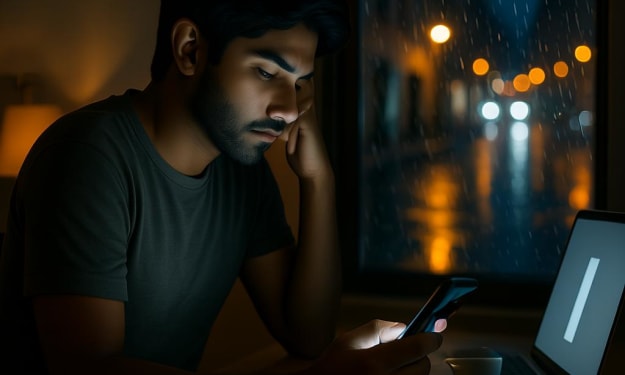
I wrote the message three times. Each version was a little different—some angrier, some softer, some just full of dots and unfinished thoughts. But I never sent it. I still think about that night. The room smelled like rain and old books. My phone screen glowed against the darkness, and your name sat at the top of the screen like a dare. We hadn't spoken in months. Not since I let you walk away. You didn’t slam the door. You didn’t scream. You just said, “If you don’t know by now, I can’t keep waiting for you to figure it out.” And you left. At the time, I told myself I was doing the right thing. That love should be logical, tidy, controlled. That not texting back immediately showed strength. That keeping my heart guarded was wisdom. But the truth? I was scared. Scared of needing you too much. Scared of being known. Scared of becoming someone soft. But I didn’t realize that real love is soft. It doesn’t demand control—it asks for honesty. And I failed at that. --- So that night, months later, I opened our old thread. The last message from you just said, “Take care.” No drama. No blame. Just final. And I typed. > “I’m sorry. I wasn’t ready then. I thought pushing you away was strength. But now I just miss you.” I stared at it. Read it five times. And then deleted it. Typed again. > “I hope you’re doing well. I still think about you when it rains.” Deleted that too. The third one? > “Do you ever think about me?” That one hurt the most. Because the truth is, you probably don’t anymore. You moved on. Maybe you found someone who doesn't flinch at commitment. Someone who didn’t need to lose you to understand your worth. But I still see you everywhere. In the girl laughing too loud in the coffee shop. In the playlists I skip because they still carry your echo. In the scarf someone wore last week that looked exactly like yours. In the quiet moments before I sleep, when your memory slips in like a breeze I can’t shut the window against. I try not to romanticize the past. I know memory is a soft liar. But you were different. Not perfect, not without flaws—but you were real. --- I didn’t send the message. And I’ve had to live with that silence ever since. But here’s what I’ve learned: Sometimes closure isn’t a conversation. Sometimes it’s writing the words you never said—and letting them go. So I did. I let them go. Not because they didn’t matter. But because holding them in was starting to rot something inside me. --- You taught me that love isn't always grand gestures and perfect timing. Sometimes it’s just someone willing to sit with you in your mess. And I wasn’t brave enough to let you do that. I thought love meant fixing myself first. Now I know—it just means showing up. Flawed. Honest. Afraid, even. But showing up anyway. --- I hope you’re happy. I hope someone makes you feel seen in all the ways I didn’t. I hope you laugh without holding back. I hope someone texts you just to say, “I saw a cloud today that reminded me of you.” Because you deserve that kind of love. --- I still have that message draft saved in my notes app. Not because I’ll send it. But because I want to remember who I was when I wrote it—and who I don’t want to be again. It reminds me that I had the chance to love deeply, and I let it pass. That I had the chance to speak—and chose silence. --- To anyone holding back words you needed to say: Say them. Even if they shake in your throat. Even if they come too late. Because silence can protect us—but it can also rob us of something we never get back. If this story reminded you of someone—text them. Call them. Or at least write it down. Even if you never press send.
By Muhammad Abuzar Badshah about a year ago in Marriage
Second Chances Exist — But Only Once
Second Chances Exist — But Only Once In 2147, humanity perfected regret management. It came packaged in the sleek, government-issued device called the Redress Chip, implanted behind every newborn’s left ear. By law, everyone got exactly one Second Chance in life — a single opportunity to rewind time and rewrite a moment they couldn’t live with.
By Huzaifa Dzineabout a year ago in Marriage
Valentine's Day Gift Guide: The Best Gemstone Earrings
Love is in the air, and Cupid’s arrow is ready to strike hearts again—it's Valentine’s season! While roses and chocolates are classic, have you thought about adding some sparkle to your gift? If sparkling jewelry whispers romance to you, then you’ve landed in the perfect spot. Get set to immerse yourself in the spirit of Valentine's Day with breathtaking gemstone earrings. Here, let's explore a world where classy beauty meets the heartfelt celebration of this special day.
By Richard Smithabout a year ago in Marriage
The Envelope I Never Wanted
A Knock That Changed Everything I used to believe marriage was a promise that, if you worked hard enough, you could keep unbroken. Mark and I had been together for twelve years, and in all that time, I clung to the story that we were different—that we were stronger because we’d come from fractured families and were determined never to repeat their mistakes. Even when he started coming home late, smelling faintly of hotel soap, I convinced myself it was all in my head.
By Zahir Ahmadabout a year ago in Marriage
🌸 How I Found My Life Partner – A Journey of Prayers, Pain, and Destiny
I used to wonder how people found true love. I would see couples walking hand in hand, laughing like the world was theirs, and deep down, a soft ache would whisper inside me—“When will it be my turn?”
By Muhammad Riazabout a year ago in Marriage
The Letter Beneath Her Pillow
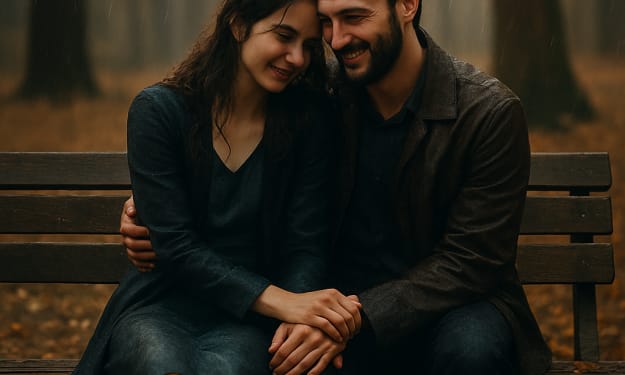
“The Letter Beneath Her Pillow” I first saw her on a rainy Tuesday, seated by the café window with raindrops threading down the glass like veins on a fragile heart. She stirred her coffee without drinking it, her gaze fixed on something outside—perhaps a memory. I don’t know what drew me in. Maybe it was her silence in a room full of chatter. Maybe it was the slight tremor in her hand, as though she carried a sorrow too big for her frame. I never believed in love at first sight. But this wasn’t love—it was a haunting. Her name was Aanya. I didn’t speak to her that day, just watched from across the café, pretending to read. But she came again the next day. And the day after that. Always at the same table, always stirring her coffee and never drinking it. She never smiled. I began to wonder if she was waiting for someone who never arrived. I gathered the courage on the fourth day. I walked up to her table and asked, “Is this seat taken?” She looked up, startled, like I had broken into a daydream. “It was,” she said softly, “but not anymore.” We started talking. Carefully, like we were both afraid of waking something up. She was quiet but precise with her words. Every sentence felt chosen, polished by grief. I told her about my love for poetry, how I believed that people are poems in progress. She smiled for the first time. “That’s beautiful,” she said, “but some poems aren’t meant to be finished.” I didn’t ask what she meant. Over weeks, our conversations deepened. She told me small things—how she liked to sleep with one earphone in, how she had a scar on her ankle from a bicycle accident, how the smell of cinnamon made her cry. But she never spoke about her past. There was a silence stitched around it, tight and warning. One night, after I walked her to the train station, she paused before boarding. “You should know something,” she said, “I don’t do forever.” Then she stepped inside, and the doors closed between us. I couldn’t sleep that night. My mind swam in questions: What did she mean? Was she ill? Married? Running from something—or someone? The mystery wrapped itself around my heart like ivy. Two months later, I fell in love with her. I didn’t tell her that, not yet. But it hung between us like mist—visible, unspoken. Then came the night everything changed. I arrived at the café, but she wasn’t there. I waited an hour. Called. No answer. For three days, she disappeared. I searched every street I knew she loved. I called hospitals. Nothing. Then, on the fourth night, I found an envelope slid under my apartment door. No name. Just a single line written in delicate handwriting: “Under my pillow, you'll find the truth. I’m sorry.” I froze. Her pillow? I had never been to her apartment. But I remembered her mentioning once that she lived near St. Mary’s Church, in a white building with purple bougainvillea hanging over the gate. I found it after midnight. The door was unlocked. Inside was silence, dust, and a faint scent of lavender. Her bed was neatly made. I reached beneath the pillow. There it was. A letter, folded thrice. I opened it with shaking hands. “If you’re reading this, it means I’ve broken my own promise. I swore I wouldn’t drag anyone into my past. But you deserve truth. I had a fiancé once. Aarav. He was everything—kind, brilliant, reckless in love. We were engaged, planning our wedding in December. One evening, we had a fight. A stupid fight about work. He stormed out. It was raining, and he was driving too fast. He never made it past the bridge. I was supposed to be in the car too. But I stayed behind. He died. I lived. That night cursed me. I’ve lived in guilt ever since. The café you met me in? That was our place. I kept returning like a ritual. Hoping that if I sat still enough, time would rewind. Then you came. With your poetry and your quiet eyes. You began to stitch me back together without even knowing it. I tried to push you away. But I failed. I don’t know if I can love again. But if I could, it would be you. I’m going away for a while. Not to vanish. Just to breathe. To try and forgive myself. If you still want me when I return, I’ll be at the café. On the first rain of September. Same seat. Same time. But if you don’t come, I’ll understand. Some poems, after all, aren’t meant to be finished.” I didn’t cry. Not then. Just sat on the floor, letter trembling in my hands, as if it carried her heartbeat. September felt like a century away. But I waited. And on the first rain of September, I went to the café. My heart was louder than the thunder. The chair was empty when I arrived. For twenty minutes, I thought she had changed her mind. Then she walked in. No umbrella. Hair soaked. Eyes nervous and shining. She sat across from me. This time, she drank her coffee. We didn’t speak for a long time. We just looked at each other—two broken verses finding rhyme again. And in that moment, I knew. Some poems are meant to begin twice.
By Ali Asad Ullahabout a year ago in Marriage
When Our Eyes Met in a Crowded Train
When Our Eyes Met in a Crowded Train A Realistic Love Story It was just another suffocating evening on the New York City subway—crowded, metallic, and tired. The kind of day where everyone keeps their heads down and earbuds in, pretending not to exist in the same overstuffed train car. I had stayed late at work again, dragging myself through a long shift and an even longer to-do list. My body was moving, but my mind was somewhere else entirely. Then the doors of the 6 train opened at Grand Central, and I stepped in.
By Ali Asad Ullahabout a year ago in Marriage
“The Silent Pulse: A Doctor’s Journey Through a Night That Changed Everything
The Silent Pulse By Dr. Marwan --- The hospital corridors echoed with a stillness unique to late nights. As the clock ticked past 2 a.m., the air in the emergency ward was thick — not just with the scent of antiseptics and weary determination, but with unspoken questions: Who will make it tonight? Who won’t? I had been working shifts for years, but something about that night felt different. My stethoscope felt heavier, my white coat more snug around the chest — as if anticipating a weight I had yet to bear. A nurse rushed toward me. “Dr. Marwan, we have a Code Blue — young male, early twenties, massive trauma. ETA three minutes.” Three minutes. That’s how long it took for life to hang in balance, and for a doctor’s entire philosophy to be tested. --- The Arrival The trauma team was already assembling as the ambulance doors burst open. The patient, a lean young man with blood-soaked clothes and a mangled leg, was wheeled in. His face was barely visible under the oxygen mask, but the panic in his eyes was unmistakable. He was conscious — barely. “Motorbike accident,” the paramedic said. “He lost a lot of blood. No helmet. No ID.” “Let’s stabilize and prep him for emergency surgery,” I ordered. My hands moved with muscle memory — assessing vitals, guiding intubation, directing medication doses. But my mind kept wandering to his eyes. They weren’t just scared; they were pleading. --- A Pulse Lost Just as we began wheeling him to surgery, the monitors screamed. Flatline. “Code Blue! Start compressions!” I began chest compressions myself. Every press of my hands over his sternum echoed like thunder in the silent ER. I felt sweat trickle down my temples as adrenaline surged through me. One minute. Two. Five. Nothing. “He’s gone,” whispered the nurse. I paused. But I wasn’t ready to give up. Not yet. I remembered something my mentor once told me during residency: "Sometimes, you don’t fight death for the chance of success. You fight because every human deserves your best effort." So I kept going. Ten minutes. Still no pulse. And then... a blip. A faint, fluttering line. A pulse. --- The Conversation He was unconscious, but alive. The surgery was long, and we weren’t sure he would wake up. But three days later, I visited the ICU, and to my shock, he was sitting up, groggy, eyes open. He was unable to speak at first, but he scribbled a word on the paper pad beside his bed. "Why?" I sat beside him and smiled gently. “Because you were still fighting, even when your heart wasn’t.” He teared up. Later that week, I learned his name — Yusuf. He had left home after a falling out with his father. He was studying music, against his family’s wishes. --- The Lesson Yusuf survived with a metal rod in his leg and a long road of therapy ahead. But he made it. Months later, he returned to the hospital — not as a patient, but to perform in the hospital’s charity gala. He played the violin — a soft, soulful piece that left even the surgeons misty-eyed. After the show, he came to me and said something I’ll never forget: “You didn’t just save my life, Dr. Marwan. You saved my music.” That night, I went home, sat alone on my balcony, and cried for the first time in years. Not from exhaustion, or loss, or frustration. But because in that moment, I remembered why I became a doctor. It wasn’t for the title. It wasn’t for the money. It was for the silent pulses — the ones you fight for even when there’s nothing left on the monitor. The ones that become music. --- Reflection I’ve treated thousands of patients since then, but Yusuf remains etched in my memory. Not because of the medical miracle, but because of the human one. Being a doctor often means facing death, despair, and disappointment. But once in a while, you witness something extraordinary — a resurrection not just of a heartbeat, but of a dream. And that, perhaps, is the true medicine.
By Doctor marwan Dorani about a year ago in Marriage
Romeo and Juliet: The Timeless Tragedy of Star-Crossed Lovers
For centuries, Shakespeare's masterpiece defined love, conflict, and fate. Romeo and Juliet is one of those stories that has captivated readers like no other. This tragic tale of a young love doomed by family disputes, written by William Shakespeare around 1595, has survived time and inspired numerous productions, from ballets to blockbuster films. However, Romeo and Juliet is a complex investigation of passion, violence, and the destructive power of hatred, despite its romanticized reputation. This in-depth analysis delves into the play’s themes, historical context, and enduring legacy—revealing why, more than 400 years later, we still can’t escape the story of these star-crossed lovers.
By Silas Blackwoodabout a year ago in Marriage