
A Gift Guide for People Who Are Terrible at Giving Gifts
In a world of instant messages and next-day delivery, I went searching for the kind of gifts that still require patience, paper, and a little bit of paint


I used to be terrible at giving gifts.
Not because I didn't care, but because I had confused convenience with thoughtfulness. I'd wait until the night before a birthday, panic-scroll through my phone, and click "Buy Now" on something algorithmically recommended. The package would arrive in brown cardboard, efficient and anonymous. I'd hand it over with a smile, hoping the recipient wouldn't notice that I had outsourced the entire decision to a machine.
They always noticed. And so did I.
The turning point came at my sister's bridal shower. She unwrapped a dozen boxes—kitchen gadgets, gift cards, trendy appliances she hadn't asked for. Then someone handed her a flat, square package wrapped in thick, textured paper tied with velvet ribbon. Inside was a set of illustrated travel accessories: an eye mask, a small pouch, a journal, all covered in hand-painted botanical prints so vivid they looked like they'd been lifted from a garden in Provence.
My sister didn't just smile. She gasped. She ran her fingers over the watercolor peonies and gold foil details. She held the journal to her chest like a secret. In that moment, I understood something I'd been missing: a gift can be a message about how well you see someone. And that message requires slowness. It requires beauty. It requires art.
The Rebellion of the Hand-Painted
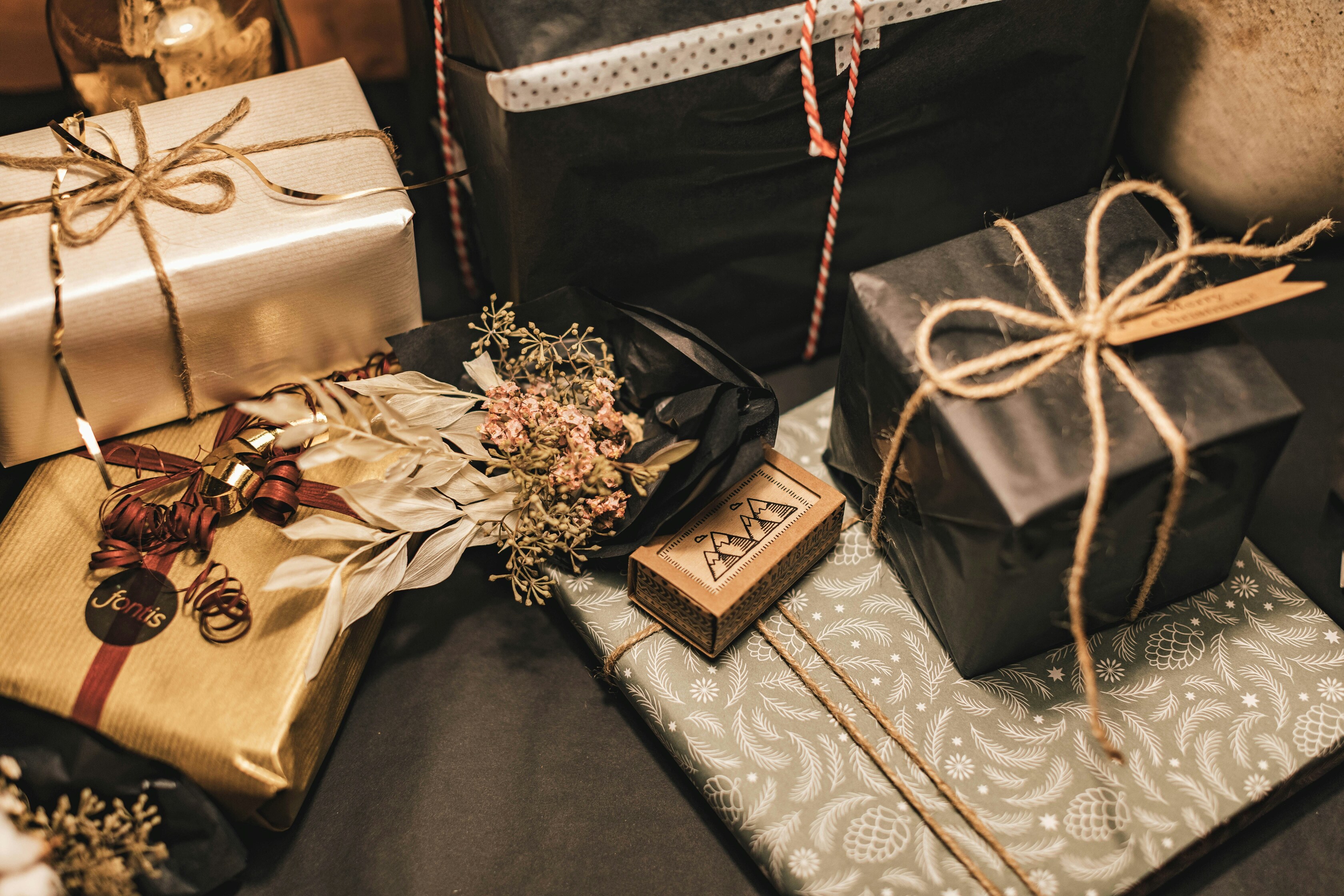
I became obsessed with illustrated objects after that. Not prints hanging in galleries, but functional things made extraordinary by an artist's hand. A phone case that looks like a pressed-flower herbarium. A planner whose monthly dividers feature hand-painted citrus groves. A set of playing cards with botanical backs so lovely you hesitate to deal them.
There's a radical quality to these items in our current moment. We live surrounded by screens, by interfaces designed to be invisible, by products engineered to disappear into utility. An illustrated object refuses to disappear. It demands to be looked at. It insists that the everyday—writing a grocery list, packing a suitcase, jotting a reminder—deserves ornamentation.
I started collecting these pieces slowly. A greeting card with a watercolor bouquet that took someone's actual hand and actual time to paint. A desk calendar where each month reveals a new garden scene. I wasn't just buying things; I was curating a small museum of beauty in my apartment. And I found that living among illustrated objects changed me. I wrote more letters. I planned trips with more intention. I wrapped presents with more care, because the wrapping suddenly felt like part of the gift, not just camouflage.
The Gift as a Mirror
The best gifts I've given since my revelation have been small and specific. A silk eye mask with a pattern of climbing vines for my insomniac friend who gardens at midnight. A set of illustrated recipe cards for my mother, who still writes her ingredients on index cards stained with fifty years of marinara. A leather-bound notebook with hand-painted wildflowers for my niece leaving for college, blank pages waiting for her own story.
Each of these gifts said something the recipient needed to hear. I see your insomnia. I honor your recipes. I believe your story matters. That's the power of a beautiful, intentional object. It becomes a mirror held up to the person's inner life.
I think about this when I stand in front of shelves of illustrated stationery and accessories. The temptation is to choose what I find pretty. But the discipline is to choose what the other person will find themselves in. A bold, graphic floral print for the friend with loud laughter and louder opinions. A delicate pattern of herbs and seed pods for the one who speaks in whispers and grows tomatoes on her fire escape.
The Ritual of Presentation

I've also learned that giving beautifully requires wrapping beautifully. Not perfectly—I'm still terrible at crisp corners—but intentionally. I save the tissue paper that comes with illustrated purchases, the ribbons, the small cards with gold-embossed envelopes. I write notes now, actual notes with full sentences, not just "Happy Birthday!" scrawled in a rush.
Last winter, I sent a gift to a friend recovering from surgery. I wrapped it in lavender paper, tied it with sage green velvet, and tucked a handwritten letter inside explaining why I chose each item. She told me later that she sat on her bed for twenty minutes just looking at the package before she opened it. The anticipation was part of the medicine.
That's what we lose when we default to the fastest option. We lose the ritual. The unwrapping. The pause between receiving and discovering. The sense that someone has traveled a distance—emotional, creative, physical—to place something in your hands.
Why Paper Still Matters
I know there's an environmental conversation to be had about paper goods, and I don't dismiss it. I buy less now, but I buy better. I choose items made with recycled materials, with vegetable-based inks, with packaging that can be composted or reused. The illustrated pieces I invest in tend to come from small studios and independent artists who care about these details. The eye mask I gave my friend came in a reusable drawstring bag that she now stores her knitting in.
There's a sustainability to beauty, too. An illustrated journal doesn't get thrown away when the year ends. It gets shelved. Revisited. Eventually, it becomes an artifact. I have a five-year-old planner on my bookshelf whose pages are filled with coffee stains and ticket stubs and the occasional pressed flower. The illustrated cover is faded now, but I can't part with it. It's a sculpture of a specific year of my life.
The Quiet Revolution of Slow Gifting

I've started a small tradition in my friend group. For birthdays, we give "slow gifts." Nothing ordered after 10 PM in a panic. Nothing shipped overnight in plastic mailers. Instead, we hunt. We notice things months in advance. We commission small pieces from artists we admire. We write letters that take days to compose.
It's not about money. Some of the best gifts have cost almost nothing: a hand-bound booklet of poems typed on a vintage typewriter, a framed print of a watercolor made by a local art student, a curated playlist delivered on a hand-decorated USB drive. What they share is intention. They say: I thought about you when you weren't around. I paid attention to who you are.
The Gift I Still Haven't Given
There's one item I've been holding onto for months. It's an illustrated travel set—an eye mask, a pouch, a luggage tag—all painted with wild roses and deep green foliage. I bought it for a friend who is terrified of flying but dreams of seeing the Scottish Highlands. I haven't given it to her yet because I'm waiting for the right moment. Not her birthday. Not a holiday. Just the day she finally books the ticket.
I imagine her opening it. I imagine the way her fingers will trace the painted petals. I imagine her packing it into a carry-on bag that will one day sit on a train somewhere between Edinburgh and Inverness, the illustrated pouch holding her passport, the eye mask blocking out the cabin light as she crosses an ocean toward something she's been afraid to want.
That image is why I believe in giving beautifully. Because a gift isn't just an object exchanged between two people. It's a vote of confidence in someone's future. It's a way of saying: I see where you're going. And I think it's going to be extraordinary.
About the Creator
Kiran Raghuvanshi
I'm a creative content writer & currently working as a freelance writer. Aspires to help my readers to shop the best and how to discover their personal style by sharing personal tips learned through both years of experience & research.
Enjoyed the story? Support the Creator.
Subscribe for free to receive all their stories in your feed.
Comments
There are no comments for this story
Be the first to respond and start the conversation.