
Why Window Replacement Costs Vary So Much From Home to Home
Understanding the factors that shape the price of a window project.

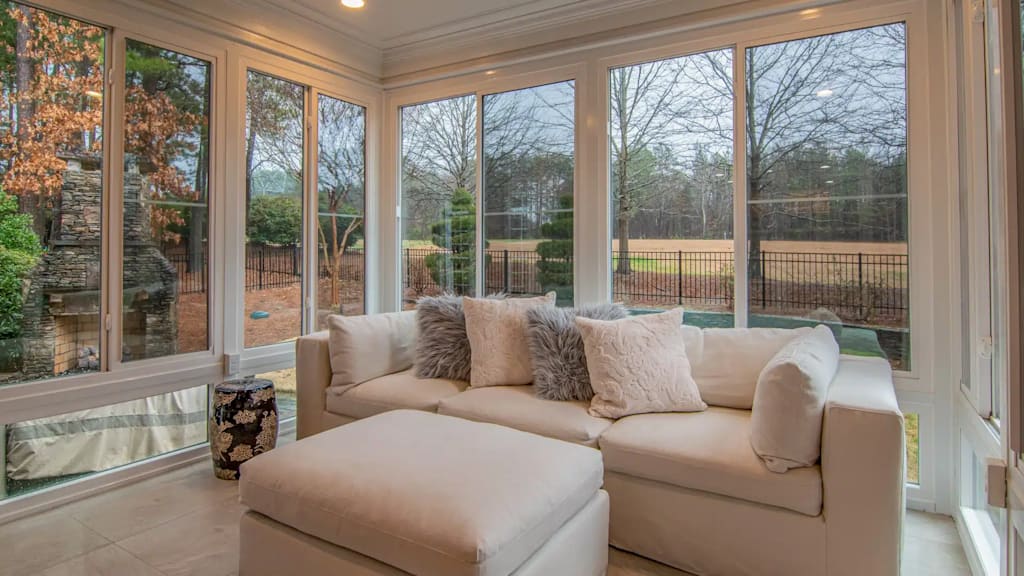
Few home projects surprise people the way window replacement does. Two neighbors with similar houses can receive quotes that differ by thousands of dollars, and the reason is rarely obvious from the outside. A window looks simple enough — a frame, a pane of glass, a way to open and close it — so why such a wide spread in price?
The honest answer is that the glass is the smallest part of the equation. A full-home window replacement usually lands somewhere between $8,000 and $30,000, and premium work can climb higher still. That range feels enormous until you realize a window project is really a stack of decisions and discoveries, each one nudging the total in a different direction.
The most obvious factor is how many windows are involved. Replacing a few tired units in one room is a modest job. Redoing every opening in a house multiplies the materials, the labor, and the finishing work required. Style matters too. A standard double-hung window is among the most economical to build and install, while picture windows, bays, bows, and custom shapes often need extra support and custom glass, which raises the cost accordingly.
Frame material is one of the biggest forks in the road. Vinyl tends to be the most affordable and stays popular because it resists moisture, needs little upkeep, and comes in plenty of styles. Composite sits a step above, offering a more premium look with solid durability. Fiberglass is valued for its stability and energy performance but costs more to make and install precisely. Wood occupies the top end, prized for its warmth and character, though it asks for ongoing painting and sealing that the others do not. As a rough guide, installed vinyl runs roughly $500 to $1,200 per window, composite around $800 to $1,800, fiberglass $900 to $2,000, and wood $1,000 to $2,500 or more.
Glass choices add another layer. Double or triple panes, low-emissivity coatings, insulating gas fills, and sound-dampening packages all push the price up front, though several of them quietly pay you back through lower energy bills and a more comfortable home. What lies behind the old window can matter just as much. Once a unit is removed, a crew sometimes uncovers rot, water damage, or weakened framing. Fixing those problems adds to the bill, but it is usually what allows the new window to do its job for years to come.
The difficulty of the work itself rounds out the picture. Upper floors, masonry walls, historic construction, and tight access can call for extra equipment and time. Finishing details — interior trim, exterior capping, drywall repair, fresh flashing, and paint or stain — also feed into the final number, with more elaborate work carrying a higher cost.
It helps to remember that new windows often give something back. They sharpen curb appeal, cut drafts and outside noise, improve efficiency, and freshen an older home, which is why they rank among the more worthwhile upgrades before a sale. Most installations take one to three days, though larger or custom projects run longer. And if you are wondering whether yours are due for replacement, the usual signs are persistent drafts, condensation between the panes, windows that stick, climbing energy bills, and visible rot around the frames.
In the end, window pricing is not arbitrary. It reflects the number of units, the materials chosen, the glass package, the condition of the home, and the complexity of the install. The only way to turn a broad range into a real figure is to have someone assess the house in person and see exactly what the work involves.
About the Creator
ORB Technology Solutions
ORB Technology Solutions helps roofing professionals achieve digital success. Our stories deliver actionable SEO and marketing blueprints to rank higher and land leads.
Enjoyed the story? Support the Creator.
Subscribe for free to receive all their stories in your feed.
Comments
There are no comments for this story
Be the first to respond and start the conversation.