
Why Does My Shearling Collar Get Dirty So Quickly?
Common Reasons Behind Fast Dirt Build-Up & Easy Ways to Keep It Clean

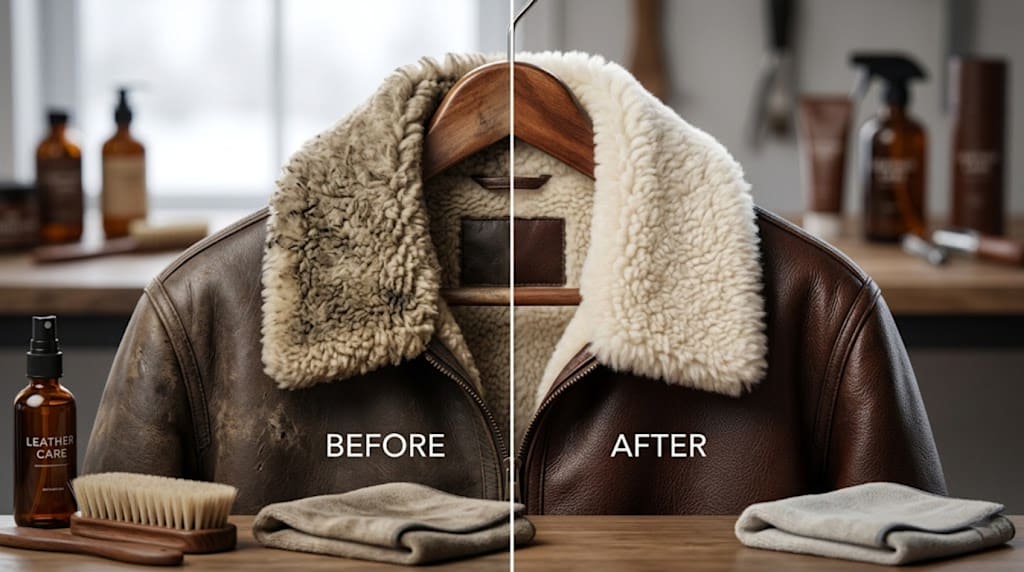
You pull out your favorite men's leather shearling jacket. It looked perfect last winter. Now the collar is dark, matted, and honestly a little embarrassing. Sound familiar? You are not alone.
Shearling collars are beautiful. But they are also one of the fastest parts of any jacket to show wear. There are real reasons for this, and once you understand them, keeping the collar clean becomes a lot less frustrating.
What Makes Shearling Collars Attract Dirt So Fast?
Shearling is not just leather. It is tanned sheepskin with the wool still attached. That fluffy texture feels amazing against your neck, but it also works like a magnet for everything you come in contact with daily.
Here is what is actually happening:
- Skin oils and sweat: Your neck constantly produces oil. Every time the collar touches bare skin, it absorbs sebum. Over time this turns the fur yellow, greasy, and flat.
- Makeup and skincare products: Foundation, moisturizer, SPF, and beard oil all transfer directly onto the collar fibers within minutes of wearing.
- Hair products: Dry shampoo, gel, or hair spray particles settle into shearling and build up over weeks.
- Airborne dust and pollution: Wool fibers create static. Static pulls in fine dust particles from the air, especially in urban environments.
- Rain and moisture: Wet shearling gets heavy, mats together, and if dried incorrectly, stays that way permanently.
Quick stat worth knowing: Studies on textile soiling show that natural protein fibers like wool absorb skin lipids up to 3 times faster than synthetic alternatives. That is why shearling shows dirt long before the leather body of the jacket does.
The Collar vs. The Rest of the Jacket
Most people notice the collar goes bad first. The body of the jacket stays cleaner because it does not have constant skin contact. The collar is different. It sits right against your neck for hours at a time, every day you wear it.
Collar area specifics worth noting:
- Direct skin contact zone: Absorbs oils daily and traps makeup and product residue. It is the most visible and most touched zone of the entire jacket.
- Body and sleeves: Mostly contact with clothing. Far less oil transfer. Dirt here is mostly surface level and easier to brush off.
- Cuffs: Second most affected area after the collar. Same reason. Direct skin contact at the wrist all day.
This is why a targeted approach for collar care matters more than just wiping down the whole jacket.
How to Actually Clean a Dirty Shearling Collar
Before you try anything, stop and read this. Shearling is sensitive. The wrong product or method will cause permanent damage, shrinkage, or hardening of the leather backing.
For Light Dirt and Daily Maintenance
- Use a soft bristle brush or suede brush. Brush in one direction only, following the natural grain of the wool.
- For surface dust, a lint roller works fine. Do not press too hard.
- If a slight odor is building up, lightly mist the collar with a 50/50 mix of white vinegar and water. Let it air dry completely away from direct heat.
For Oil Stains and Buildup
- Sprinkle a small amount of cornstarch or talcum powder on the affected area.
- Leave it for 6 to 8 hours. The powder draws out oils from deep in the fibers.
- Brush it away gently with a soft brush.
- If staining remains, apply a dime-sized amount of wool-safe shampoo diluted in cool water. Work it in gently with your fingertips. Never scrub.
- Rinse with a damp cloth and allow to dry naturally at room temperature.
For a full breakdown of leather and suede cleaning methods that actually work, check out this detailed Suede Leather Care Guide. It covers product recommendations, common mistakes, and step-by-step instructions for different stain types.
Fix Flattened Fur Inside a Shearling Jacket
Dirt is one problem. Flattened, matted fur is another. If the interior shearling lining has gone flat from compression, it affects both comfort and insulation quality.
Here is how to restore it:
- Lightly dampen the flattened area with a spray bottle set to mist. Do not soak it.
- Use a wide-tooth comb or pet slicker brush and work through the fibers gently, lifting from root to tip.
- Allow it to air dry while occasionally fluffing with your fingers.
- For stubborn flat spots, use a handheld steamer held 6 inches away. Move in circular motions. Never press a hot iron directly onto shearling.
This full restoration technique is explained in depth here: Fix Flattened Fur Inside a Shearling Jacket. Worth a read if the interior lining has lost its loft.
Preventing the Collar From Getting Dirty So Fast
Cleaning is reactive. Prevention is smarter. A few small habits make a real difference over the life of your jacket.
- Apply a wool-safe protector spray to the collar at the start of each season. This creates a barrier against oil and moisture absorption.
- Wear a scarf or turtleneck when possible. This sounds simple but it dramatically reduces direct skin contact with the collar.
- Remove the jacket before applying cologne, perfume, or hair product. Alcohol in fragrance can cause discoloration on shearling.
- Store the jacket properly. Use a wide padded hanger, never fold it. Keep it in a breathable garment bag, not plastic.
- Brush the collar lightly after each wear. Takes 30 seconds and prevents buildup from hardening into permanent staining.
Most shearling jacket owners do none of these things and then wonder why the collar goes bad in one season. The ones who do maintain properly get 8 to 12 years from a quality jacket.
Choosing a Shearling Jacket That Holds Up
Not all shearling jackets are equal. The quality of the tanning process, the thickness of the hide, and the density of the wool all affect how quickly the collar degrades.
Low-quality shearling uses thinner hides that absorb moisture faster and show soiling almost immediately. Quality-tanned shearling resists saturation longer and responds much better to cleaning.
If you are looking for a well-constructed mens leather shearling jacket that holds up over multiple seasons, pay attention to the hide grade and construction details before buying. A jacket built properly from the start gives you a lot more room to recover when the collar starts showing dirt.
Final Thought
A dirty shearling collar is not a sign of bad luck. It is a predictable result of how the material works and how most people wear and store their jackets. Now that you know the why behind it, fixing and preventing the problem is actually straightforward.
The collar is the most exposed, most visible, and most touched part of the jacket. Give it the attention it deserves and it will look sharp for years, not just one season.
Frequently Asked Questions
Can I wash a shearling collar in the washing machine?
No. Machine washing will shrink the leather backing, felt the wool fibers, and cause permanent damage. Always hand clean with wool-safe products or take it to a specialist leather cleaner.
How often should I clean my shearling collar?
Light brushing after every few wears. Deep cleaning once per season or when visible staining appears. Over-cleaning is also a problem since too much moisture and product application breaks down the natural lanolin in wool over time.
Why does my shearling smell even after cleaning?
Odors in shearling usually come from trapped moisture or bacteria from skin contact. Air the jacket out fully between wears. A diluted white vinegar mist neutralizes bacteria without damaging the fibers. Make sure it dries completely before storage.
Is shearling harder to maintain than regular leather?
Yes, in terms of collar and lining care. The leather exterior of a shearling jacket is maintained similarly to a regular leather jacket. But the wool portions require gentler products, more careful attention, and more frequent light maintenance to stay in good condition.
What is the best product to protect a shearling collar?
Look for a lanolin-based wool protector or a dedicated shearling protector spray. Avoid silicone-based sprays that can mat fibers. Apply lightly, let it absorb fully, then brush through the collar to restore texture before wearing.
About the Creator
Gwen Jorgensen
I’m Gwen Jorgensen, a fashion enthusiast and Marketing & PR Manager at Leather Jacket Black. I share insights on modern outerwear, style trends, and premium leather fashion, with a focus on what makes standout pieces truly timeless.
Enjoyed the story? Support the Creator.
Subscribe for free to receive all their stories in your feed.
Comments
There are no comments for this story
Be the first to respond and start the conversation.